

The Desserts Everyone Used To Leave On The Counter That Really Belong In The Fridge

Desserts are best when shared, but baking your favorite sweet treats often yields a fair amount of leftovers. From the olden days of leaving pies to cool on the windowsill or modern variations of setting out a tray of cupcakes to nosh on sporadically, it's a common practice to leave desserts on the counter for better ease of access and enjoyment. Though you might be used to slicing a piece of creamy cake for yourself, you might not be aware that pastries which include dairy elements are better when stored in the refrigerator. This is both to keep the dairy ingredients at a proper temperature and to avoid risking your sweets becoming unsafe to eat.
Why does dairy belong in the fridge rather than on the counter? The answer is simple. If you've left your dairy-filled foods on the counter for more than two hours, chances are it is sitting within what is referred to as the "danger zone." At temperatures between 40 and 140 degrees Fahrenheit, harmful bacteria can develop, leading to real health concerns.
Though the tradition of leaving pretty much any and everything out on the counter is a staple of Southern cultures, doing so poses a credible health risk. What's more, it will effectively destroy the desserts you've worked so hard to create. The next time you bake a classic and decadent red velvet cake recipe, take the right precautions to ensure it will last long enough and be safe to share with friends.
More tips for properly storing your dairy-based desserts
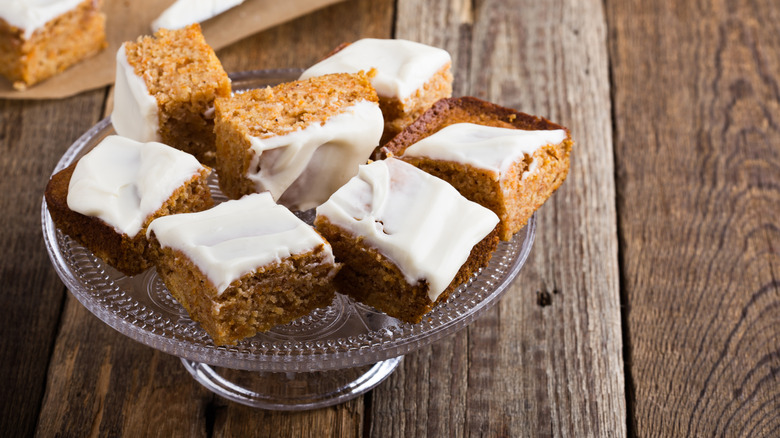
Contrary to popular belief, there is an inherent danger to leaving cream-based sweets out on the counter past two hours at room temperature. In the summer months and warmer homes, this is especially important to keep in mind. Though there is the chance that you'll be "just fine" with a bite or two, it isn't worth the risk given the easy methods and tools available for properly and safely storing homemade desserts.
For example, if you've whipped up a scrumptious loaf of spiced carrot banana bread with cream cheese frosting, the best way to keep it is by placing it in the refrigerator where it can stay for about three to five days. It's a plus if you put the leftovers in a Ziploc bag or other sealable airtight container to preserve its flavor and texture.
The next time you're working on a batch of fall-worthy pumpkin cinnamon rolls with cream cheese frosting, keep this tip in mind. You can also freeze your desserts and let them thaw safely in the refrigerator before serving. Remember that, because of the dairy component in the frosting, you won't want to try heating them up. As long as you exercise caution and stay mindful of timing and temperature, any of your favorite cream cheese-frosted recipes will stay safe and delicious.