

Stop Storing Your Booze In This Common Spot In The Kitchen
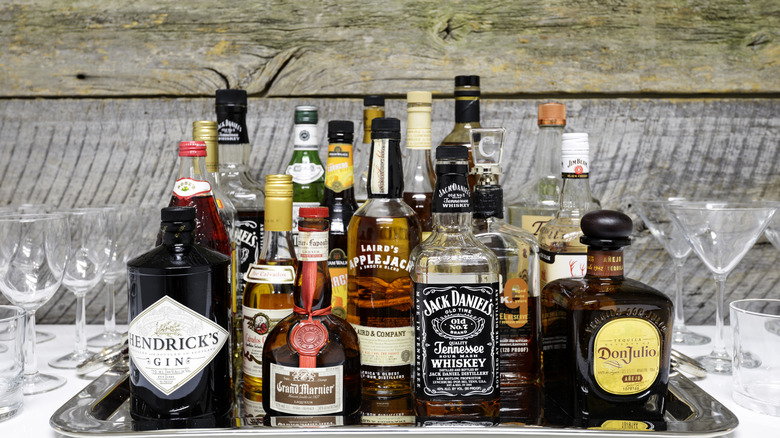
Kitchen storage is in hot demand. There are only so many cabinets, drawers, and spots on the counter for a seemingly infinite amount of tools, utensils, cookware, food items, beverages, and so on. So, it's understandable that we use whatever nooks and crannies we can. The problem is, not every niche is ideal for everything we slot into it. One of the most common (and worst) examples is alcohol in the cabinet above the stove.
That area often becomes a home bar cabinet because it's a bit out of the way. Higher up, we might think it's best for things we're not reaching for all the time, saving space in other cabinets for things we need to grab in the flow of meal prep. But the heat generated by your stove makes it a poor liquor cabinet. In the most urgent sense, this could pose a fire threat: If the heat of your stove ever got out of hand, that cabinet directly above it is filled with flammable liquids. Longer term, all that heat promises to negatively impact the condition, flavors, and even amounts of your spirits, wines, and liqueurs. You may know you shouldn't store wine on top of your fridge, either, as it's exposed to the heat generated by the refrigerator's cooling system, causing off-flavors. Those effects can be even more significant over the stove.
How heat impacts alcohol
Over time, exposure to heat will cause your spirits to evaporate. Ever wondered what "angel's share" means in whiskey? It's the whiskey that evaporates due to temperature changes during the aging process. You can expect to sacrifice some of your own booze if you keep it in a place that can get hot. Presumably, you don't want your spirits simply disappearing.
On a similar note, heat can cause liquids like whiskey to expand, so be aware of corked bottles. Expanding spirits can reach and damage those corks, leaving you with bits of cork in your spirit, as well as the negative flavors of oxidation as the degraded cork allows oxygen in. Heat can lead to these oxidative off-flavors like vinegar and wet cardboard. In wine, heat can turn the tannins unpleasantly astringent; in spirits, it can muddle the complex flavor and aroma nuances that made you like them to begin with.
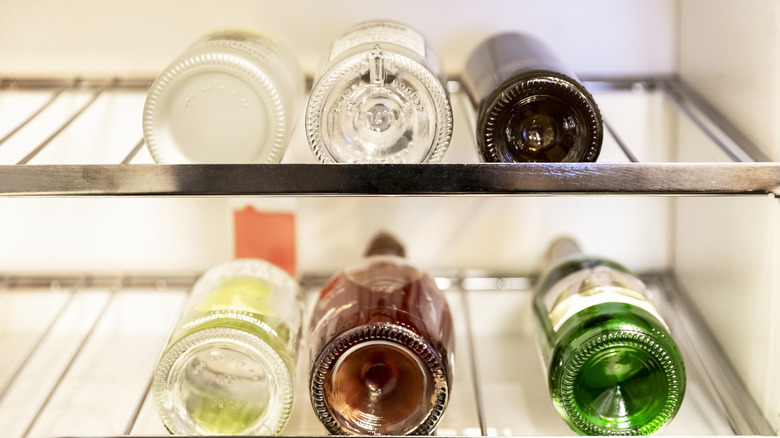
You can store distilled spirits for years and age wine with only positive results if you know how to keep them. This requires using that over-the-stove cabinet for something else and separating your alcohol. Some liquors belong in the fridge, like liqueurs and fortified wines. Wine thrives at cellar temperatures between 55-65 degrees Fahrenheit. The best way to store alcohol is a dry, cool place, so consider what storage swaps you can make in the kitchen, dining area, or living room.