

Blending Banana Peel And Vinegar Could Be The Garden Hack Worth Trying
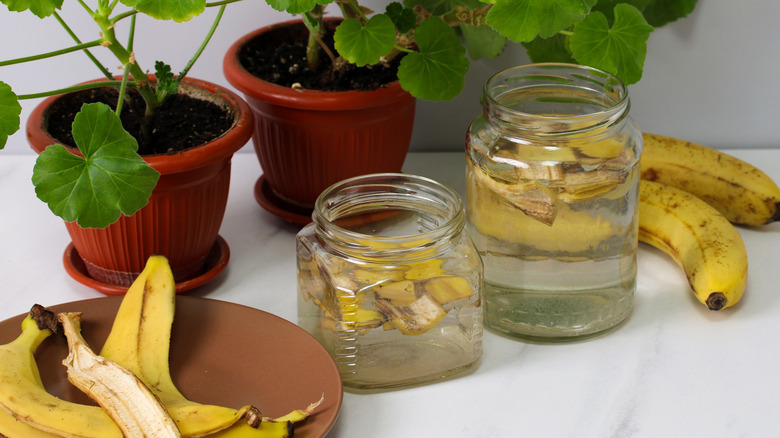
After spending cash on seeds, pots, and soil beds, shelling out for expensive garden fertilizers can really make your wallet weep. Whipping up DIY plant boosters instead is one of the top tips for growing a vegetable garden on a budget, and a recipe using banana peels and vinegar is one of the thriftiest, most sustainable solutions of all.
This idea sounds novel, but tons of gardeners have stopped throwing out banana peels and used them to grow vegetables at home. The skins are rich in nutrients that are beneficial for plant growth and found in commercial fertilizers, including calcium, magnesium, potassium, and phosphorus. White vinegar makes soil more acidic, which can help certain plants absorb nutrients faster, and is also proven to extract minerals like calcium out of organic material, making it the perfect way to break down banana peels.
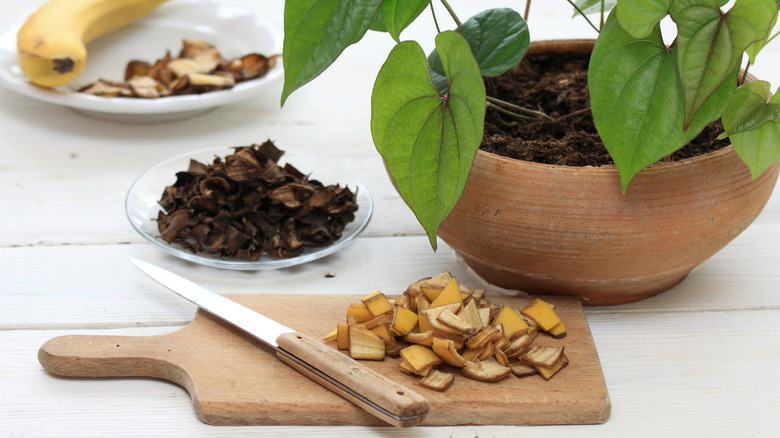
To try it, put a couple banana peels in a clean container and add enough white vinegar to cover them completely. Put the lid on and let the peels soak for two days. Alternatively, whirl the ingredients in a blender to skip the extraction step. The mixture will keep for a few days when stored in a cool, dark place. Dilute it with water and apply around the base of your plants weekly to give them a nice dose of nutrition. However, you have to be selective, as not all crops will benefit from this solution.
Possible pitfalls of banana peel and vinegar fertilizer
Some fruits, veggies, and flowers really don't agree with the mixture of vinegar and banana peels. Popular plants that do well in slightly acidic soil include tomatoes, potatoes, azaleas, bell or hot peppers, and roses. Plants that need neutral or alkaline soil include asparagus, lavender, beets, peas, onions, and lettuce. Keep your banana peel fertilizer away from these crops and test the pH of your soil regularly, no matter what you use on your plants. Soil with a pH level of seven is considered neutral, with any number below being acidic and above being alkaline.
On top of that, you might not want to use banana peels to fertilize your house plants as opposed to outdoor crops. The decomposing banana peels can attract bugs into your home, and the mix of old bananas and vinegar also doesn't smell great, which will be way more noticeable if you spray it inside your house.
As a final point, while all-natural fertilizers made of household items are economical — not to mention free of harsh chemicals and way gentler on the environment — they are never as effective as commercial products. There have been no scientific studies on the benefits of banana peel water for plants, and while some gardeners have seen good results, others report gnats and fungus growing in soil after trying it. You may want to test your homemade fertilizer on a hardy, low-risk plant before spreading it all over the garden.