

The Type Of Dish You Should Never Order At Seafood Restaurants
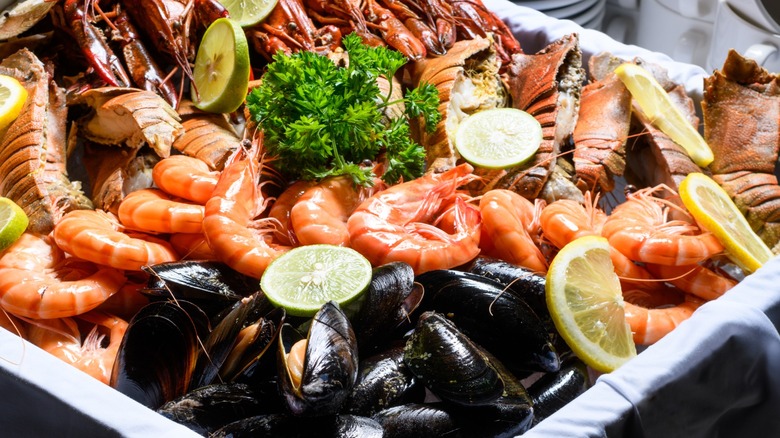
The American seafood industry has been riddled with issues for years. In 2019, an Oceana study revealed that seafood fraud was a widespread problem, with a third of all seafood mislabeled. Some fish, like red snapper, were mislabeled almost 90% of the time. In 2024, the FTC warned major seafood chain restaurants that selling imported fish as fresh, local seafood could result in penalties. Seafood continues to be mired in controversy, not even counting longstanding concerns about contamination. So when it comes to making smart seafood choices, you need to be cautious. For that reason, you may want to avoid seafood pasta at your favorite seafood place.
Both Gordon Ramsay and Anthony Bourdain spoke out over the years about fish specials at restaurants, and the same logic applies to pasta. Seafood pasta often makes use of less than fresh ingredients since restaurants frequently use them to sell leftover stock before it goes to waste. When it comes to fish dishes to avoid, the seafood pasta should top your list.
In many seafood pastas the kitchen is using leftover bits and scraps. If there was a scallop special the day before, your pasta may have whatever wasn't sold mixed in. That isn't inherently bad, and we're not suggesting you'll get poor-quality fish or unknown ingredients, but if it's a generic seafood pasta, there's a good chance you're getting the clean fridge special.
What's in a seafood pasta?
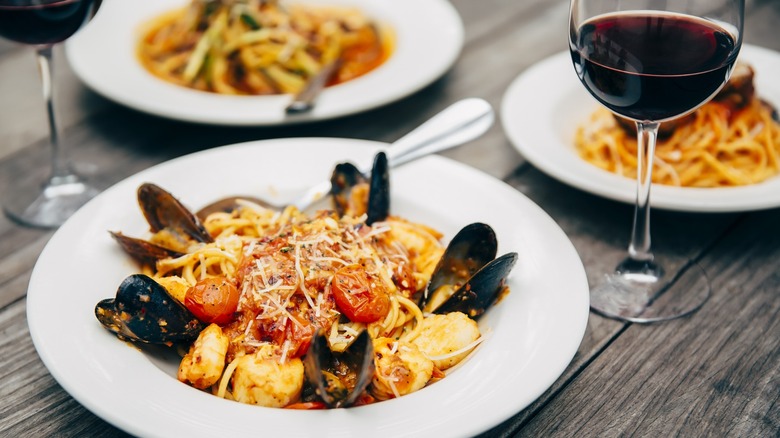
If the restaurant menu lists linguine with clams or buttery lobster spaghetti, you're being served a specific dish. That's a good thing because it's been planned and made with intention. But with a generic dish like "seafood pasta," there could include a dozen different types of seafood, depending on what is available. This also means the ingredients may vary from one serving to the next.
When in doubt, you can always ask for clarification. If it's a seafood special or a generic seafood pasta, you can ask exactly what's in it. You can also ask how fresh the seafood is. Some customers are hesitant to ask because it seems rude, implying that the restaurant serves seafood that isn't fresh. However, a restaurant that serves fresh fish is usually very happy to discuss not just how fresh the fish is but where it came from. Professional chefs will ask where fish comes from if the menu doesn't explicitly say so. The restaurant should be just as willing to provide details about seafood pasta as it would for bluefin tuna on the menu.
The world is full of high quality, delicious fish and seafood. Just because some people cut corners and offer inferior products doesn't mean everyone does. Because there are risks, you owe it to yourself to make sure you're getting fresh, quality products. If a restaurant can't confirm that their seafood pasta is fresh, avoid it.