

Celebrity Chefs Debunk These Common Restaurant Myths
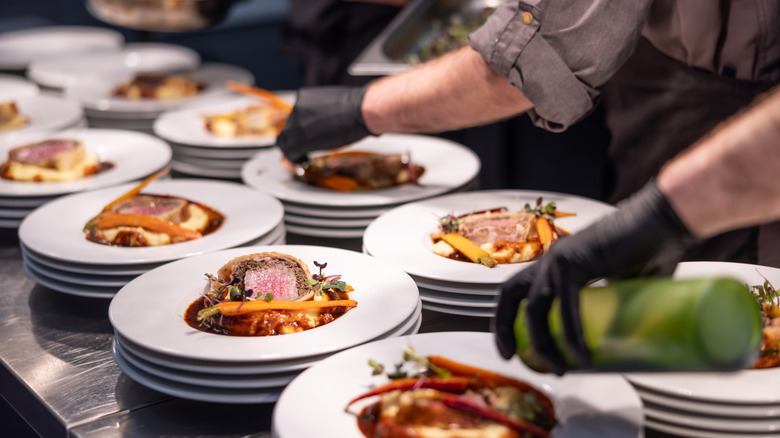
Dining in a restaurant is something most of us do on a regular basis, so it's easy to assume a lot about the industry after spending plenty of time in these environments. But the truth is, a lot happens behind the scenes in a restaurant that patrons are usually never privy to. I discovered what a few world-renowned chefs think about some common restaurant myths. These celebrity chefs gave me the inside scoop just in time for the upcoming Revelry Culinary Weekend 2025 in Las Vegas, Nevada, in which they'll all be participating. During Revelry Culinary Weekend, famous chefs come together to show off their skills at Wynn Las Vegas in a rare treat for food enthusiasts — get your tickets here.
In this exclusive interview, chefs Kyle Connaughton, Jeff Ramsey, Antonia Lofaso, JJ Johnson, and Sarah Thompson all chime in to debunk some widely-believed restaurant urban legends and set the record straight once and for all. If you've ever wondered what servers actually expect from their tables, how accurately movies and TV portray restaurant kitchens, or where staff really stand on tipping culture, you're not alone. Five celebrity chefs are here to pull back the curtain on an industry that's constantly in the spotlight yet still manages to keep much of its reality hidden.
It's only ever about the food

What's the first thing you think of when you think of your favorite restaurant? There's a good chance it's the food, but you might find your mind wandering to its intimate booths, soft lighting, or particularly friendly and accommodating staff before you even remember the delicious meals you always enjoy there. Chef Antonia Lofaso debunks the persistent misconception that a good restaurant is all about good food and nothing more. "Of course, the food has to be excellent — that's a given," she explains. "But a truly great restaurant is the sum of all its parts. From the moment a guest arrives, every detail matters: the cleanliness of the parking lot, the warmth of the host's welcome, the lighting, the music, the attentiveness of the staff, even the way employees acknowledge guests as they pass."
These details accumulate to make up the overall appeal and success of an eatery. Beyond this, Lofaso says the key to making a great restaurant includes things like comfortable seating, knowledgeable waitstaff, an attractive and easy-to-read menu, and elegant, well-presented cocktails. In some ways, the food is the finishing touch on top of a memorable restaurant experience.
The food that comes out of upscale kitchens is intricate and complex
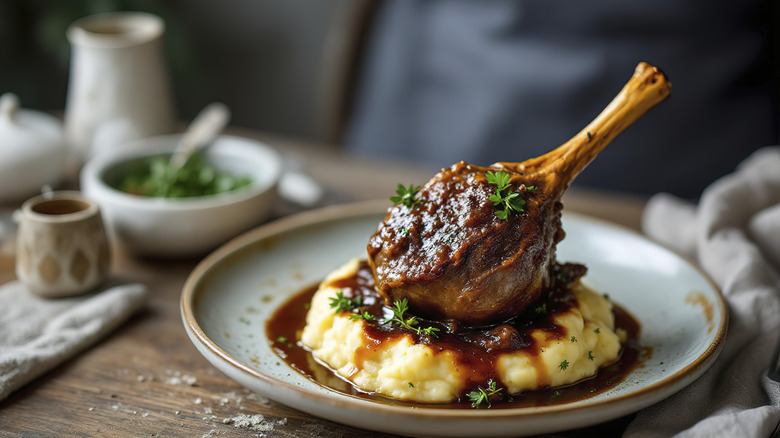
One of the most widely believed restaurant myths is that upscale restaurants with illustrious reputations serve food that would be impossible for a culinary layman to recreate in their own kitchen. The belief is that dishes from Michelin-rated restaurants are always exceptionally creative and elaborate. But Chef JJ Johnson disagrees. "The biggest myth is that the best food has to be complicated," he says. "People think we're using all these crazy secret techniques and ingredients you can't find at home. It's really about taking simple, fresh things and treating them with respect. A great dish, in a restaurant or at home, is about knowing how to make a few good ingredients truly shine."
A skilled chef knows that a dish is only as good as its ingredients. Sure, complex cooking methods that only highly-skilled culinary professionals have mastered can make a dish excellent, but at the core of that meal is fresh food. Finding premium ingredients comes from maintaining longstanding partnerships with farmers who raise delicious produce with respect for the plant or animal and the environment from which it came. Diners are more likely to notice the flashy techniques or expert preparation, so they often think that's what makes a meal great. They're less likely to see the care and expertise that happens before the ingredients even reach the kitchen.
Media portrayals are always accurate
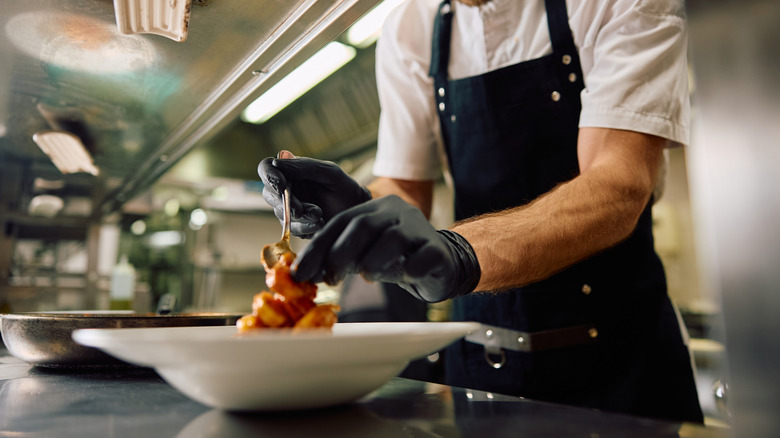
The popularity of the television show "The Bear" and films like "Boiling Point" and "The Menu" proves that TV shows and films set in restaurants are more in demand than ever. In recent years, media portrayals of restaurant kitchens have painted a picture of what it's like to be thrust into the belly of the beast, offering a glimpse into a harsh, fast-paced environment, complete with plenty of screaming, interpersonal drama, and throwing things. But the truth is, cooking in a restaurant is often far from the cutthroat, nightmarish experience portrayed on screen.
Chef Sarah Thompson remarks on the misconception that restaurant kitchens are always stressful work environments: "In recent years, leadership has evolved to be more empathetic, inclusive, and focused on mentorship," she explains. "Kitchens are built on mutual respect, communication, and teamwork, and when a diverse group of industry leaders comes together with a shared goal, it results in a memorable dining experience."
Chef Kyle Connaughton also weighs in on his experience with this prevalent myth. "If professional kitchens were actually [chaotic and loud], we wouldn't be able to produce all of the beautiful dishes that require a lot of coordination and teamwork to execute. In reality, things are generally very calm, pre-organized, pre-planned, and practiced." He goes on to explain the difference between a real-life and TV kitchen. "TV often portrays cooking as this sort of perpetual competition, which is very far away from what we actually do in the restaurant world — it really isn't competitive at all, but is in fact about taking care of guests."
The restaurant industry loves tipping culture
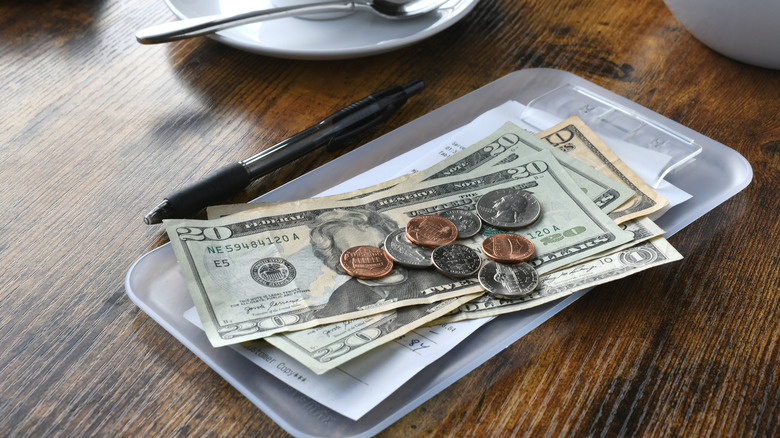
Few industries in America revolve so heavily around tips. Tipping is a practice with a long and controversial history, and bringing it up in a discussion often sparks a contentious debate. Nowadays, diners are expected to tip about 20% when dining out, assuming the service they received was adequate. Tipping — especially at a fancy restaurant — is objectively complicated and sometimes a bit stressful for diners, and it isn't always easy to navigate for restaurant staff, either. The common misconception is that all front-of-house staff prefer tipping culture because they can make more money, but that isn't always the case.
Tipping culture usually leads to unfair pay across different positions, which can affect the restaurant's regular operations. "One of the things in restaurants [...] that we really struggle with is making sure that there's equity across all positions," says Chef Kyle Connaughton. "Because gratuities can be so high, oftentimes it can be difficult to find people who want to move into management roles, because that shift away from getting tips every night to becoming a salaried manager doesn't necessarily mean that you're going to be making more money. Sometimes the promotion can just be an opportunity for a more regular schedule, or growth, or a learning opportunity."
Connaughton further explains that tipping only persists because diners are still willing to do so, but the industry will change if tipping ever falls out of favor with guests. He says that tipping may not be what's best for restaurant employees, and that as a culture, we need to decide if we want it to continue or not.
Eating with your hands at a restaurant is always frowned upon
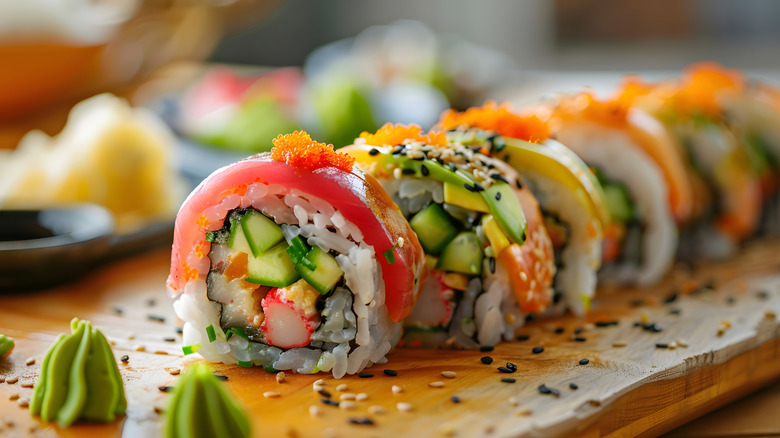
This common myth centers around the physical act of eating at a restaurant, and not the behind-the-scenes operations. Most of us understand that dining at an upscale eatery usually involves greater attention to politeness and (sometimes unspoken) etiquette rules. But, in certain cases, we abstain from doing something out of fear of offending, when it's really perfectly acceptable or even preferable.
When it comes to international cuisine — especially Japanese — there's a laundry list of persistent etiquette-related myths that are just blatantly untrue. Rumors abound in the U.S. when it comes to cuisine that's very different from our own traditional fare, especially with something as distinct and elegant as sushi.
Sushi Chef Jeff Ramsey aims to put one common myth to bed. He explains that he actually encourages guests to eat sushi with their hands at his restaurant. "It is common and a natural instinct to use chopsticks when consuming sushi," he says. "However, fish and rice tend to be very delicate, so using your bare fingers is often preferred in most sushi restaurants in Japan. We encourage our guests to use their hands when dining at the sushi bar at Mizumi at Wynn Las Vegas as a way to truly immerse themselves in the Japanese culture and spirit."
There's a best time — either of the day or week — to visit a restaurant
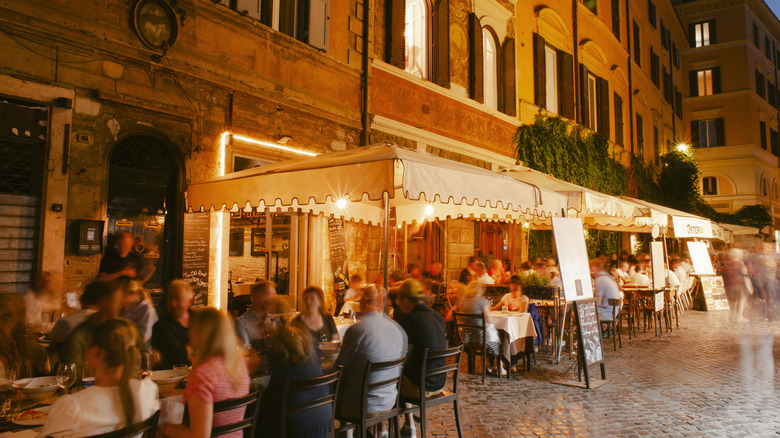
This myth isn't quite as common as the others on our list, but it's one that I've heard restaurant patrons vehemently declare. Some people who are fans of dining out insist that there's a certain time of day or a day of the week when the food at a restaurant is better. They sometimes even stand by the notion that the service is better on certain days or claim a restaurant is cleaner and more comfortable at a specific time of day. I've often heard that it's better to visit a restaurant earlier in the evening and avoid stopping by on a Monday or during weekend day times, but the truth is that a good restaurant will rarely be so inconsistent.
Chef Kyle Connaughton wants to debunk this myth. He says: "Restaurants are actually very consistent, and oftentimes going earlier in the week, including Monday, is one of the best times to catch a restaurant at its best. In reality, you should be having the same experience at any time, no matter what day you go or what time you book."
If a restaurant has a good reputation, everyone will enjoy it
Your favorite expensive, high-end outfit is likely cozy and flattering on you, but that doesn't mean it will look and feel great on anyone just because it comes from a luxury brand. A good restaurant is just the same. An overwhelmingly positive reputation is often indicative of a good restaurant, but that doesn't mean everyone who eats there will enjoy the food or the atmosphere. There's a vast world of different restaurant styles to choose from in just about every U.S. city and state, and the restaurant experience is far from one-size-fits-all.
Chef Kyle Connaughton reminds restaurant patrons not to settle for an eatery based solely on reviews. "I would say that simply choosing a restaurant based on ratings and accolades alone, rather than doing your own research and finding the types of restaurants, cuisines, and ethos that really speak to you, is something I would consider bad advice," he explains. "There's so much variety out there now and not everything is to everybody's unique taste, so having a wonderful dining experience is really about finding what types of experiences you think you would enjoy, and what might challenge you to learn (and try) something new."
Revelry Culinary Weekend will take place from September 19th through 27th, 2025, at the Wynn Las Vegas luxury resort. The event will feature dozens of world-famous chefs demonstrating their expertise for food lovers in the iconic and exhilarating atmosphere of culinary mecca Las Vegas, Nevada. Tickets are available here.