

15 Things To Know About Sicilian Wine
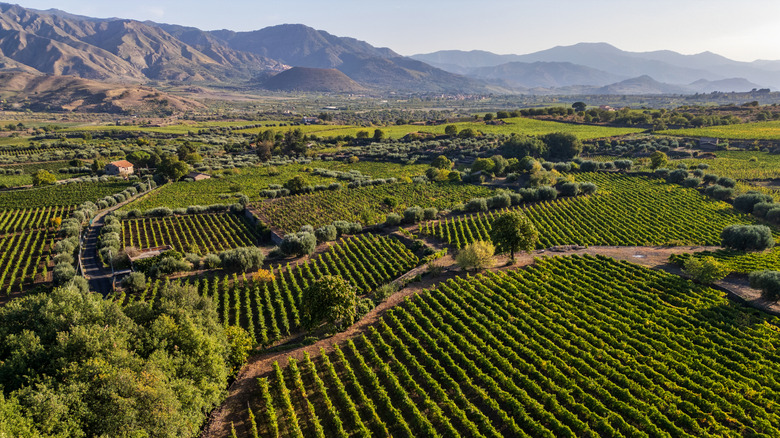
It's easy to think of Italian wine as a single category, but the various regions are highly distinct, showcasing their own varieties, wine styles, and traditions. Though the boot of Italy is its most prominent landmass, the nation's islands also have plenty to offer. With striking natural landscapes, an idyllic climate, and a long-winded history, Sicily is a prime place for vineyards to flourish. And that, they have.
Although Sicily is one of Italy's 20 regions, its proximity to northern Africa has infused it with cultural influences that make it one of a kind — Sicilians are sure to remind visitors of that fact. The local wine industry has paved a path separate from the mainland regions, complete with methods, indigenous grape varieties, and regional styles.
To understand what makes Sicilian wine so intriguing for oenophiles, we're going to dive into the many nuances of the iconic region. Whether you've dipped your toes in the Sicilian wine landscape or are looking for a new region to explore, you won't be disappointed. With an extensive history and wide range of grape varieties you've likely never heard of, there's plenty to discover.
Its history goes far back
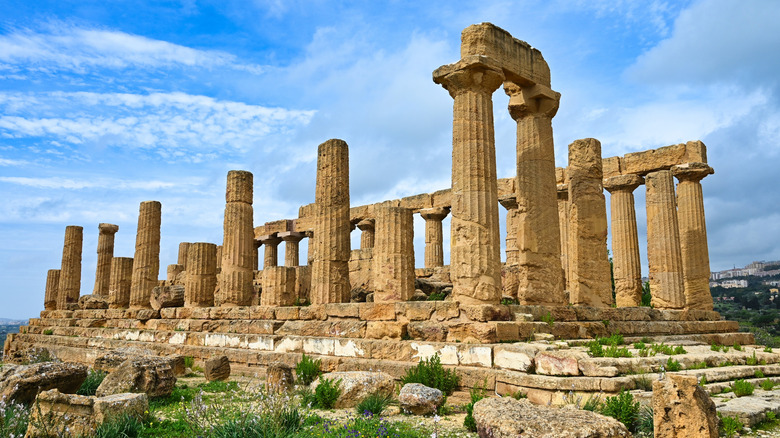
With its prized location in the Mediterranean, Sicily has been at the intersection of numerous groups for millennia. Many of them discovered the island's suitability for grape growing and planted vineyards, establishing the foundations of the local viticulture. According to some estimates, evidence of winemaking on Sicily dates back 6,000 years. It might be increasingly on the radar for oenophiles nowadays, but there's nothing new about Sicilian wine.
From the Phoenicians to the Greeks and Romans, wine was continuously produced in Sicily. These wide-ranging influences meant numerous advances were made locally, as different groups brought in their know-how. For several hundred years, the island was ruled by invading forces, adding to its broad cultural reach. In the 1700s, the British helped catapult Marsala wine to popularity, bringing it to the level of other fortified wines like port and sherry. Sicily's story continues to develop, as attention to quality and an island identity are being carved out.
Original winemaking methods were unique
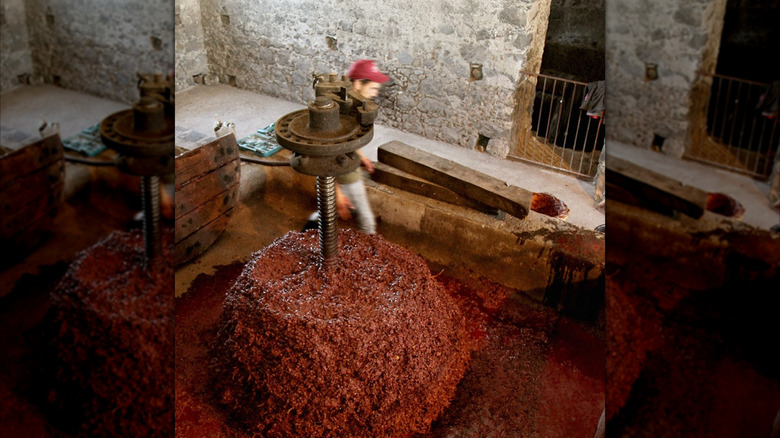
In some parts of the world, the general methods of winemaking have remained largely unchanged over the centuries. Sicily saw quite a shift from earlier techniques that existed on the island to the current methods that became prominent midway through the 20th century. Namely, instead of using steel tanks or oak barrels to ferment wine, a tank carved out of stone (often from lava), brick, or concrete was used. Known as a palmento, these large tanks typically took up the area of a room and were commonly located on rural land.
More developed versions consisted of an upper tank used as a receptacle for grapes, which were often crushed by foot, though eventually a press mechanism was also employed. Then, the juice would flow through a hole via gravity and funnel its way into a lower tank, where fermentation could begin. Finally, the wine would flow further until it was channeled into large chestnut oak barrels to mature. The absence of pumps and mechanical presses helped preserve the fruit, allowing its natural complexity to be retained. At present, some wineries have even found ways to modify traditional palmentos to use them for winemaking.
Sicily covers the largest area of Italy's wine regions
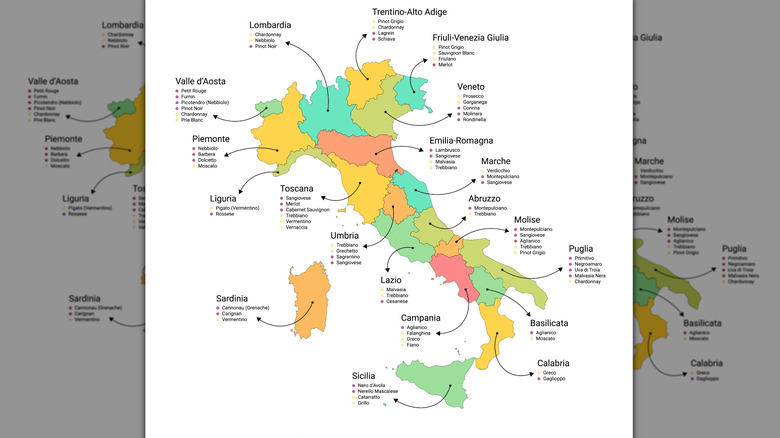
Italy is composed of 20 main wine regions across its landmass, and Sicily is the southernmost and largest, covering more vineyard area than the other wine regions. Of the 700,000 or so hectares countrywide, Sicily encompasses around 100,000. However, since vineyards have been better managed and production quality improved, the grape yields are more modest, and Sicily lags behind a few other high-volume producers.
Although the island of Sicily contains a large area of vineyards, it produces less than half the volume of wine as Veneto and Puglia, which have a similar acreage of vines. For most other crops it would seem optimal to have a greater amount of product for an area of land, but this isn't always the case for vines. For Sicily, a reduction in yields delineates an increase in attention paid to vineyard management, leading to healthier fruit and improved wine production over the years.
The terroir is optimal for grapes
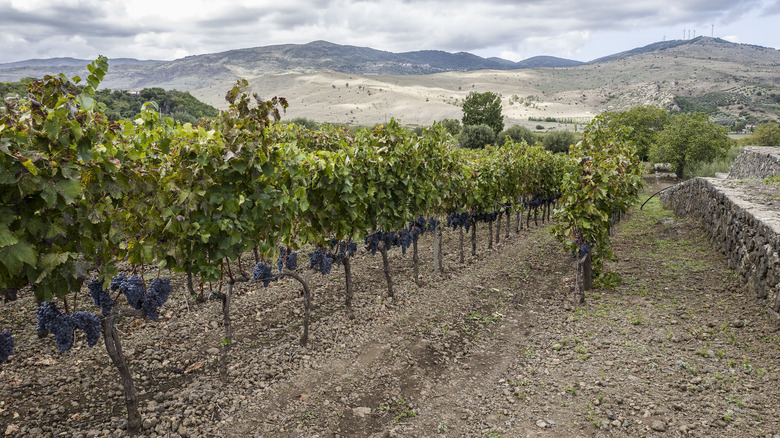
The Mediterranean climate that makes Sicily an excellent vacation destination also makes it a great environment for growing wine grapes. Namely, there's plenty of sunshine and heat for the fruit to ripen fully. The island also experiences minimal rainfall and beneficial winds. Vines can do well without large volumes of precipitation, growing deeper roots instead. However, not all areas of the island lack rainfall.
Sicily is influenced by the presence of the Scirocco and Maestrale winds, which have an important impact on fruit ripening due to the humidity and rainfall they bring. Case in point, the east hillside of Mount Etna has around double the rainfall average of the rest of the island. Similarly, northern areas also experience more rainfall. On the other hand, warmer winds from Africa bring additional heat to ripen the grapes in the south, which affects the styles of wines produced.
Meanwhile, limestone soils are prominent on the island and reflect the sun due to their light color, which prevents overheating. Limestone also contributes to fresh and elegant styles of wine. Other areas, like Etna, feature volcanic soils, which are far darker and packed with minerals, leading to wines with more structure, tannins, and bold aromas. Sandy soils are present in coastal regions of the island, adding another layer of dimension and a delicate nature to the wines.
Variations in elevation have a huge impact
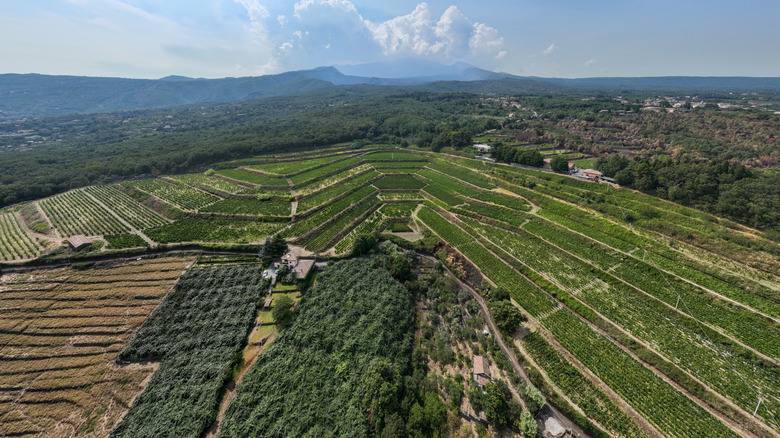
Another important element of Sicily's climate is its varied elevation. There are several mountain ranges across the island, which have their own effect on temperature. As elevations increase, temperatures decrease, which creates a greater difference between the daytime and nighttime temperatures, also known as the diurnal range. A larger diurnal range is advantageous for vineyards because the fruit can ripen fully during the daytime. As temperatures cool down at night, the grapes retain their freshness and acidity.
On a sensory level, this results in a fresher palate, more pronounced aromatic character, more acidity, and lower alcohol levels. Thanks to the diurnal range, even when temperatures soar during the daytime, the fruit can still maintain adequate characteristics for successful wine production. This quality is emblematic of many styles of Sicilian wine, and most of the indigenous grape varieties thrive in these conditions.
About one-third of vineyards are farmed organically
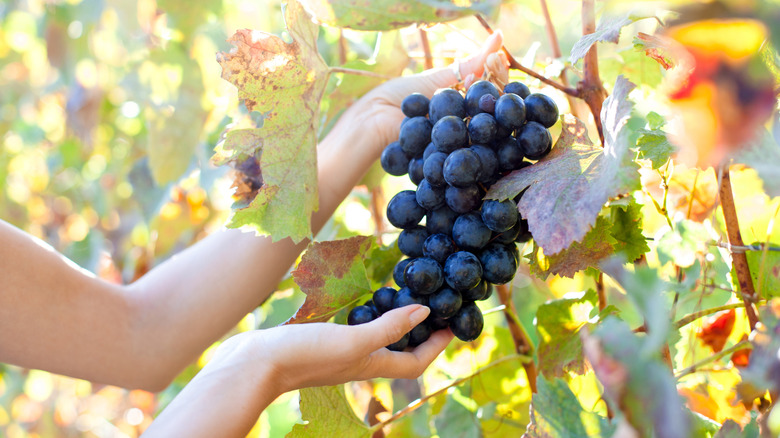
In Sicily, the dry weather, winds, and sunshine make organic farming entirely feasible. Thanks to the island's natural climatic benefits, winemakers can use sustainable agricultural methods with great success. This isn't only the case on an individual level, as the Sicilian DOC, the regulating body, is highly committed to producing sustainable wines that highlight the island's qualities.
The island's producers and consortium developed a protocol for sustainability and created SOStain Sicily Foundation in 2020. The group aims to minimize the environmental impacts of agriculture on the ecosystem to ensure its long-term viability, with benefits for both the land and the community. Over 40 wineries are members of the foundation and work together to address the effects of the industry. Currently, more than 30% of the island's vineyards are farmed organically, a clear sign that producers are invested in the longevity of the land. This mindset highlights Sicily's progressive outlook, as well as its eagerness to showcase the terroir to its fullest.
There are major regional distinctions
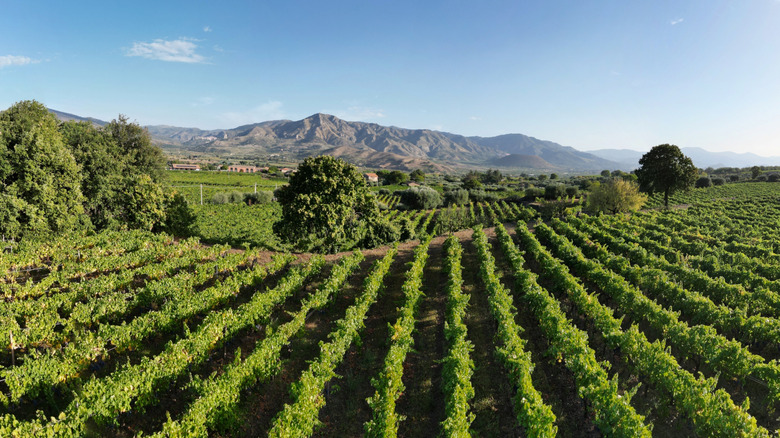
Sicily is roughly the size of Massachusetts, with large variations in terrain. One way to distinguish between the different geographies is to separate the island into three valleys: west, southeast, and northeast. The Western area experiences a lot of heat along the coast; moving inland the terrain joins with mountains, where cooler climates are experienced at elevation. In the Southeast, warm winds and plenty of sunlight help the fruit ripen fully, producing rich red wines. Finally, the Northeast is home to Mount Etna, which boasts a unique landscape and terroir.
Aside from the diversity of soils distinct to each region, with limestone, sand, and mineral-rich volcanic earth, the variations in landscape mean a range of elevations. Along with having a significant impact on the styles of wine produced, these variations lend themselves better to certain grapes over others, ultimately resulting in specific varieties being more prominent in certain parts of the island.
There are two dozen designated appellations
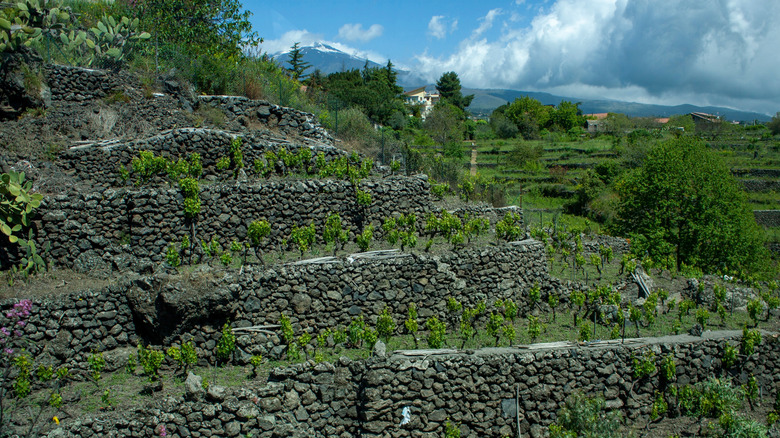
To accurately describe and categorize the various regions of the island, Sicilian wine regions are classified into a DOCG and DOCs. These represent different levels of quality and control levels, which are regulated by national laws and consortiums. Depending on the classification, restrictions regarding grape varieties, agricultural and winemaking methods, and wine styles are outlined.
The broader overarching classification is Sicilia DOC, which covers the entire island. This permits a multitude of grape varieties, offering a taste of both tradition and novel blends. Next, the Etna DOC encompasses the vineyard areas around Mount Etna, and can be broken down into over 140 contradas, small subzones that are selected due to their distinct characteristics.
The Marsala DOC is also of note, and the region where the famous fortified wine is produced. The west and south vineyard areas of Sicily are also home to multiple DOCs, highlighting the island's diversity. Cerasuolo di Vittoria is Sicily's only DOCG, the highest quality level of wine classification, for its red wines made with two indigenous grapes.
Mt. Etna plays a significant role in the microclimate and soil
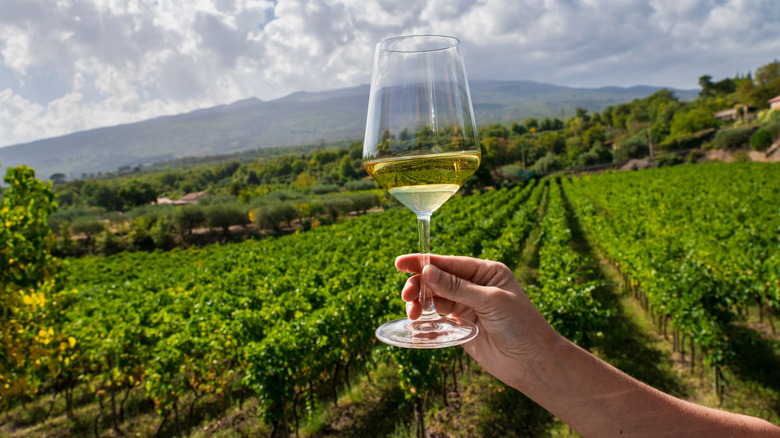
The domineering land mass of Mount Etna (it reaches almost 11,000 feet) impacts both daily happenings and agricultural tradition on the northeastern coast of Sicily. With each eruption, the landscape is in a continuous state of fluctuation. Aside from being a visual symbol of the region, the volcano also influences the surrounding microclimates and soils, which vary with elevation along the slopes. It's no surprise that the vineyard region is subdivided into over 140 contradas. From afar, it might seem like overkill, but for the winemakers on Etna, each distinction is necessary.
To capture the spirit of viticulture here, we spoke with Sicilian winemaker Angelo Di Grazia, who produces wines for his private label as well as for Tornatore Wine. "Mt. Etna is such a unique terroir that it is difficult to compare it to other Sicilian wine regions," he notes, describing it as "an island within the island." He points to the soil as being at the heart of the unique character. "The mineral content of the volcanic soil certainly plays a fundamental role, giving the wines complexity, longevity and elegance," Di Grazia explains. In particular, minerals like magnesium, copper, phosphorus, and iron add dimension, which in turn affects the vines.
Most grape varieties are indigenous
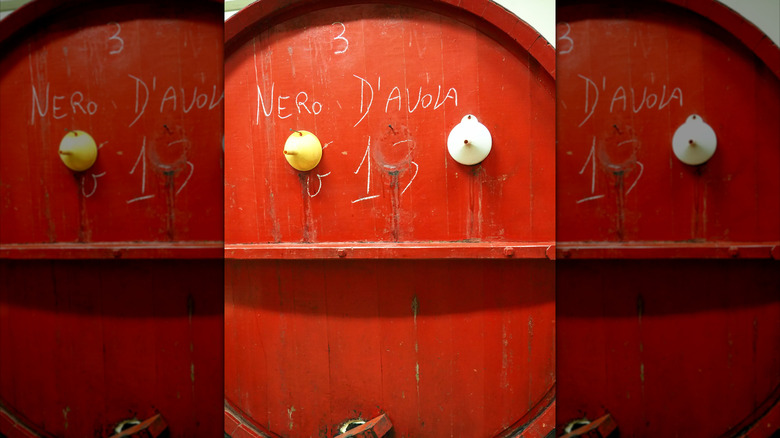
Part of Sicily's allure for amateurs and wine connoisseurs alike is its abundance of indigenous grape varieties. Numerous are found nearly exclusively on the island, making the resulting wines a true expression of the Sicilian terroir. Around 70 indigenous grape varieties grow on the island, though only a fraction are commonly vinified.
The most planted red grape is Nero d'Avola, which showcases various styles, ranging from light and fruity to more structured and bold. Meanwhile, Nerello Mascalese is the primary grape grown in the Etna DOC, and continues to gain fandom for its elegant character. Nerello Cappuccio is often blended with the former to add depth. Frappato is another prominent red grape, typically produced in a light and juicy style. Finally, of the more prevalent red varieties, Perricone is often used as a blending grape, adding tannin and color to wines.
Sicily grows several white grape varieties too, notably the ones used to make Marsala. Cataratto covers a third of white grape vineyards, and is used for both fortified wine and table wines. Grillo and Inzolia are also used to produce Marsala and white wine. Meanwhile, carricante is a popular variety on Etna, and others like grecanico and zibbibo have histories that date far back. The island also grows international varieties, like chardonnay, syrah, and grenache, but it's well worth discovering the local ones first.
There are still some pre-phylloxera vines
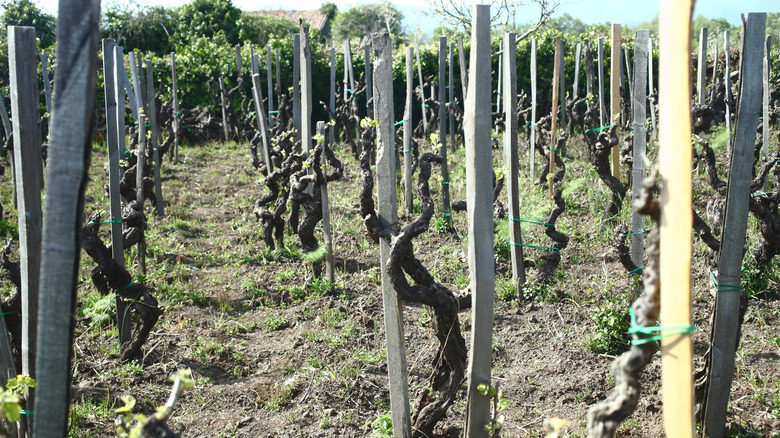
In the second half of the 1800s, a pest called phylloxera decimated vineyards in Europe. To protect against the pest, vines had to be grafted on North American rootstocks, which were resistant to phylloxera. Significantly, the insect couldn't survive and propagate in sandy soils, sparing some European vineyards, including those around Mount Etna, with its sandy ash soils. Consequently, in areas that weren't devastated by the pest, the original vines continue to grow.
Angelo Di Grazia highlights the importance of these historic vines, describing, "The pre-phylloxera vineyards are a library of our winemaking heritage. They must be preserved and cared for." With their innate connection to the land, these vines benefit from extremely deep roots, which allow them to thrive with very little irrigation. "Over the years, a pre-phylloxera vineyard has achieved a balanced vegetative and productive life that produces uniquely qualitative grapes, and this exceptional quality is directly linked to the wine, which achieves unparalleled levels of finesse," Di Grazia concludes.
There's a wide variety of wine styles
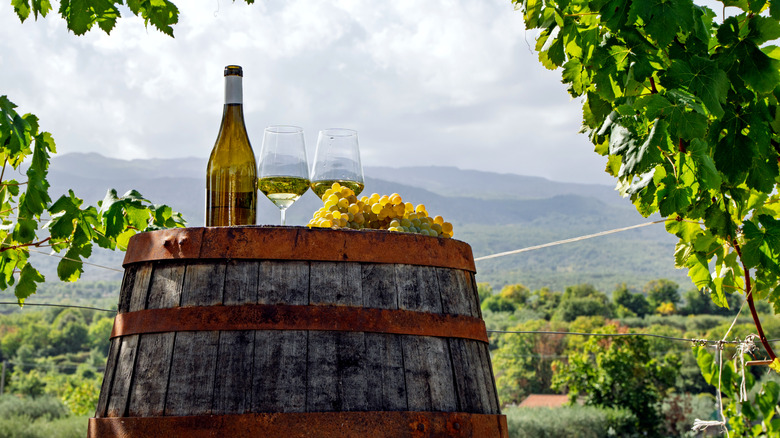
Some wine regions are specifically known for one style of wine, but in Sicily, you can find a bit of everything. Depending on the region of production, the red wines range from light and juicy styles to bolder, more full-bodied wines with a tannic structure. Tasting notes run the gamut, spanning floral, red and dark fruits, spices, earth, and mineral aromas. White wine lovers can savor crisper styles, with notes of citrus, stone fruit, sea salt, and crushed rocks, or wines that trend more complex with a fuller body, displaying floral, nutty, and herbaceous notes. Rosé wines featuring indigenous red grape varieties are common too, offering a refreshing take.
Sicily is increasingly becoming a source of excellent sparkling wine. Typically made in the traditional method, these bubbly wines highlight the island's diversity. And of course, wine lovers can't skip Marsala, the island's iconic fortified wine, vinified dry, semi-sweet, or sweet. Commonly used in cooking, Marsala comes in various quality levels and is certainly worthy beyond the kitchen. It typically features rich flavors, with notes of dried fruit, vanilla, brown sugar, and nuts.
The local wine industry is seeing a renaissance
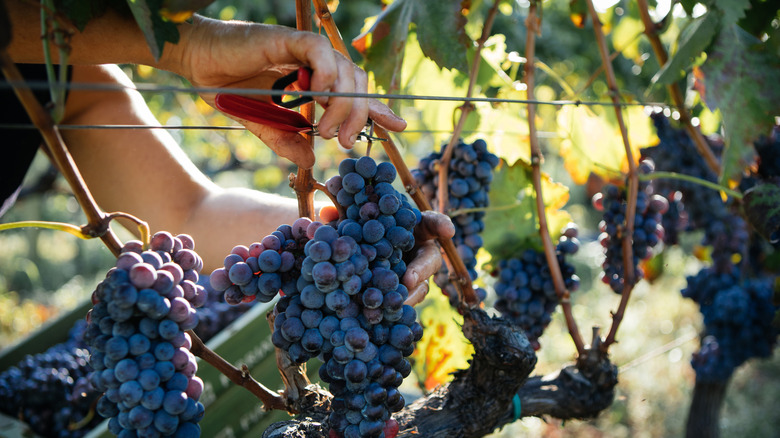
With its prized Mediterranean climate and hours of sunlight, Sicily was once the source of large volumes of grape production. In the '80s, the island produced bulk wine that was shipped to other countries, and only a small percentage remained for local consumption. By the end of the '90s, this outlook started to shift, and a few Sicilian winemakers founded Assovini Sicilia, an association aimed at producing quality wines rather than high quantities.
A dozen or so years later, the Sicilia DOC was declared, and producing quality wine with a sense of place became the target. Less optimal vineyards were eliminated, prioritizing those with better soils and orientations. Instead of trying to please international buyers with common grape varieties, indigenous ones were replanted. Aside from being ideally suited for the island climate, continuing to farm these varieties is essential to prevent their extinction.
"In general, we are adapting to the current events that are most affecting the world of wine, namely climate change and consumers' changing approach to wine," Angelo Di Grazia explains and details, "Therefore, new agronomic practices are being implemented in the vineyards to lower alcohol content in favor of acidity, all without, of course, distorting the identity of the terroir." To top it off, the recently established SOStain Foundation has brought sustainability to the forefront of Sicilian winemakers' agenda, a far cry from the island's past bulk wine identity.
Top producers are boosting the island's reputation internationally
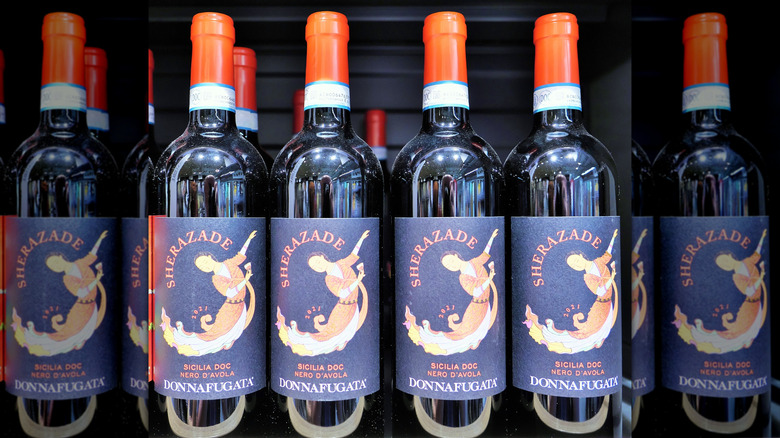
Once Sicilian wine moved away from being all about bulk production and toward a sense of identity and island terroir, international consumers began to take an interest. With over 350 wineries under the Sicilia DOC, there's no shortage of producers for wine drinkers to try. Over the years, certain influential wineries have steered the direction of international growth, promoting Sicily as the source of exceptional wines. Angelo Di Grazia believes the success comes down to the island's unique character. "It's diverse, rich, and full of contrasts," he says and notes, "The wines reflect all this, with a special ingredient: each producer's passion for showcasing their own terroir."
For example, Planeta piqued consumer interest and highlighted the level of quality found on the island by releasing a series of high-end wines made with international varieties. Others, like Donnafugata, Tasca D'Almerita, Benanti, Tenuta delle Terre Nere, and Palmento Costanzo, are responsible for enhancing Sicily's visibility on an international scale. Family-run wineries are prevalent too, like Tornatore Wines, which holds the largest continuous vineyard area on the northern slopes of Etna, showcasing the volcanic terroir with its lineup of single-vineyard wines. Meanwhile, cult natural winemakers like Frank Cornelissen, COS, and Arianna Occhipinti are the source of plenty of buzz.
It's a great match for the local cuisine
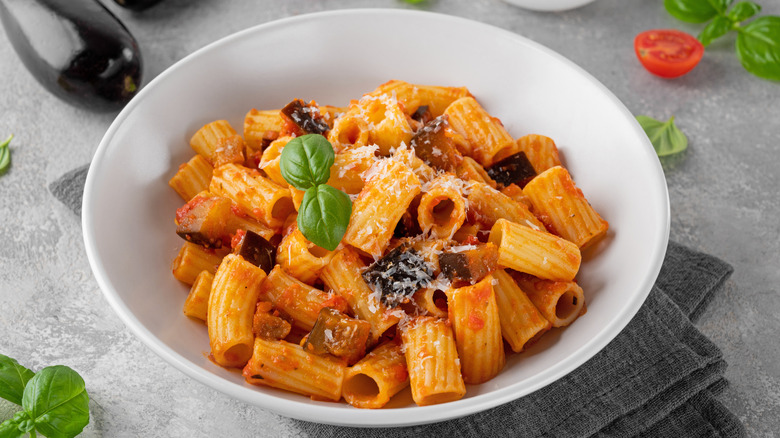
True to the saying that what grows together goes together, Sicilian wines pair seamlessly with the island's foods. The local food is connected to the natural environment and cultural ties, which include North African, Greek, Roman, and Spanish influences. Ingredients like eggplants, tomatoes, capers, olives, and citrus fruits grow abundantly, as do pistachios, almonds, and wheat. The ample coastline means there's plenty of seafood on the menu too, and recipes don't shy away from meat either.
Ranging from crisp and vibrant white wines to more aromatic styles, these pair wonderfully with the local seafood and nutty sauces. The red wines bring both levity and structure to the palate, working equally well with a grilled swordfish steak as with a hearty meat ragu. And of course, the complex flavors of Marsala wine can be a surprising accompaniment for a main or a sweet finale to a satisfying meal.