

Here's How Long A Homemade Dry Rub Is Good For
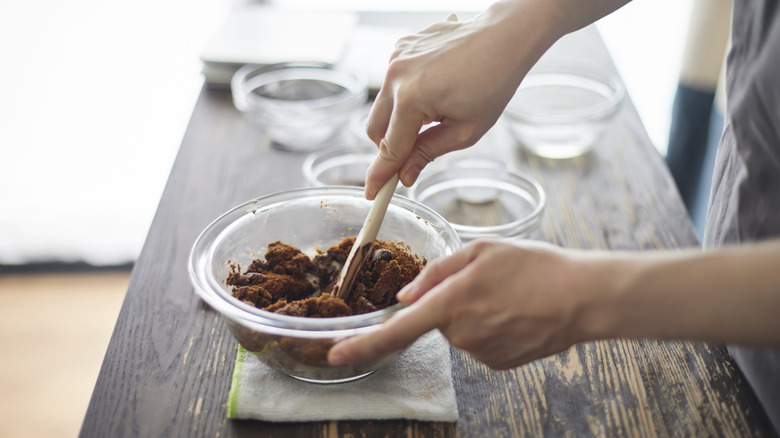
We may receive a commission on purchases made from links.
Adding a dry rub to your roast or barbecue meats is the quickest way to infuse it with flavor, as well as helping to create a tasty crust. Although we have some favorite store-bought rubs, making your own is not only easy, but also allows you to add all your favorite flavors. When you manage to tweak the recipe to your liking, it makes sense to put together a big batch to have on hand for whenever it's needed. But how long will your homemade dry rub last?
It depends a little exactly what you put into it, but a dry rub made from ground spices should last up to a year when stored correctly. Spices don't tend to go bad in the traditional sense but do lose their flavor over time. However, if you do see any signs of mold or an unpleasant smell, it's a sign that something in the mix has spoiled and needs to be thrown out. If your dry rub is clumpy, it's not necessarily stale, just a sign it has absorbed moisture. If you can break up the clumps easily and there's no sign of mold, then it's still fine to add to your meat.
Tips to make your dry rub last longer
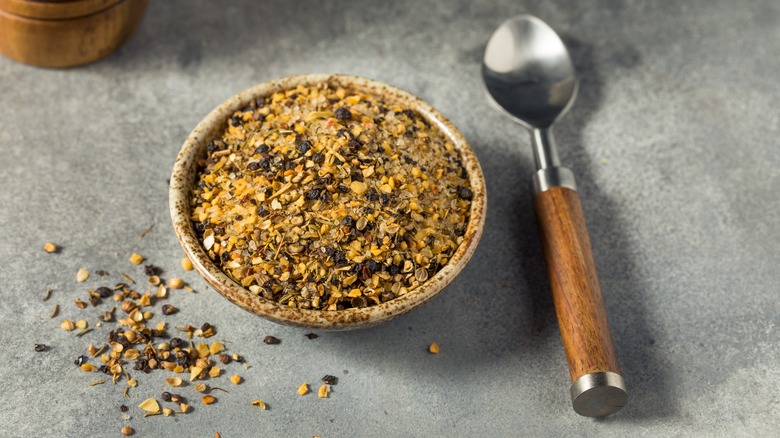
The key to extending the life of homemade dry rub is first about using freshly ground spices. If you're using a jar of cumin powder that's already spent six months in your pantry, your dry rub is already halfway to going stale. The best-case scenario is to buy whole spices, which have a longer shelf life, and grind them yourself. Otherwise, consider buying new packages of spices for your batch preparation and look for those with the longest expiry date.
The same storage tips for spices also apply to a dry rub — it needs to be stored away from oxygen, moisture, heat and sunlight. Any moisture can increase clumping but also provide an environment for mold to grow. Oxygen, heat and UV rays will speed up the degradation of the spices, meaning they'll lose their flavor more quickly. The best way to store dry rub is a jar with a good airtight seal in the pantry — not on the countertop or above the stove.
Some ingredients are more prone to hardening or clumping, brown sugar and onion or garlic powder in particular. Food-safe silica packets will help prevent clumping with most spices, but will actually have the opposite effect on brown sugar. In this case, consider checking your dry rub regularly and breaking up any lumps that form.