

10 Dead Giveaways That You're A Fine-Dining First Timer
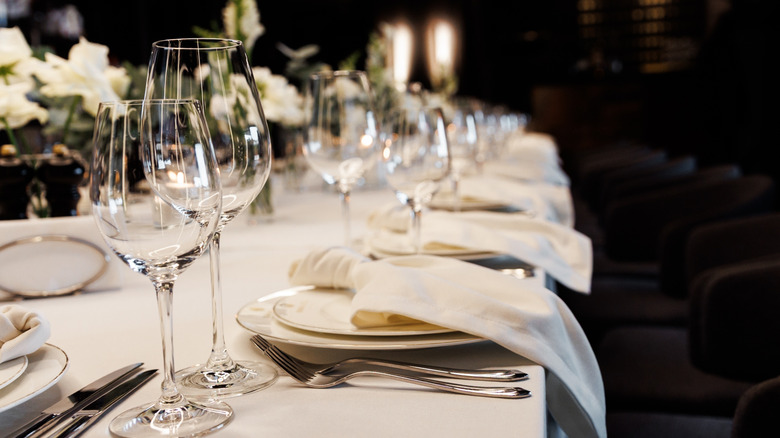
There is more to the fine-dining experience than just being able to write a fat check for a one-time meal. Even if you can afford the elevated prices, there are certain social graces that need to be mastered so that you feel like you fit in with the rest of the swish set.
For starters, it helps to know that some questions are immediate red flags to servers, from asking for the cheapest item on the menu to requesting off-menu additions. And it doesn't end there, either. From what you are wearing when you arrive at the restaurant to the finer nuances of where your napkin is placed during the meal, the smallest actions can serve as telltale signs that you are a fine dining first-timer.
So, how do you navigate all the silent expectations that nobody is spelling out loud but that other people already seem to know? With a little help from Mariah Grumet Humbert, of course. As an etiquette expert, author, and founder of Old Soul Etiquette, Grumet Humbert lends her insights about the subtle giveaways that you are new to the fine-dining experience. Whether you're handling the tricky situation of running late for your reservation or you need a crash course on how to use the cutlery, her expert advice will see you through.
Not understanding the dress code
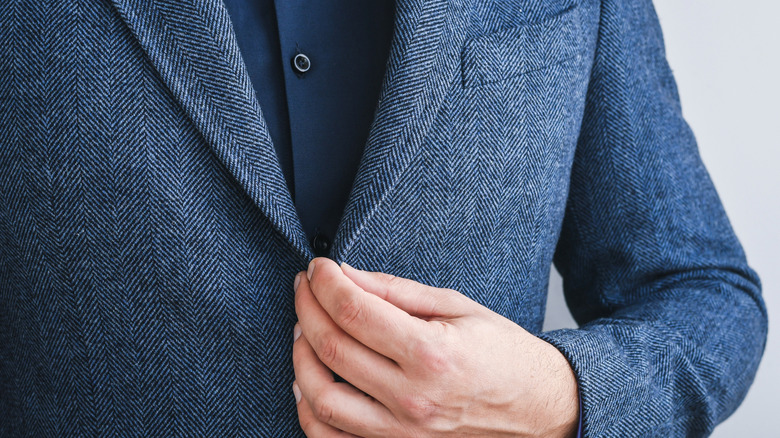
If you are looking to fit in with the seasoned diners, you'll need to ensure that your attire is aligned with the expected dress code. Understanding the finer nuances of what a business casual dress code means — polished polo shirts and pants, rather than ripped jeans and scuffed sneakers — is the first litmus test on whether you truly belong there.
But why do fine-dining restaurants have a dress code in the first place? The concept of fine dining has evolved from the dining rituals and traditions of the aristocracy. While many modern establishments have relaxed the rigidity of these rules, following the dress code is a means of showing respect to the chef and the ambiance he wishes to create in his dining room. You wouldn't show up to a formal dinner party at a loved one's house in stained sweats — why not extend the same courtesy to the chef and staff who have worked on putting together an immersive experience for their diners?
Mariah Grumet Humbert has found that arriving underdressed is a common error by first-timers. She specifically recommends paying attention to clothing or accessories that are not allowed. "For instance, a restaurant may specify no shorts, no denim, or no flip-flops," she says. With a little sleuthing on your part — try calling up the restaurant in advance or looking up diners' photos on social media — you can easily figure out what is appropriate for the establishment you plan to visit.
Arriving late for your reservation
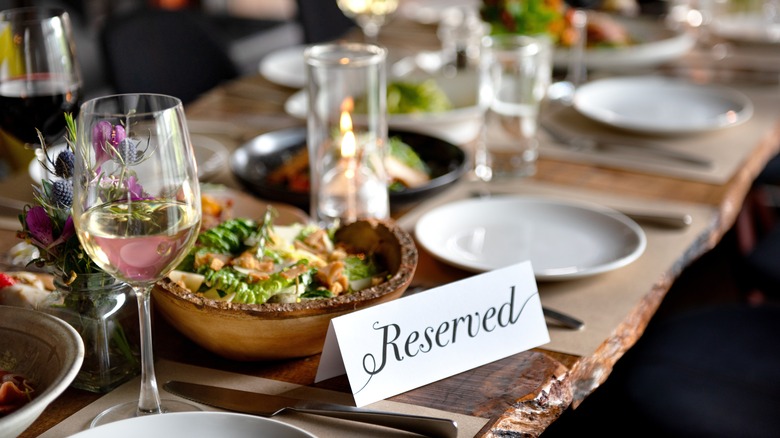
Regardless of which restaurant you are dining at, punctuality is paramount. However, arriving on time is not just a matter of etiquette. Unlike other restaurants, every course in a fine-dining restaurant is choreographed in advance and is designed to be spread out over two to three carefully planned hours. The underlying intention is to ensure that guests can take the time to savor every course and fully appreciate the culinary prowess of the chef. When you arrive late, you might have less time to enjoy each bite, and the pace of the meal might get rushed.
Mariah Grumet Humbert believes punctuality is especially crucial if you are hosting friends and loved ones at a fine-dining restaurant. "If you are the host of the meal, I recommend arriving 10 minutes prior to your reservation to ensure ample time to check in and greet your guests before moving to your designated table," she advises.
So, what do you do if you can't arrive on time due to factors beyond your control? In these situations, you will need to inform the restaurant and share an honest estimate of when you will arrive. Most restaurants have a grace period, and The National Restaurant Association of America recommends staff hold tables for a maximum of 15 minutes. Having an accurate ETA will help the restaurant servers plan the meal accordingly and catch up on lost time after you are seated.
Looking lost with the cutlery
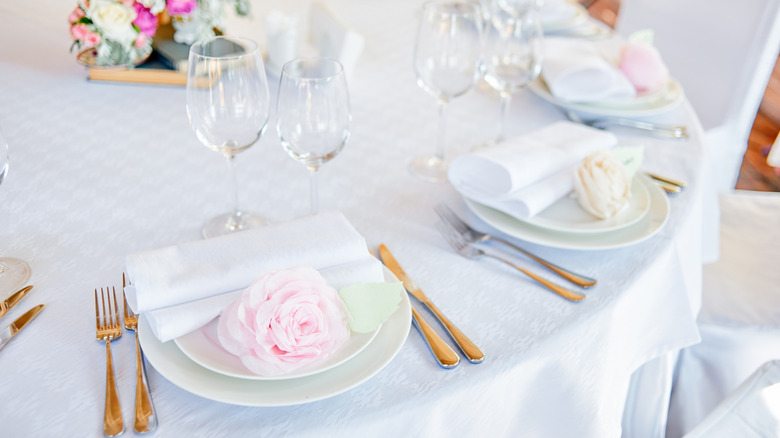
When you first draw up a chair at a fine-dining restaurant, the labyrinthine display of forks and knives can look intimidating. However, if you have done your homework, you will be able to tell the salad fork from the fish fork with ease.
"A good rule of thumb to keep in mind is to work from the outside and then inward," Mariah Grumet Humbert says. This is because cutlery is generally placed on either side of the plate in the order that it will be used. This means that the dinner fork will be placed directly on the left of the plate, accompanied by the fish fork and finally, the salad fork. On the right side of the plate, you will have the dinner knife, fish knife, and salad knife in this order.
It also helps to brush up on some silverware etiquette tips before you visit a fancy restaurant. For instance, placing your fork and knife in the shape of an upside-down V can signify that you need a break from eating. Another faux pas that Grumet Humbert wants you to steer clear of is speaking with hand gestures while your cutlery is in your hands. "It is best to set the cutlery on the plate for a brief break or keep the hand gestures at bay until you are finished with your meal," she says.
Misusing the napkin
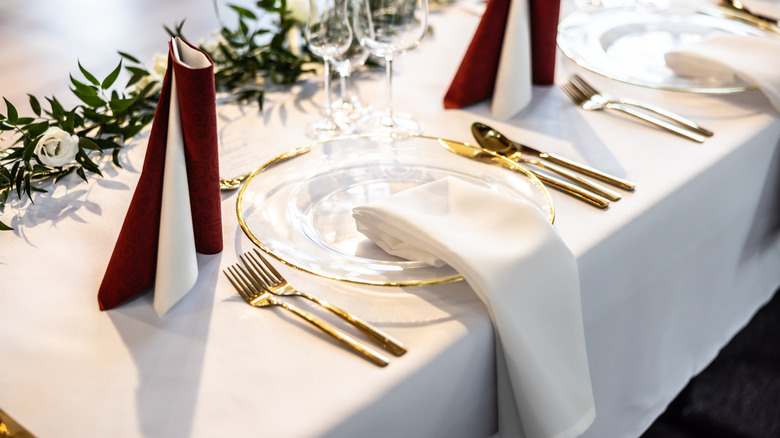
Once you have mastered the correct use of the silverware, it's time to brush up on your napkin etiquette. Unlike casual restaurants, the napkin has a language of its own in fine-dining establishments. According to Mariah Grumet Humbert, the napkin is used for guests to non-verbally communicate with the serving staff. "For starters, it is a mistake to leave the napkin on the table until you order, the water is served, or food is brought to the table. The napkin should be placed on your lap as soon as you sit down at a restaurant," she says.
Once it has been placed on your lap, it will stay there until the end of the meal — and no, it may not be used to wipe cutlery or blow your nose. "It is best to excuse yourself to the restroom if you can catch it in time," she adds. If you have to get up from your place to answer a call outside, the napkin needs to be left on your chair, not back on the table.
A common misstep that Grumet Humbert has observed is the napkin being placed on top of the plate when someone finishes their meal. "The correct napkin placement for the end of a meal is to the left of the plate," she says. While you needn't return it to its original pristine folds, you should avoid leaving it crumpled at the side of the plate.
Not understanding the difference between an amuse-bouche and an appetizer
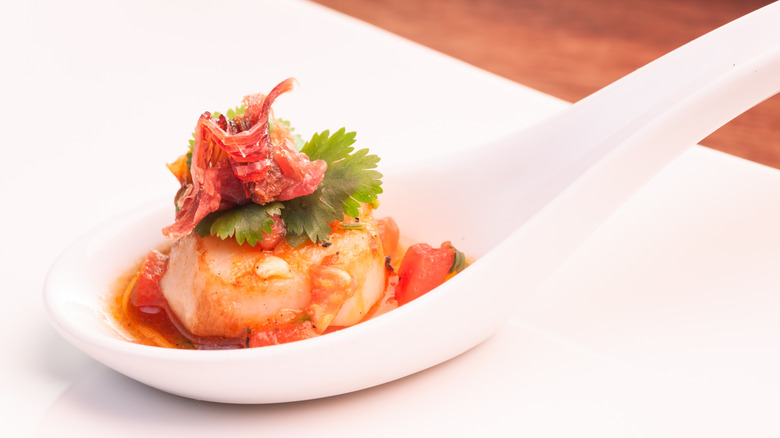
Not an appetizer, not specifically finger food, either: An amuse-bouche occupies dedicated territory of its own within the hallowed halls of fine dining. Hailing from French, an amuse-bouche literally translates into a "mouth amuser" and its role is just that — to tantalize your taste buds in anticipation of the meal to follow.
However, it helps to understand that an amuse-bouche is not the same as an appetizer. The latter is the first course of the meal and is usually served in a larger quantity than the dainty, bite-sized amuse-bouche. Beyond this, amuse-bouche are generally not added to the bill but rather, sent as a welcome gift from the chef to set the tone for the culinary experience ahead. Requesting substitutions or sweeping it aside untouched can signal disrespect to the chef's hospitality.
The role of amuse-bouche is changing, and it can be served as a light bite before dessert rather than at the beginning of the dining experience. If you are presented with one, it helps to know the right etiquette for eating an amuse-bouche. The presentation will hint at how it is intended to be eaten: anything served in a tasting spoon should generally be consumed in one bite. If the size doesn't look like it will fit in a single mouthful, you can safely assume that it is meant to be eaten in two bites.
Handling bread the wrong way
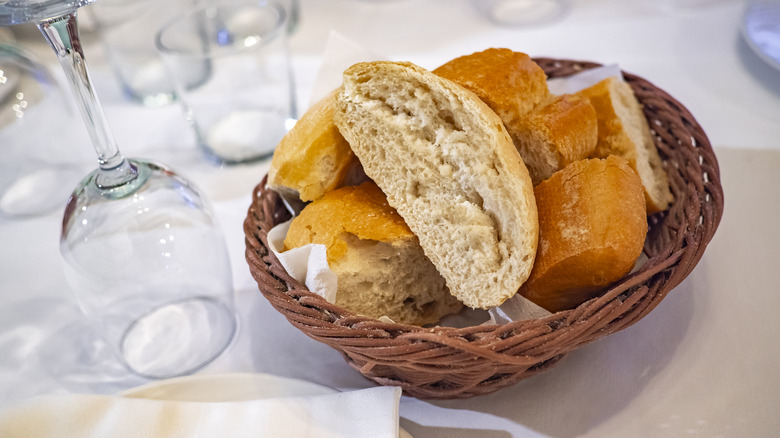
While you might be accustomed to the all-you-can-eat baskets of doughy bread that show up at the start of your meal at casual eateries, the bread basket at a fine-dining restaurant is accompanied by its own etiquette standards. In most fine-dining establishments, you will find that bread is served individually on plates for the diners, rather than being served in a communal basket on the table. However, in case there is butter, olive oil, spreads, or any other accompaniments that are meant to be shared, it is considered common courtesy to wait for your turn rather than diving in eagerly.
Mariah Grumet Humbert recommends adding all of your preferred accompaniments to your bread plate first. Once done, the bread should not be cut with your butter knife. Instead, "the proper way to eat bread is to put everything on your bread plate first, tear a small piece of bread off at a time, add butter to that individual piece using your bread knife, and then enjoy and repeat," she explains. It also helps to bear in mind that the chef has meticulously prepared a feast for the senses, so you don't want to fill up on too much bread or ask for refills.
Mispronouncing menu items
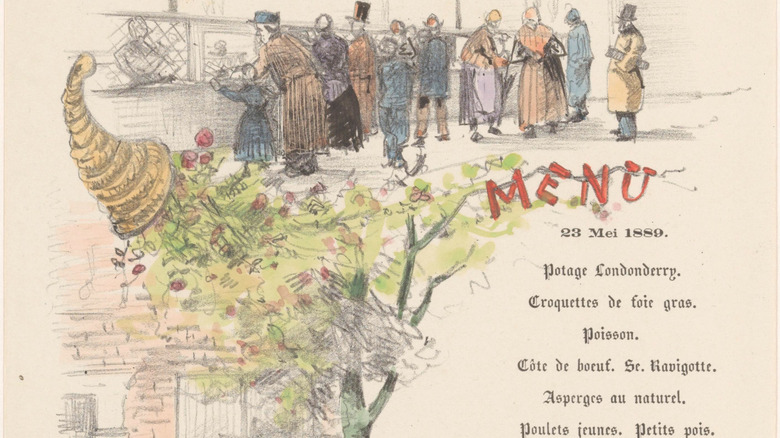
As much as we all love exploring novel dishes from international cuisines, mastering the pronunciation is another ballgame altogether. Give us an "aye" if you have ever broken a sweat while explaining to the server that you'd like some gnocchi (is it to be pronounced as guh-nok-ee? Or nyo-chee? Nok-chi, perhaps?) And you aren't entirely to blame, either. Over time, regional words can get anglicized and pronounced with colloquial influences — in fact, there is a proven reason why we have all been pronouncing bologna wrong all this time.
But Mariah Grumet Humbert believes that something as simple as mastering the correct pronunciation of the menu items can serve as a form of respect for the hard-working hands that have put together your meal and curated the overall dining experience. As a rule of thumb, she encourages her clients to familiarize themselves with the menu and the specific cuisine before attending the meal. "Preparation puts you at ease, and feeling at ease allows you to be confident," she says. "If you are unsure how to pronounce something, ask your server for assistance and give it a try. Allowing yourself to be a student of another culture or language is a wonderful way to enhance your experience when fine dining."
Asking for items that are not on the menu
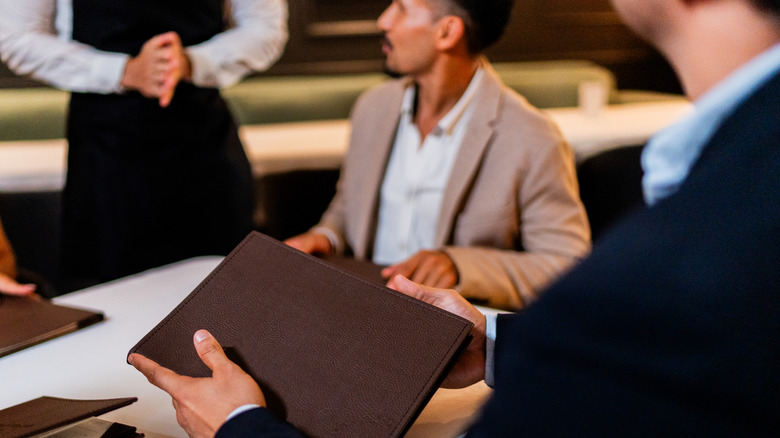
Tasting menus and set prix fixe meals are often popular at fine-dining restaurants because the tempo of the meal can be meticulously orchestrated beforehand. You wouldn't walk up to Picasso and ask him not to use so much blue because it's not really your thing, would you? Choosing to go off script by asking for extra sides or items that are not on the menu can interrupt the rhythm of the meal for the kitchen and, subsequently, for other diners.
There are certain situations where Mariah Grumet Humbert has found it acceptable to request items that are not on the menu. These usually fall within two categories: if you have an allergy that would place your health at risk, or if you have an acceptable dietary restriction, such as being a vegetarian. "In both of these instances, it would be acceptable to request an amendment to the menu. However, it is best and most respectful to notify the restaurant ahead of time, as an extreme amount of planning goes into creating the menu," she says.
On the other hand, if your customization request is tied to a personal dietary preference, you may still politely pass on any realistic requests to the server. But be prepared to handle rejection with grace if the kitchen is not able to accommodate you.
Forgetting table manners
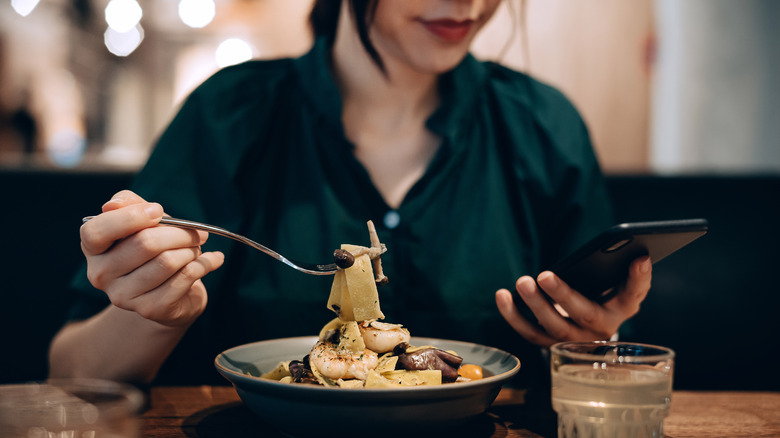
There are several international dining etiquette rules that we should all be following, such as serving elders first or waiting for the host to seat you before sitting down in a nice restaurant. However, table manners take precedence within the realm of fine dining. Given the attention to detail that has been poured into creating a memorable experience, even the smallest etiquette slip-ups can be magnified.
Chief among these is the proper use of technology. As a general rule, Mariah Grumet Humbert wants you to keep technology away from the table. "If you want to capture a special memory, do so without the flash to ensure you are not disturbing someone else's dining experience. If you need to use your phone, excuse yourself and step outside," she says. Putting your elbows on the table is considered a universal sign of rudeness, and there are other things that you'll need to keep off the table as well, such as sunglasses, handbags, and lip gloss.
The chef and the restaurant servers have worked hard to curate a specific ambiance in the dining room, so you will also want to be conscious of your voice's decibel level. If other diners can hear your conversation, Grumet Humbert takes it as a sign that the volume needs to come down a notch. "Many fine-dining restaurants have intimate seating layouts, so it's imperative to be respectful of other guests' experiences," she says.
Mishandling the check
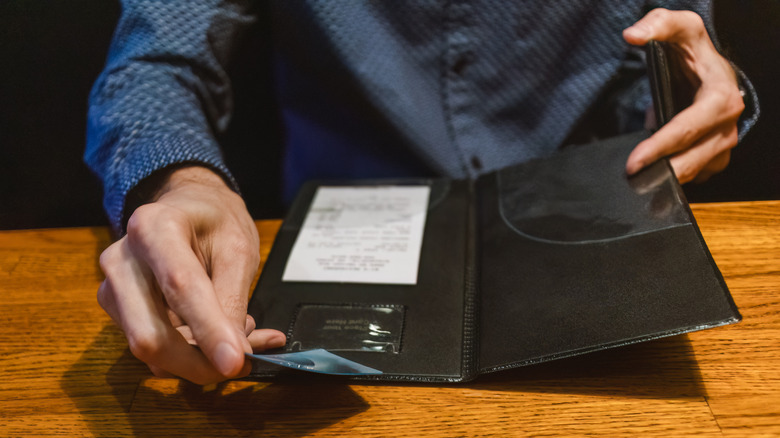
The conversation has simmered down to a pleasant lull, the last course has been cleared away, and your culinary horizons have been duly broadened. The only thing that remains is handling the check. However, this situation can be fraught with awkwardness if you aren't accustomed to fine dining.
For starters, Mariah Grumet Humbert wants you to avoid signaling the server to send over the check with a signing gesture. "Simply call them over using eye contact and a smile as this is the most respectful way to communicate with them," she says. After the check has been deposited discreetly at your table, the host should gracefully reach for the folder, rather than drawing all eyes by lunging for the bill.
Beyond the bill for the actual food, you will also want to handle the delicate matter of tipping appropriately. It is standard practice to tip at least 18% of the pre-tax bill at a fine-dining restaurant. Being stingy with your tip, on the other hand, is a dead giveaway that you aren't a regular at such establishments. For a special night, you can plan ahead and include the tip in your expected budget to avoid any surprises later on. Initially, the rarefied world of fine dining can seem like an alien land governed by unspoken rules. But a little bit of practice will help you feel like you truly belong.