

The Affordable Pork Cut That Is Used To Make Flavorful American Bacon
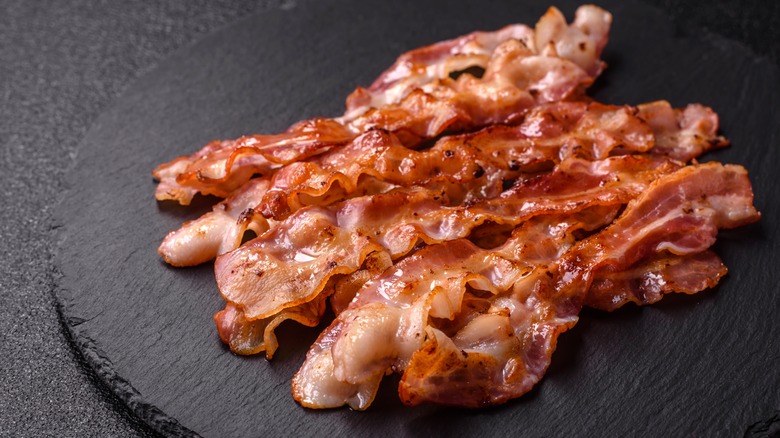
Bacon is one of the great joys of American life. From the necessary crunch it lends an indulgent breakfast sandwich or fresh BLT, to providing the perfect salty accompaniment for a plate of maple-coated pancakes, it really can complete a meal, and just a waft of that recognizable smell is enough to improve any morning. But if you've ever wondered exactly what cut of pork is used to make American bacon, the answer is pork belly.
When most of us think of that particular cut, we picture a big piece of thick skin-on pork belly that's crispy on the outside and soft on the inside: the kind that's slow-cooked and served in fancy restaurants. But in fact, the streaky bacon we know and love usually comes from the same part of the pig.
While Canadian bacon is usually made from the loin, American bacon is just very thinly sliced pork belly, which comes from the ventral line of the hog's long underside. It's the fattiest part of the pig, which is why you get all of those gorgeous white streaks that make American bacon so unique. It's also one of the more affordable cuts, so even good-quality bacon shouldn't be too expensive to get hold of.
What is pork belly?
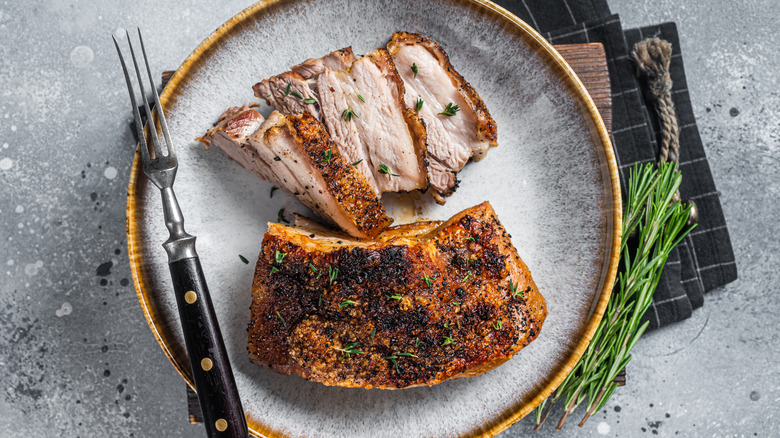
Pork belly is a very versatile cut. Usually coming in a rectangular shape with a thick layer of skin on top, it has a mild flavor, making it a great canvas for slow roasting, barbecuing, or smoking. The swirling layers of fat and lean meat provide a lot of juice and flavor, but only when cooked correctly.
The trick with pork belly is that it has a lot of connective tissue that needs to be slow-cooked in order to break down. This can take hours, but patience is a virtue, and it will be rewarded with tender, pull-apart meat. The skin can toughen during this process, so many people remove it before cooking. Others leave it on to make crackling. There's a temperature trick that helps make it crispy, if you want to give it a try.
The most important thing is to leave the fat undisturbed, otherwise, you'll lose all of that delicious flavor. Once you have it mastered, you can make a crispy miso-braised pork belly salad or Kalua pork belly. Or if you're very crafty, cure the pork belly and make your own bacon.
Curing pork belly

What sets bacon apart from the pieces of pork belly you find at hog roasts is not just its thin size, but also the fact that it's cured. Curing involves salting, flavoring, and drying meat to change its taste and texture, and preserve it.
There are two methods associated with curing pork belly to make bacon. The first is dry curing, where the pork is salted, seasoned, and typically rubbed with some sugar for sweetness and nitrates to extend the shelf life and give the bacon its signature color. The meat is then smoked or air-dried. Wet curing, which is a faster and more popular process, involves using a brine rather than a dry rub. The bacon is either soaked in the brine or injected with it and then dried in the smoker or an oven.
Most of the bacon you buy at the store is wet cured, and the flavor won't be as strong as one that's been dry cured. And even if you find a packet of bacon that's labelled as "uncured," it's still going to have been treated with some type of nitrate source, but maybe a more natural one like celery salt. All of it can be used to make the crispiest bacon for breakfasts, sandwiches, pastas, and salads. Some types might just taste better to you than others. Either way, it should all be coming from the same part of the pig!