

Do You Have To Refrigerate Furikake Seasoning?
We may receive a commission on purchases made from links.
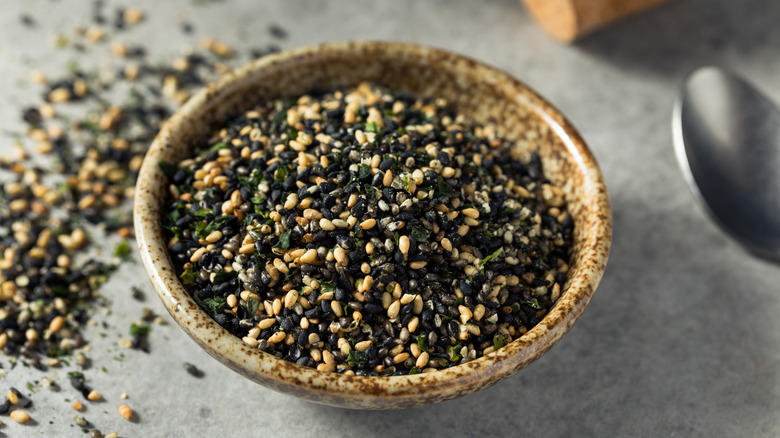
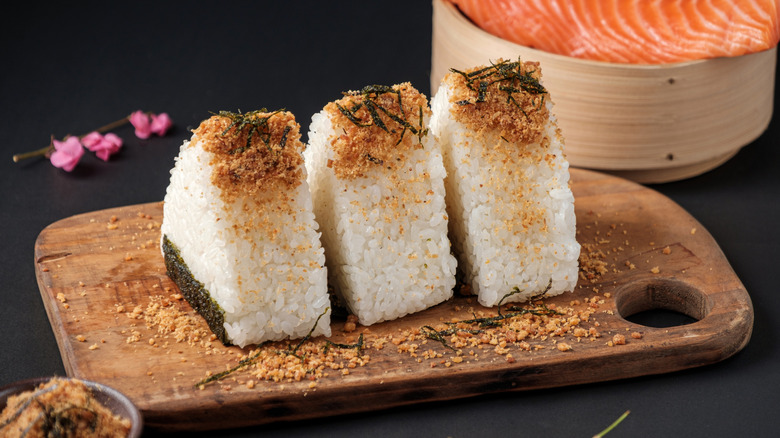
In Japan's culinary landscape, furikake is one of the many wonders. It translates to sprinkling in Japanese, and that's precisely what the seasoning is used for. Usually made with bonito flakes (dried fish flakes), soy sauce, sesame seeds, and nori (seaweed), furikake often goes on top of rice for a touch of umami flavor.
You can either make your own furikake at home or opt for store-bought. Regardless of which you have, instructions for storing the seasoning aren't so straightforward. As a general rule of thumb, it's fine to store it in a cool and dry place at room temperature, as long as the packaging is airtight. That being said, in some cases, you will want to refrigerate the seasoning to maintain its quality.
If you live in a humid environment, it's a good idea to stick furikake in the fridge once it's opened. Things like humidity, heat, and light can impose damage to the delicate blend of ingredients in your furikake, causing them to soften, clump up, and lose their flakiness. Refrigeration mitigates this and keeps the seasoning dry and crunchy. Although commercial furikake is typically packed in durable containers designed to keep the seasoning secure from air and moisture, it doesn't hurt to refrigerate it if you live in such an environment. And when in doubt, you can always look at the packaging for storage instructions. As for homemade furikake, the same conditions apply, but consider adding a desiccant pack to the airtight container to absorb excess moisture when keeping it in the pantry.
Tips for handling furikake
While storing it in a tightly sealed container in the refrigerator helps, it's also important to handle the seasoning with care so it stays fresh longer. Furikake, like many condiments, must be used with clean, dry utensils. You don't want moisture getting in there and ruining the seasoning. Dirty hands and unclean spoons can also possibly contaminate it.
Before sprinkling the seasoning on top of your food, make sure it's not spoiled. Homemade furikake generally lasts two to four weeks, while store-bought furikake usually has best-by dates. It's a good practice to always check for signs of spoilage before you add furikake to your meals, be it a hibachi-style steak fried rice or just some simple seasoned sushi rice. This can be a little complicated since furikake doesn't necessarily go bad in the conventional sense — that is, it might not display any clear signs of visual decay. However, there are subtle indications, like deterioration of flavor and aroma. That being said, whenever in doubt, it's probably best to avoid consuming furikake that you think is stale.