

This Classic Cake Flavor Has Been The Star Of British Royal Weddings For Centuries
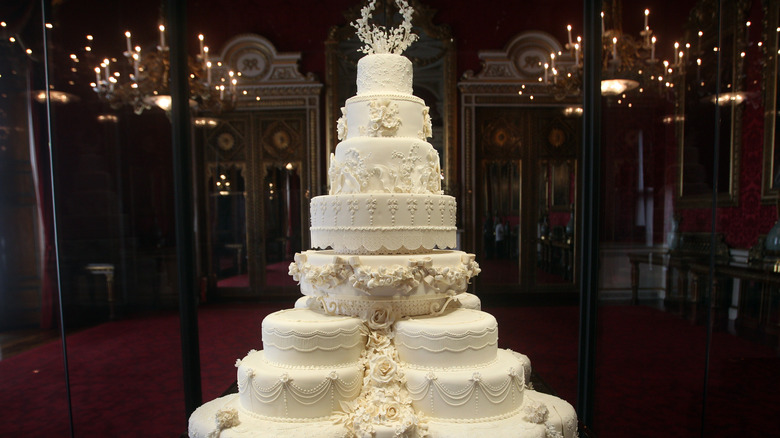
Many of us know fruitcake as the Christmas dessert people love to hate, but the British royals know it as the go-to flavor for their lavish wedding cakes. Much like the monarchy itself, the exterior of a royal wedding cake is clad in extravagant details and symbolism, while the interior is a perfect picture of consistency and tradition.
In the UK, fruitcakes rose to popularity in the 18th century. Unlike the small loaf we know today, the fruitcake of history was uncharacteristically big and rich, jam-packed with countless ingredients including many dried or candied fruits, warming spices, and a bold dose of liquor. This is still the approach for traditional British Christmas cakes today. The cake represented wealth and abundance, as well as celebration. There was also a practical element to it, though — by soaking the fruitcake in alcohol, the treat could be made several weeks ahead of time, making it convenient for large events.
It's therefore not surprising that Queen Victoria chose the trusty and opulent fruitcake as the centerpiece of her royal wedding menu in 1840, when she married Prince Albert. At 300 pounds, the cake was massive and able to feed more than just the wedding guests. The royal couple sent slices of the shelf-stable fruitcake to people who helped plan the event, thus including them in the festivities. This practice is another tradition the British royals have kept to this day, except now the slices are mostly sent to charities.
Fruitcake was present at almost every iconic royal wedding (with a major exception)
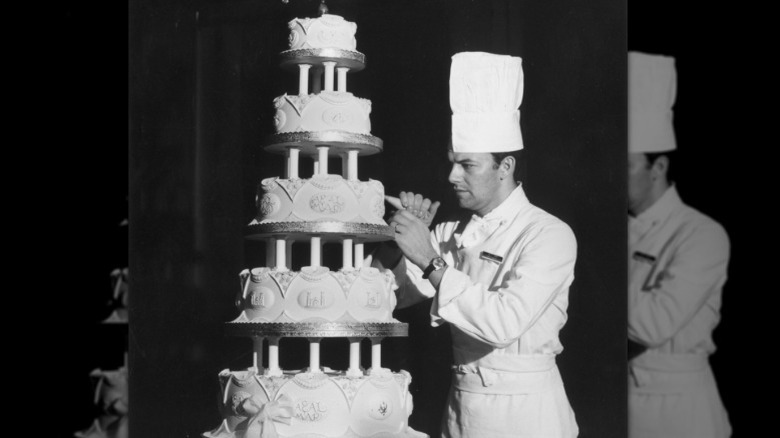
When Princess Elizabeth married the Duke of Edinburgh in 1948, the fruitcake was there. In fact, that same cake was also present for young Prince Charles' christening, as the couple saved a tier especially for that occasion (another royal tradition). A brandy-soaked fruitcake (shown above) was on display for the Queen's daughter Princess Anne's wedding to Captain Mark Phillips in 1973. Later, Prince Charles' own wedding cake was a fruitcake, too. First, it featured in his wedding to Lady Diana Spencer, but despite the sad way that marriage ultimately ended, Charles stayed loyal to the cake flavor. Refusing to break tradition, a fruitcake was dutifully served also at his second wedding to Camilla Parker Bowles. A year before the wedding took place, the Prince actually sampled a delicious fruitcake during a royal visit to Wales and later asked the local lady who made it to bake it for the wedding.
The fruitcake tradition persevered even for the wedding of some younger royals, like Prince William and Catherine Middleton (their cake is pictured, top). It doesn't matter that the exterior boasted over 900 sugar flowers or that it took 50 chefs to make the decorations; the interior of the cake remained the good ol' fruitcake. Finally, after nearly two centuries of being the centerpiece of royal weddings, the fruitcake was kicked to the curb by Meghan Markle and Prince Harry in favor of spring-inspired lemon elderflower cake. That said, perhaps the couple would have reconsidered had they tried our fruitcake recipe with rum and ginger. Just saying.