

Why Some Kitchen Knives Have Dimples On The Blade
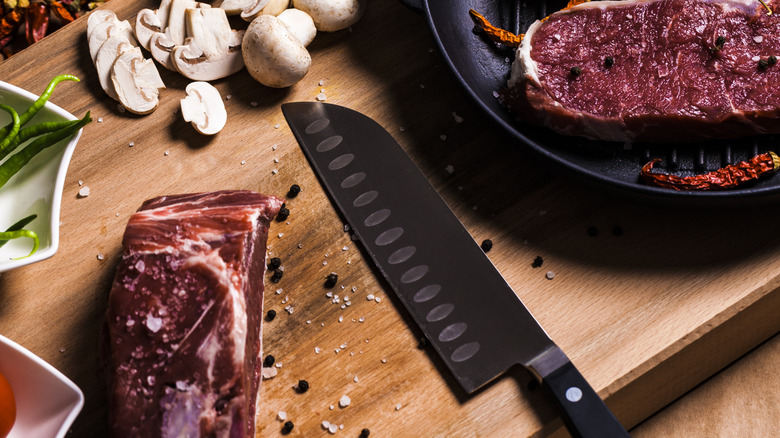
When it's time for dinner, maybe that slow-roasted prime rib is fresh out of the oven, and you reach for a knife to get the party started. By now you've noticed that your fancy knife block of sharp tools comes with several different kinds of knives, some serrated and some strangely long, but maybe you're not entirely sure what they each do. There's even a heavier one in the back of the set that looks like someone sunk their teeth into the metal, with five or six oblong dimples stamped near the edge of the blade. But what are these dimples on the blade, and what are they used for? Here's what you need to know.
Some knives are adorned with dimples, often called "scallops" or a "Granton edge," to prevent moist foods from sticking to the blade, perfect for slicing delicate salmon. With a dimpled chef's knife, the divots create air pockets and release some surface tension that causes damp foods to suction against the blade. Just think about how often bits and pieces of the food get stuck to a regular knife when you're cutting a large piece of meat like prime rib or fruits and vegetables like potatoes. Using a knife with dimples can make the entire cutting process easier and more efficient since you're getting cleaner slices on moist foods and spending less time wiping the blade.
Not all dimpled blades are created equal
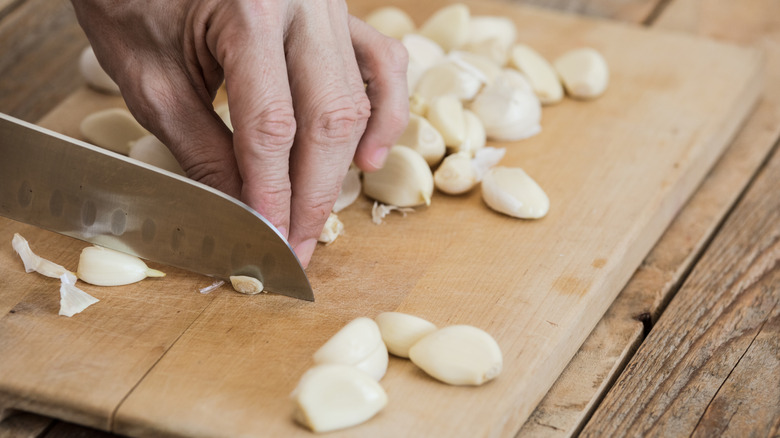
Although knives with dimples are typically called "Granton edges," they're not necessarily a Granton blade. Granton Knifemakers is a brand that patented its design for knives with dimples that touched the edge of a blade over 80 years ago, but a knife technically isn't considered a Granton edge unless it was manufactured by the company. Granton edge and dimpled knives are sometimes also called "kullenschliff," a German word that means "hollow cut" and refers to blades with dimples that don't quite meet the edge. The Japanese-style Santoku knife is another version of a dimpled knife, but in general, the dimpled knife design has begun rising in popularity worldwide.
Experts say there's not truly a huge benefit or disadvantage to using a dimpled knife in the kitchen. It's worth considering that a dimpled knife will be thicker than an average knife and therefore heavier, though opting for a dimpled knife will usually leave you with cleaner (and easier) cuts. If you do opt for a dimpled blade, experts recommend looking for a knife with large scallops located near the edge of the blade, which are more effective than ornamental scallops placed near the top. It's also important to find a knife with dimples in an alternating pattern or on opposite sides of the blade, which will also increase the effectiveness. If you need more guidance, check out our ultimate guide to choosing the right chef's knife for your kitchen.