

9 Abruzzese Dishes You Need To Try At Least Once
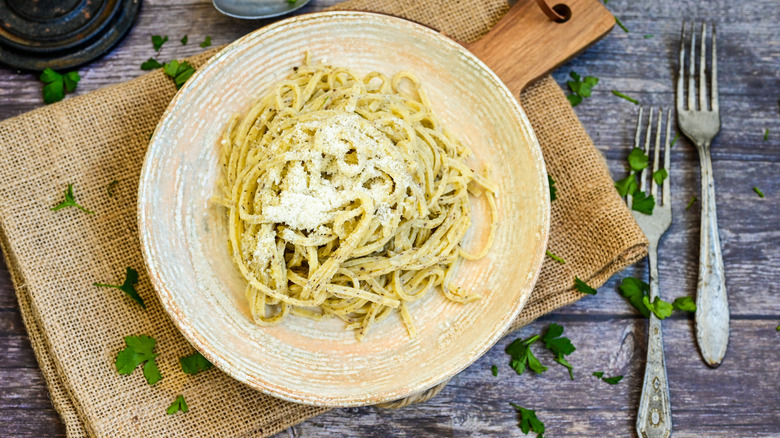
When most head to Italy for a vacation, they get off the plane at destinations like Milan in Lombardy, Rome in Lazio, or Florence in Tuscany. And while all of these well-known locations are great to visit, Abruzzo also arguably deserves the spotlight, too. The lesser-known region in southern Italy is home to stunning national parks, bustling cities like Teramo, picturesque coastline, rolling hills, impressive peaks, and lots of fascinating historical architecture. And of course, like everywhere in Italy, there is plenty of outstanding regional cuisine to try.
From flavor-laden pasta to indulgent desserts, Abruzzese cuisine is not to be missed. You can sample elaborate dishes made with Abruzzo's most famous spice, saffron, or keep it simple and plant-based with sagne e fagioli. You can munch on delicious desserts like confetti, calcionelli, and bocconotti, too (if you've got room after all the arrosticini, of course). Below, we've listed some of the region's best dishes, and we're pretty certain there is something for everyone.
Spaghetti alla chitarra
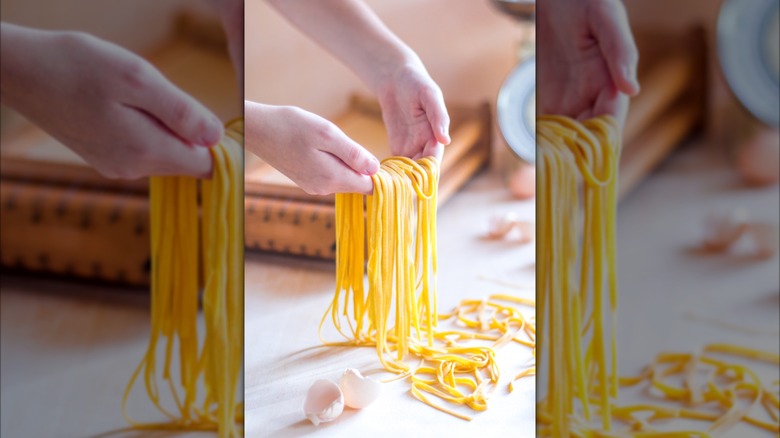
In Abruzzo, pasta making is an art. It requires patience, skill, and a guitar. No, we're not talking about serenading the pasta with a few rusty chords from "A Horse With No Name." We're talking about a chitarra, a traditional pasta-making tool from Abruzzo that looks a lot like a guitar (but isn't quite as tuneful).
In a nutshell, a chitarra is a wooden frame with stainless steel wire stretched across it. The pasta dough is stretched out over the top of the frame, and then rolled with a rolling pin through the strings to create long strips of pasta. In the end, it looks a lot like regular spaghetti, but square in shape rather than round. The chitarra has a long history in Abruzzo, and has likely been used in the region for centuries, although the first written evidence dates to 1871.
Spaghetti alla chitarra can be served with a variety of sauces and toppings, but traditionally, it's paired with tomato sauce and tiny meatballs known as palotte. In fact, this dish is likely an early ancestor of the Italian-American classic, spaghetti and meatballs.
Sagne e fagioli
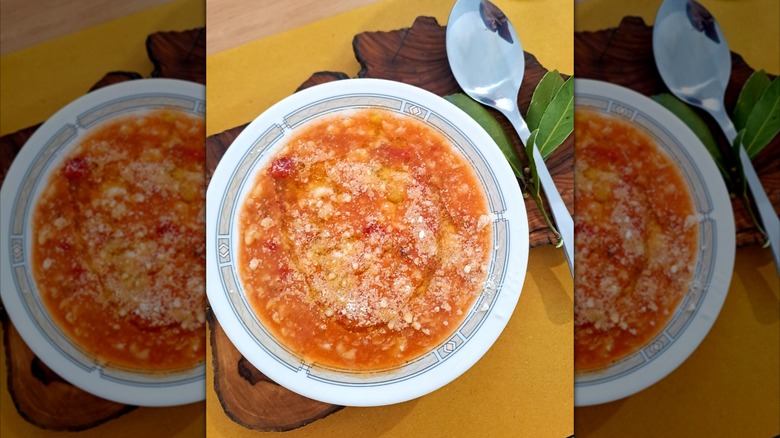
Pasta e fagioli, which translates to just "pasta and beans," is an example of cucina povera, a cooking philosophy that originated in Italian peasant communities. The ethos is simple: Make the best of what you have. It involves taking accessible, cheap ingredients, like beans, garlic, herbs, and fresh pasta, and combining them to create something flavorful and filling. Fun fact: In its most basic form, pizza is also an example of cucina povera.
The traditional preparation of pasta e fagioli depends on the region. In Venice, for example, it's often paired with maltagliati, while in Piedmont, it's usually prepared with tagliatelle. But in Abruzzo, it's usually made with a type of pasta called sagne.
Sagne is a short, tagliatelle-style pasta that isn't made with eggs like many other traditional pastas, but with just water, durum wheat flour, and salt. The sagne is then combined with either garbanzo beans or borlotti beans to make sagne e fagioli. Often, it's also served with either greens, like broccoli, or diced ham and pork rinds.
Calcionelli
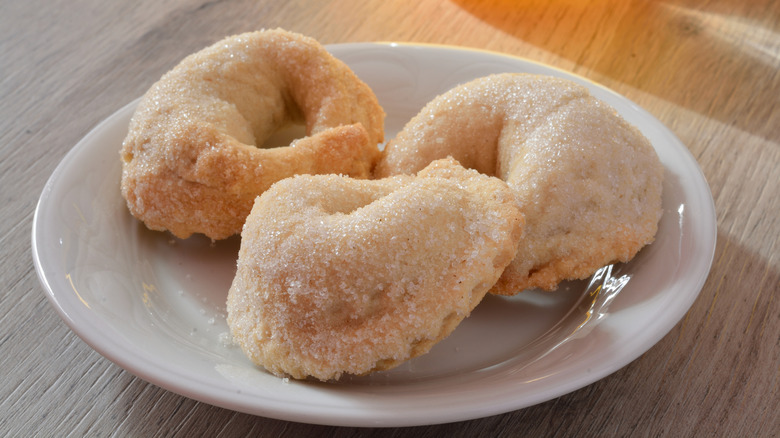
Italian is the cuisine that just keeps giving. In addition to a plethora of flavor-packed pasta and pizza recipes, you can also count on the country for delicious holiday desserts. For example, in Sicily, people feast on fig cookies known as cuccidati during the holiday season. In Campania, it's all about struffoli, which are basically small, brown, crunchy balls of fried dough, and yet another type of Italian cookie you'll want to bake yourself. But if you love nuts and chocolate, Abruzzo is the place to be.
Calcionelli (also referred to as caggionetti, calgionetti, or caggiunitt, depending on exactly where you are) is a traditional Abruzzese Christmas dessert, which features a crispy crescent-shaped pastry pocket stuffed with ingredients like puréed chickpeas, nuts, and cocoa. But many households and bakeries have their own twist on the recipe. Some like to add honey to the mix, for example, or citrus, cinnamon, and even rum.
The best time to try calcionelli in Abruzzo is from November onwards. There, you can find the sweet treat served at food markets and bakeries across the region until Christmas.
Crespelle in brodo
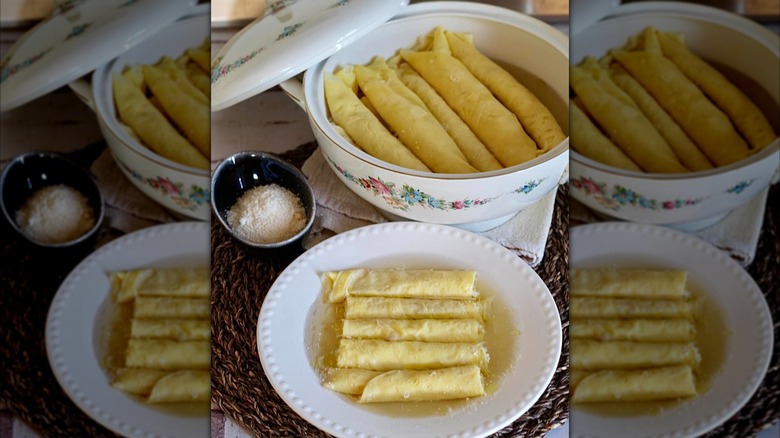
Fans of the classic French crêpe will love crespelle. We say that with the utmost confidence, because they are near enough the same thing. Just like crêpes, crespelles are thin and crispy pancakes that can be paired with sweet or savory ingredients, depending on your mood (and the region of Italy you're in).
In Tuscany, they're often served in crespelle alla fiorentina, a lasagna-like dish with spinach, ricotta, and crespelle in place of pasta sheets. In Abruzzo, they're often prepared in brodo (which translates to "in broth"). The crespelle is filled with cheese (usually Parmigiano Reggiano) before being rolled up and served in a broth, which is usually meat-based but can also be vegetarian.
The dish is also often referred to as scrippelle 'mbusse, which means "wet crêpes" in the local dialect of the Abruzzese province of Teramo. It can be enjoyed all year round, but because it's hearty and warming, you'll usually see it served during the colder months of the year.
Scapece di vasto
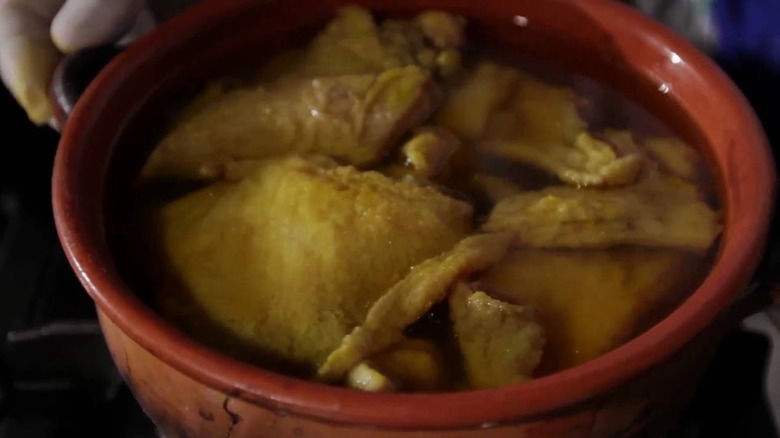
Abruzzo is known for many things, such as its vast mountainous landscape and the stunning views of the Adriatic Sea. But when many Italians think of this southern region, they think of one particular ingredient: saffron.
Abruzzo is renowned for its cultivation of the bright orange, fragrant spice. In fact, even to this day, Crocus sativus flowers (where saffron comes from) are laboriously picked by hand in the region, before they are exported across the country and beyond. In fact, Abruzzo's saffron industry is so sacred that it has Protected Denomination of Origin status.
Strangely, though, there aren't many Abruzzese dishes that actually contain saffron, and one of them is scapece di vasto. The simple dish is made with seafood (usually skate or any other fish or shellfish that is available), which is fried and then served in a sauce of vinegar, onions, and lots of saffron. Often, Abruzzese chefs will allow the fish to marinate for as long as a week to intensify the flavors, before serving it with a glass of Trebbiano, a local white wine.
Bocconotti
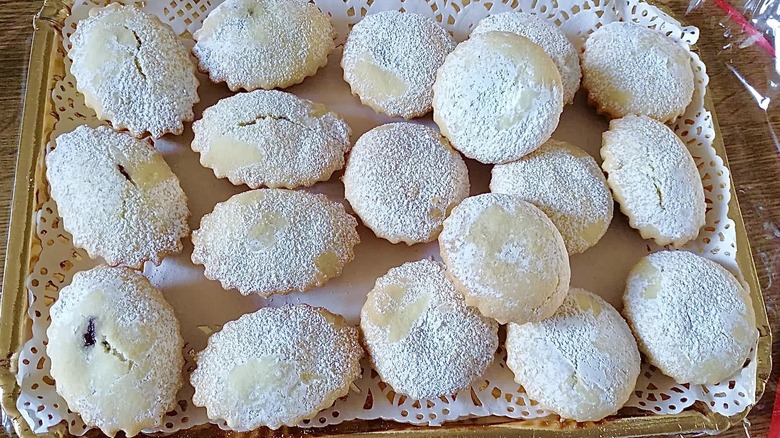
Calcionelli is just one example of Abruzzo's delicious festive treats. During the holiday season, you'll also often find bocconotti served in the region. The dessert basically consists of small, one-bite tarts or pies made with shortcrust pastry and filled with sweet ingredients, like jam and chocolate cream.
In Teramo, bocconotti tarts are usually filled with local ingredients, such as Montepulciano grape jam, and enjoyed alongside a cup of espresso or a glass of warm mulled wine. In Castel Frentano, a province in Chieti, you'll often see bocconotti filled with chocolate, almonds, and jam.
Bocconotti is eaten in many regions across Italy, but it has the longest history in Abruzzo. In fact, as legend has it, the dessert was first created by a maid in the region in the 18th century. The maid's employer was thrilled with the creation and asked her what it was. Thinking on her feet, she said "bocconotti," which means "one-bite." The name, and the recipe, stuck, and it's still enjoyed by locals and tourists alike all these years later.
Confetti
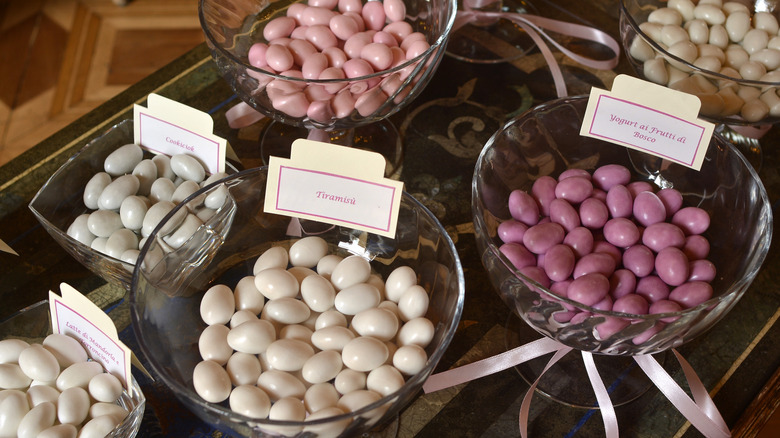
You can always rely on an Italian wedding to have plenty of confetti. But we're not talking about flower petals or small bits of colorful paper that are thrown into the air when the happy couple emerges. No, we're talking about something much tastier: sugar-coated almonds.
Italian confetti, which just like the paper kind comes in an array of colors, hails from Sulmona in Abruzzo. In fact, it has been produced in the commune since at least the 1700s, when the very first confetti factory was opened. That same old factory is still there today, although now it's a museum and tourist attraction.
Confetti is a crunchy, tasty sweet snack, which is typically still prepared to the old Sulmona recipe to maximize flavor and aroma. It's typically eaten not just at weddings, but at any celebratory event in Italy, such as birthday parties and graduations. You can also find confetti in many shops in Sulmona, which is perfect if you're visiting the region and want to take home a little edible Abruzzese souvenir for your loved ones.
Arrosticini
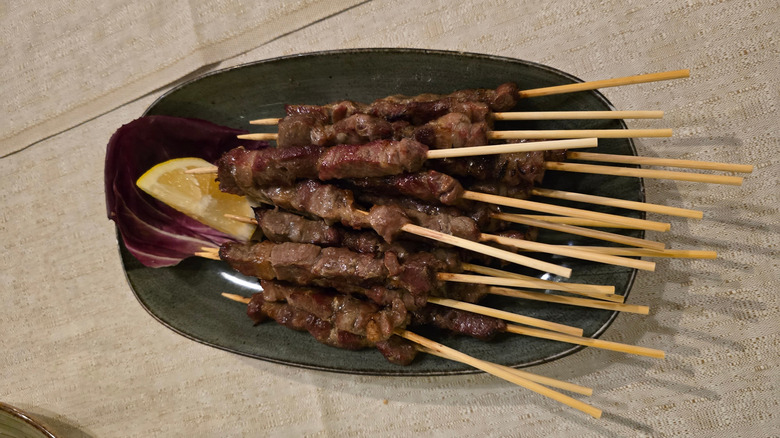
Arrosticini is, without a doubt, one of the most famous Abruzzese dishes, beloved across Italy and beyond. But again, it's incredibly simple. In fact, the dish — which is just chunks of mutton or lamb, threaded on a skewer and roasted over coals until tender — is yet another example of cucina povera, because it likely originated with Abruzzese shepherd communities in either Teramo or Pescara (there is some debate about exactly where).
Many home cooks and chefs have their own take on this underrated Italian grilled dish. Some add sage or chili to the meat, for example, while others opt for vinegar, salt, and rosemary. Some even make the beloved delicacy without meat, and instead replace the lamb with dehydrated soy.
The best place to try authentic arrosticini is at an Abruzzese festival. The dish lends itself well to street food, and is often served at art and craft events and village gatherings throughout the region.
Agnello cacio e ova
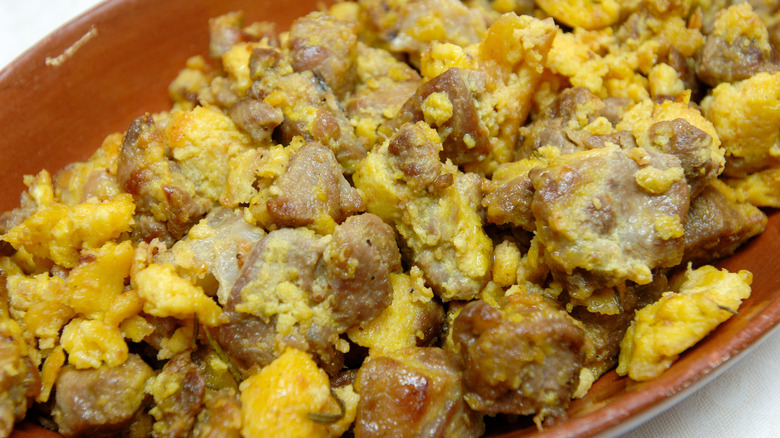
Agnello cacio e ova is another seasonal Abruzzese specialty, usually served at Easter. The creamy, hearty, carbonara-like dish consists of lamb cooked in lemon, egg, and cheese sauce, but the ingredients haven't just been thrown together, and each has a meaning: The eggs symbolize the resurrection, for example, while lemon is gentle on the stomach after a period of fasting for Lent. The lamb is eaten for purity reasons, as some Christians believe the devil can't reincarnate as the animal.
Don't want to eat meat? Look for just cacio e ova. The dish actually comes from Naples, but it has a very similar creamy taste and texture to Abruzzese agnello cacio e ova, only it contains pasta instead of lamb. There's also Abruzzese pallotte cacio e ova, but while it sounds like agnello cacio e ova, it's actually a very different dish, made with meatless meatballs and a rich tomato sauce.