

Food Halls Vs Food Courts: The Differences You Should Know
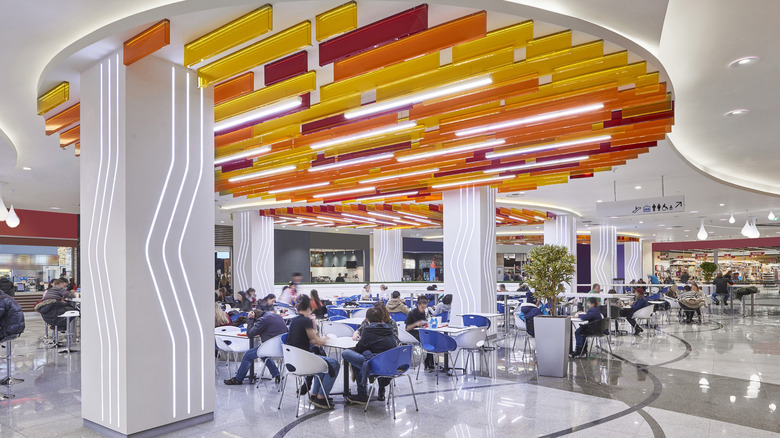
Imagine you're meeting up with friends at a place with multiple eateries under the same roof — your instinct is, likely, to call it a food court. However, the scenario is actually more ambiguous than it used to be. Old-style food courts now have culturally cognitive "cousins" known as food halls. While they do bear similarities — namely communal eating areas and many cuisines to choose from — the differences between food halls and food courts come down to ambiance, location, food quality, and menu diversity.
Food courts are typically clusters of national restaurant chains, with the intention of providing convenience. They're usually located inside of malls or shopping centers like Costco and Sam's Club, and airports, universities, or large business complexes. Food halls, on the other hand, lean toward independent restaurants and local chefs dishing out high-quality, curated cuisine. The atmosphere is less hurried, encouraging diners to linger and connect. Food halls also occupy less-commercial spaces and increasingly show up in well-known public markets or even grand, historic metro train stations.
When choosing a food hall, the experience often includes more than just restaurant dining, with chances to explore releases from local breweries or coffee roasters, taste cuisine from Michelin-starred chefs, visit specialty food markets, enjoy entertainment by regional musicians, and more. In other words, food halls are much more of a full-immersion into the community than the national-chain stores in standard food courts.
Local food halls to experience
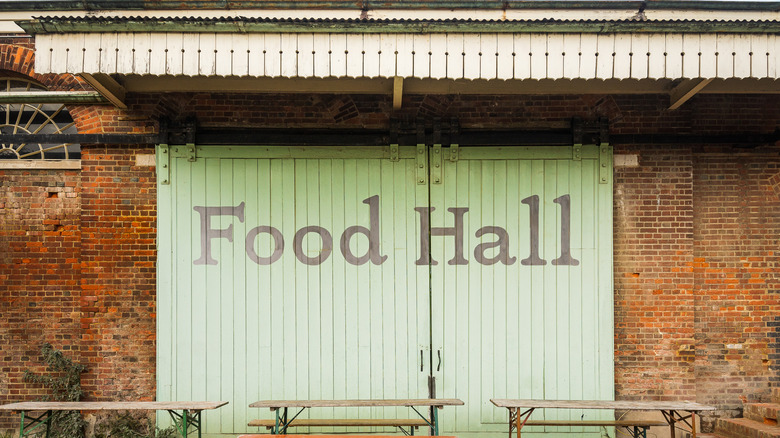
Gaining steam in the 1970s, food courts have populated the American landscape for decades. Built for efficiency and fast, affordable food, they definitely serve the valid purpose of keeping people moving, shopping, and catching flights. Fittingly, they aren't difficult to come across, either. They're also a convenient solution for feeding young children in public places, allowing a bit of wiggle room and higher noise levels.
Although they aren't as omnipresent as food courts, food halls have become increasingly popular, routinely offering fresh, made-from-scratch meals and an atmospheric "sense of place." It's worth noting, however, that the trend is sometimes compromised by vendors capitalizing on the concept, and may feature very little of the community charm and local cuisine from the districts the food halls are meant to represent.
To experience real-deal food halls, you'll need to go where locals gather. Good examples of some of the must-visit food halls in America include Krog Street Market in Atlanta; San Francisco's Saluhall, offering Indian fare and Puerto Rican classics; From Here On, tucked within Chicago's Old Post Office building; and Seattle's Uwajimaya food hall, featuring East Asian specialties from local restaurants. Mercado La Paloma, located in South Los Angeles, is also a unique food hall in that it is home to many immigrant-owned businesses — not to mention, LA's most affordable Michelin-starred restaurant, too. Most major cities, and many minor ones, now support food halls — and they're well worth exploring.