

10 Things To Know About Walmart Neighborhood Market
We may receive a commission on purchases made from links.
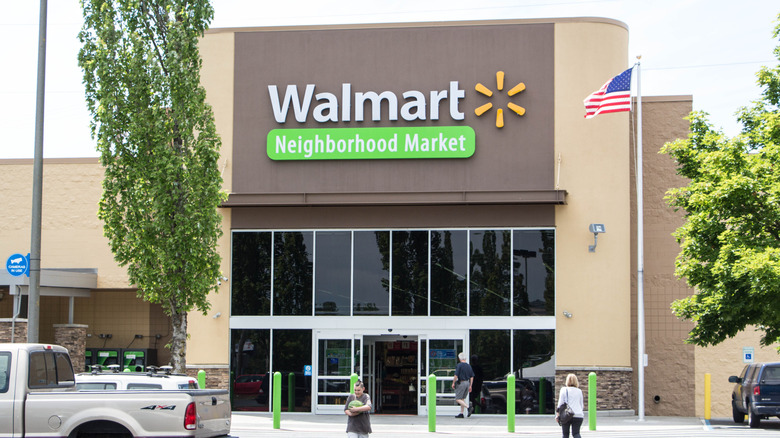
Walmart Neighborhood Markets are smaller versions of Walmart stores that may not have everything, but they're convenient for grocery shopping. Whether you're just now discovering Walmart Neighborhood Market or have been visiting these stores for years, there are some facts you may have overlooked about what's available and what's to come in this ever-popular chain.
The first Walmart Neighborhood Market made a big impression when it opened in Bentonville, Arkansas, in 1998. The idea was for it to serve the same function as a local supermarket, and shoppers loved it. After the success of its first store, Walmart opened hundreds more of these smaller versions over the decades, with a focus on groceries rather than everything else you can get at a Walmart Supercenter. You can easily identify a Neighborhood Market; it has a different color scheme than a traditional Walmart, with green taking over blue on signs and uniforms.
There's plenty to uncover behind the doors of a Neighborhood Market. We've highlighted what the stores do and don't carry, some of the tech-savvy services they offer, how prices compare to larger versions of the store, and some services you might not have realized were available. Plus, we have a sneak peek at what the future may hold. So, before your next visit to a Walmart Neighborhood Market, you'll want to take a look at everything you might not know about the grocery chain.
Some departments available at a Walmart Supercenter aren't available at a Neighborhood Market
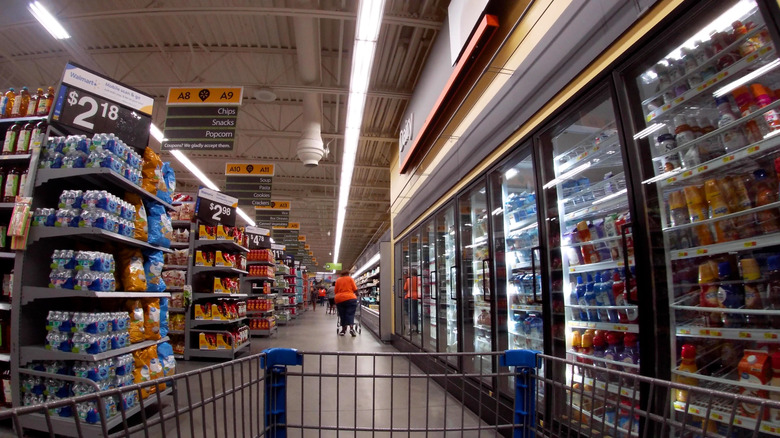
While you're able to fulfill most of your grocery shopping and personal needs at a Walmart Neighborhood Market, you won't find nearly as many things there as at a Supercenter; there's just not enough space for all of the departments. From the beginning, the idea behind Walmart Neighborhood Market was for it to have a smaller footprint than a Walmart Supercenter. In fact, you could fit five 40,000-square-foot Walmart Neighborhood Markets into a single 200,000-square-foot Walmart Supercenter.
Some departments remain the same between the two types of stores, but we've found that many departments just don't exist at Neighborhood Markets. There are no home, furniture, and appliance sections. The garden section is small (and often mostly outdoors), but you won't find patio items like outdoor grills. The closest to a home improvement section we've discovered is light bulbs available for sale. You won't find any clothing or shoes except for perhaps the occasional pair of flip flops in the summer.
The toy section is minimal; maybe a small shelf. Baby and kids' items are mainly essentials like diapers and wipes. There are no video games, and any electronics we've seen are mainly just cords and chargers. There's no auto and tire center, or sports and outdoors center. Plus, you shouldn't expect an arts and crafts section, although we have seen some party supplies.
It offers more pre-made food options than you might realize
Walmart Neighborhood Markets don't just sell unassembled groceries; they also offer fresh, pre-made items you don't need to prepare yourself. It might not be the same quality as Whole Foods' prepared items, but it still hits the spot when you're not in the mood for frozen or fast food.
First of all, Neighborhood Markets have a deli and a bakery, which means you'll find pre-made foods throughout the store. In addition to the rotisserie chickens you expect to find in the deli, we've encountered freshly-packaged, grab-and-go sandwiches and wraps. It's fairly common to find a variety of salads, like potato salads, pasta salads, and green salads, as well as ready-made soups, dips, and spreads. While they're not store brand, you can often find charcuterie trays for snacking or parties. Plus, you can find pre-made bakery desserts like cakes and cookies.
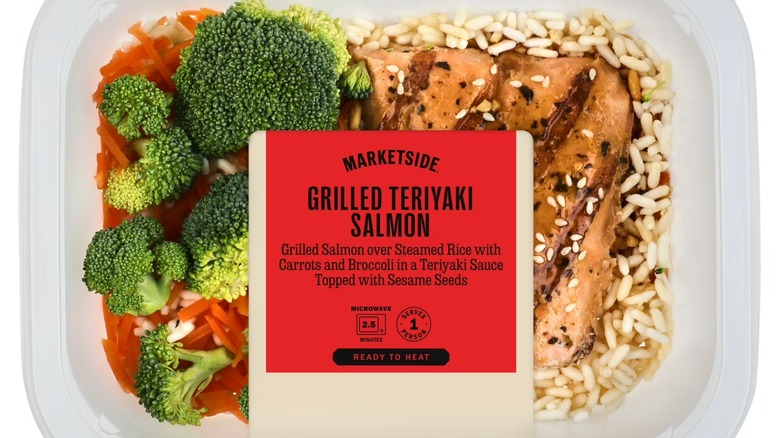
A newer addition to the prepared food offerings is pre-made meals. We've seen a few Asian-inspired items like sushi, potstickers, and ready-to-heat ramen bowls. Plus, there are all sorts of pre-made meals and sides that are fully prepared but need to be heated in the microwave or some other way. For example, you can purchase grilled teriyaki salmon that comes with rice and fresh veggies; it just needs microwaving to be ready to eat. Or you can get sesame teriyaki chicken that's seasoned but raw, with instructions for how to prepare it on the grill or stovetop.
Prices aren't always the same as at Walmart Supercenters
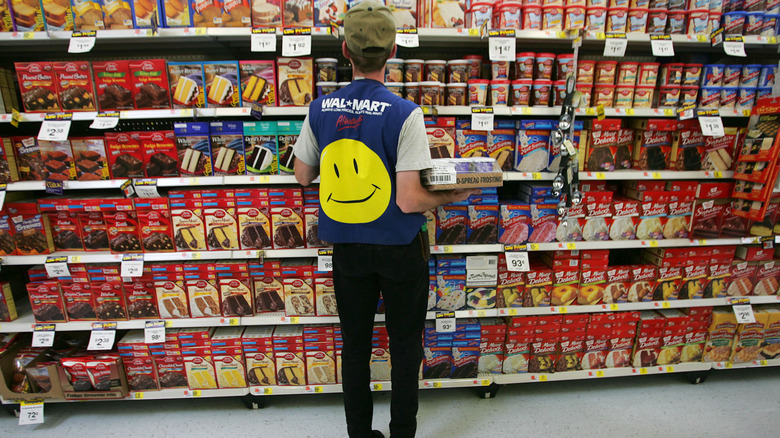
Something that you probably didn't realize is that Walmart Supercenters and Walmart Neighborhood Markets don't always have the same prices, even if they're located just a few miles from each other. There are enough items that are the same that they're counting on you not noticing the difference. And unless the price is radically different, they're also counting on you not wanting to go the few extra miles for a better deal. While it may not matter a lot for some smaller items, it may be worthwhile to do some comparison shopping for more expensive items like meat or pet food.
The differences you'll find definitely vary. We've only found a couple of items with prices that are a penny or two different between our Neighborhood Market and the Supercenter just a few miles away. However, others have reported finding notably higher prices at Neighborhood Markets, with some even discovering a difference of as much as 5-8%.
These slightly higher prices may be because real estate and operational costs can be more expensive in some city neighborhoods. So, while it's not a universal rule that you're getting a better deal at a Supercenter, you still might want to do some comparison shopping first.
The Walmart app and credit card work the same at Neighborhood Markets and Supercenters
Because both Walmart Supercenters and Walmart Neighborhood Markets are owned by Walmart, their apps and credit cards work at both stores. So, get both ready to use next time you want to do shopping at a Neighborhood Market.
The app works seamlessly at both stores. Just be sure that you've selected the location where you want to do your shopping, and it doesn't matter if it's one type of store or the other. It gives you all the same options, including two of our favorites: locating the aisle numbers for those ever-moving products and instantly scanning barcodes to check prices.
Also, if you have a Walmart credit card that you usually use at a Walmart Supercenter, you can also use it at Walmart Neighborhood Markets to take advantage of its grocery rewards program. No matter which of the two places you use it, you still get 3% cash back for shopping there with your OnePay CashRewards Card or 5% cash back if you're a Walmart+ member. Further, you can add the card to your OnePay Wallet, earn a point for every $10 you spend there, and redeem it for cash.
Walmart Neighborhood Markets tend to be strategically located
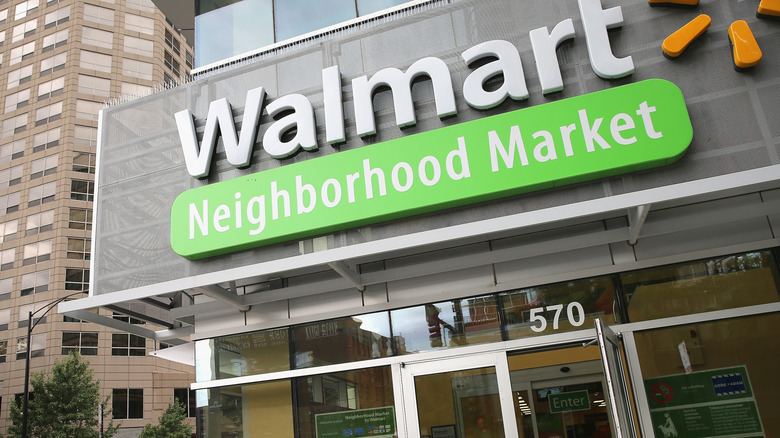
Even if you don't normally go to Walmart, the fact that a Neighborhood Market may be the only grocery store nearby for miles often lures you in for grocery shopping. Why? Because of the convenience factor. Yes, that's by design. It was originally meant as a market that was closer to home, so you wouldn't have to make a trek all the way to a Supercenter.
There are several factors that the company considers when placing a Neighborhood Market, both in suburban and urban areas. One thing the company looks at is whether there's much grocery competition around compared to the population density. In Chicago, the chain opened several Neighborhood Markets in food deserts; locales that lack another grocery store nearby. That way, these markets can have a positive effect on food security for the neighborhood.
Unfortunately, Neighborhood Markets still tend to drive business away from locally owned grocery stores. The fact that Neighborhood Markets are more conveniently located means that not as many people are driving to the stores that are farther away. Unfortunately, just like with Walmart Supercenters, a Neighborhood Market coming to town can be a source of dread for local businesses because of its predatory nature. The truth is that mom-and-pop grocery stores and other businesses often end up having to close down when they lose customers and can't offer prices that are as low.
Walmart is trying out a larger version of the Neighborhood Market
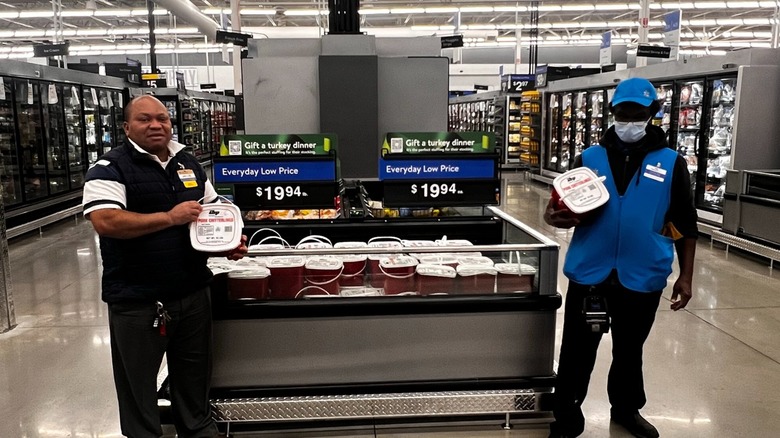
In making Neighborhood Markets, Walmart perhaps went too small. We have to admit that there are plenty of times when we wish there was more shelf space to hold everything on our shopping list. The last thing anyone wants is to make an additional trip to another store for more niche grocery items.
Starting in 2024, Walmart tried opening two larger Neighborhood Markets — one in Florida and one in Georgia — with 57,000 square feet of space instead of the average 40,000. That 17,000 square feet of extra space allows expansions for groceries, but especially a larger amount of fresh items, including more hot options at the deli. It's already popular for meat, but the new format has space for a wider selection. There's also more pickup and delivery space, more refrigeration for online orders, wider aisles, a nursing room, and an extra room in the pharmacy.
In addition to these two larger-scale stores, the company has plans to open 150 more. While some will be brand new stores, others will be conversions of existing stores to the new format. This will place Neighborhood Markets closer to the size of supermarket competitors like Kroger and Publix.
There are still far more Supercenters than Neighborhood Markets
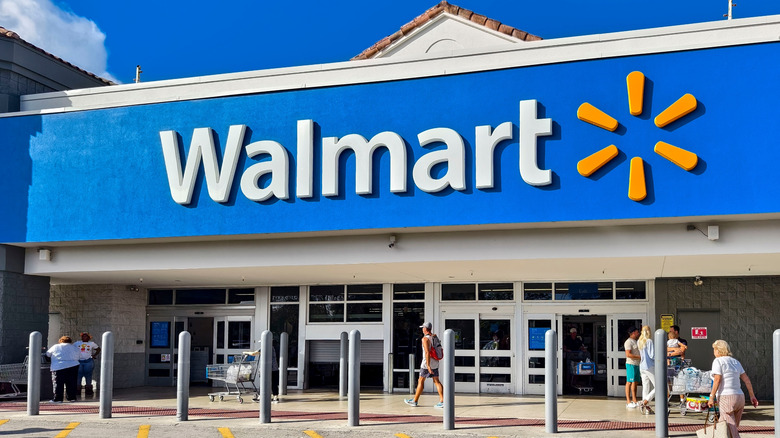
While you'd think that Neighborhood Markets would eventually outnumber Supercenters because of the larger market for grocery stores, as of 2025, there are still about five Supercenters for every Neighborhood Market in the U.S. So, they're still not as widespread as their larger counterpart. Interestingly, though, there are now more Neighborhood Markets than Sam's Clubs. So, they're growing ever easier to find.
Rather than there being more Neighborhood Markets than before, they seem to have topped out between 2018 and 2020 with a little over 800 locations. The highest number of locations reached 813 in 2019 before that number started to decline, reaching 695 total locations by the end of 2024 (compared to 3,560 Supercenters). The Neighborhood Markets that close often don't make as much money as the company thought they would.
However, with the company planning to add more large-model Neighborhood Markets in the future, the number of locations may go back up to its pre-2020 numbers. Despite this, we still wouldn't expect Neighborhood Markets to overtake Supercenters in numbers any time soon.
Special services you find at a Supercenter may not be available in your Neighborhood Market
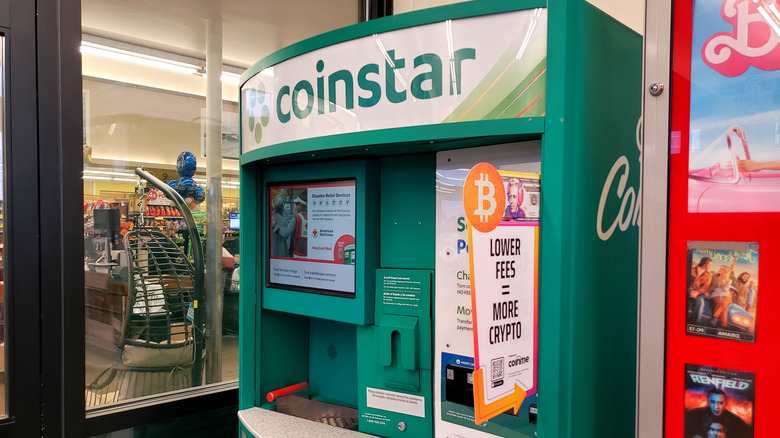
Both Supercenters and Neighborhood Markets have special services. However, because Neighborhood Markets are smaller, there just isn't room for as many. So, if you don't find the service you need at a Neighborhood Market, you'll need to head to a larger Supercenter and see if it can meet your needs.
Walmart Supercenters often have lots of extras to offer customers, like Rug Doctor kiosks, Minute Key kiosks, Western Union locations, Vision Centers, hair salons, lottery scratch cards, banks, and Coinstar machines. However, just because you see these services are available at your Supercenter doesn't mean that they exist in a Neighborhood Market. While there might be a financial center with Western Union capabilities, you won't see a bank. And you can forget finding a Vision Center or hair salon.
The other items and services you might find vary from location to location. For example, the Walmart Neighborhood Market in Fayetteville, Arkansas, has a Rug Doctor kiosk, a Coinstar machine, and a Minute Key kiosk. Many of these services are available along the wall in front of the cash registers, tucked in with water refilling stations and freezers full of ice bags. However, having less space, these smaller stores just can't fit as many things as Supercenters can.
There are lots of tech-savvy ways to order and check out groceries
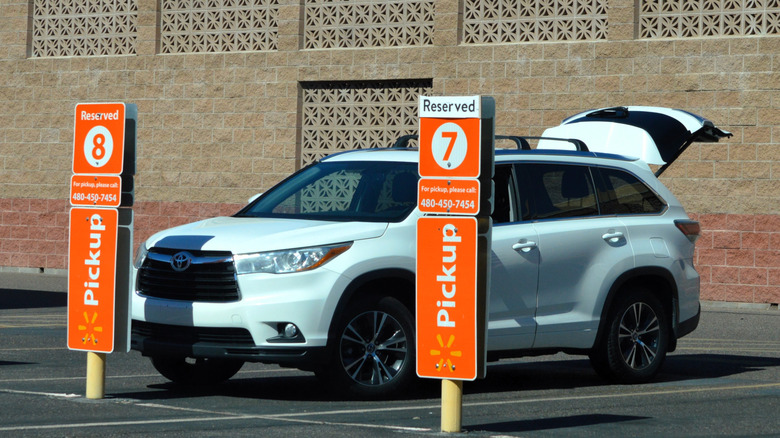
Your local Neighborhood Market has its feet planted firmly in the current decade, with plenty of tech-savvy ways to request, pay for, and receive groceries. So, if you'd rather deal with a screen than a human, it certainly has you covered.
First of all, digital shoppers will be happy that you can order online or via app. When you download the app, you'll also find an AI assistant called Sparky, which provides instant answers to questions about grocery returns, your order, and more. For your order, you have the choice of driving to the store for curbside pickup or letting your groceries come to you via a delivery service or shipping (for items not locally available). You can also create a list of favorites and easily reorder items that you get every week. Once you've made your order, you can also track it.
Some in-store options we like include the self-checkout and the scan and go option. Scan and go, which is an exclusive perk for Walmart+ members, allows touch-free, card-free, and cash-free payments through Walmart Pay. You still have to use the self-checkout for this option, but you'll just be scanning the items with your phone and then scanning a QR code rather than scanning every item at checkout. A bonus of this option is collecting Walmart Cash and manufacturer deals.
Some Neighborhood Markets deliver groceries by drone
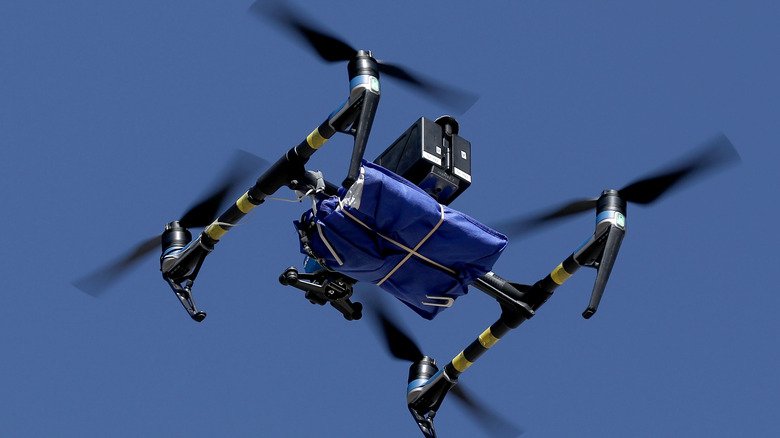
Back in 2020, Walmart began testing drone delivery for select products in Fayetteville, North Carolina. Then, in 2021, it ramped up its Neighborhood Market testing in Farmington, Arkansas. Drone delivery service started out running from 8:00 a.m. to 8:00 p.m., meaning that they were even able to fly groceries to customers in the dark. What started out seeming like science fiction was soon a reality rather than experimental.
Once the company got everything working right, drone delivery expanded to select cities in three additional states: Georgia, Texas, and Florida. Granted, we've noticed that drones tend to operate in cities where there's a larger population available to embrace this new technology, ending service to smaller cities (like Farmington), at least for now.
With the addition of drones, Neighborhood Markets can deliver groceries in as little as 30 minutes. If you have drone delivery available in your area, all you have to do is order items from the website or app, choose drone delivery, and indicate where you'd like the drone to land. You could have it come to your front yard or driveway, for example. The drone rappels the package downward onto your delivery spot, drops it, and you just have to go fetch it. It's great fun to watch your groceries arrive by drone, no matter your age or how many times you've gotten drone delivery before.