

15 Old-School Diner Foods That You Don't See On Menus Anymore
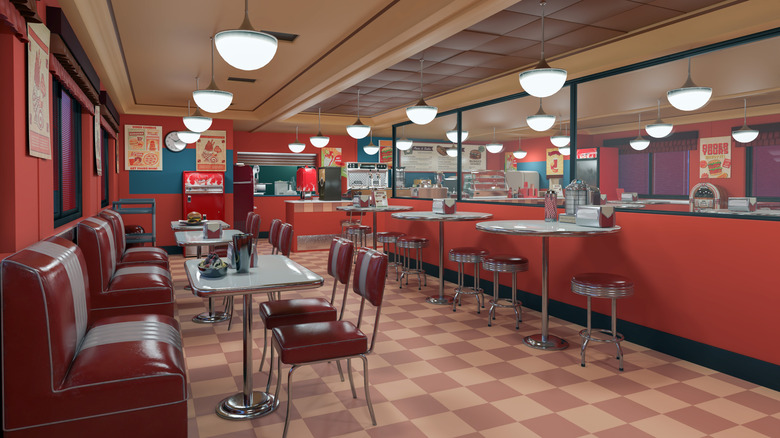
When you think of a diner, you probably envision big plates of comfort food and lots of coffee served late into the night. It's been that way for more than a century, since the very first diner opened in the late 1800s (although back then it was more of a pushcart than a restaurant). But the content of that comfort food? That has changed considerably over the years.
Sure, burgers, steaks, sandwiches, and omelettes have been a mainstay for decades. But other options like Jello salads, liverwurst, and milk toast would look totally out of place on any modern diner menu.
Come with us on a trip down foodie memory lane as we take a closer look at some of the old-school diner meals you just don't see on menus anymore. Some options you'll likely miss, but others, well, let's just say you might be thankful that they're safely consigned to the past (looking at you, calf's liver).
Jelly omelettes
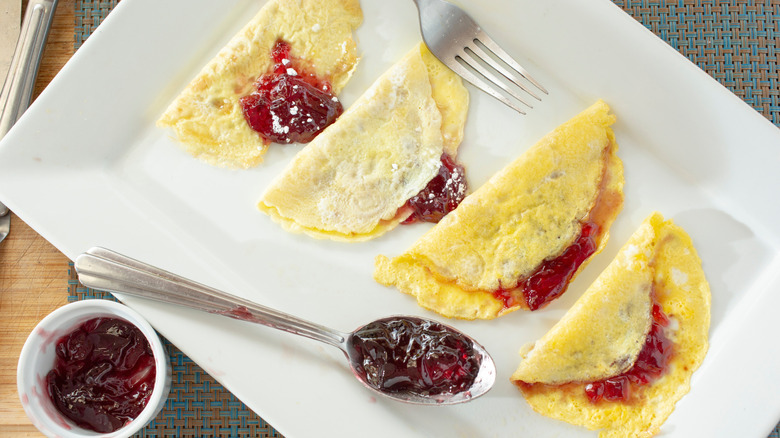
If you head to a diner today, it's almost guaranteed that there will be omelettes on the menu. You'd expect to see a simple cheese variety of the brunch classic or maybe ham and mushroom. Similarly, classic peanut butter and jelly sandwich might appear on the menu, but one thing you probably won't see on the list is a jelly omelette. But a few years ago, this slightly peculiar-sounding menu item probably wouldn't have looked out of place.
Jelly omelettes weren't just served at diners, they were also cooked at home. And they're pretty much exactly what they sound like: A classic egg omelet spread with jelly (which can be any variety, from grape jelly to marmalade). It might sound strange, but plenty of people enjoyed the combination of the sweet jelly with savory, buttery eggs. Some would even combine the jelly with cheese.
Jellied Waldorf salad
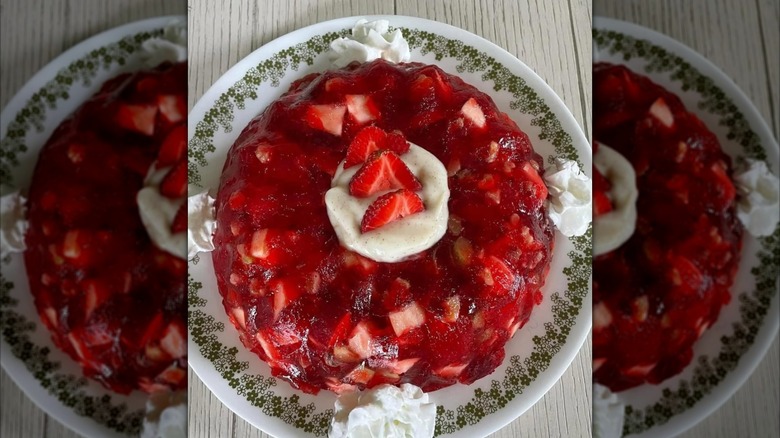
Jell-O salads aren't as common today, but in the early 20th century, they were all the rage. Made with instant gelatin, they were simple, cheap, and relatively mess-free. They were particularly popular during the Depression years, because housewives needed to make foods stretch further, and Jell-O was a great way of doing that.
But the Jell-O salad craze didn't stop at home. It also spread to restaurants. In fact, if you sat down to eat in a diner in the 1930s, you might choose something like a jellied Waldorf salad for your dinner. Well, it's called a salad, but from the outside, it actually looks more like a dessert. Instead of a bowl of leafy greens, it's just Jello mixed with ingredients like apples, celery, and nuts.
Not many families could afford luxuries during the 1930s, but plenty did still eat out. In fact, many restaurants dropped their prices to cater to customers during the period of hardship. One menu from the 1930s lists a jellied Waldorf salad for $0.15 cents, which in today's money, would be just under $3.
Sardine sandwiches
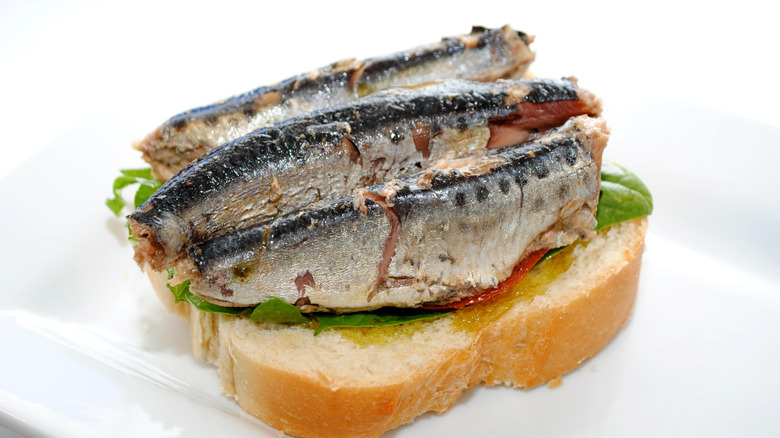
When you're not sure what to eat, a sandwich is always a good idea. In fact, in 2023, one poll found that nearly 70% of Americans believe they could live on nothing but sandwiches all week (per New York Post). But what about if that sandwich was filled with sardines? People nowadays may just change their mind. But a few decades ago, sardine sandwiches were all the rage.
In fact, in the 1930s and 1940s, demand for sardines was massive. Even during the Depression, tens of thousands people worked in California's sardine industry. During this time, many eateries, including diners, had sardine sandwiches on the menu. They usually consisted of sardines (of course), maybe a little mustard and some onions or lettuce, for extra texture.
Today, when it comes to seafood sandwiches, people are far more likely to see tuna on the menu. However, that could change. Due to ongoing economic struggles, the sales of various tinned fish are rising again.
Wheatcakes
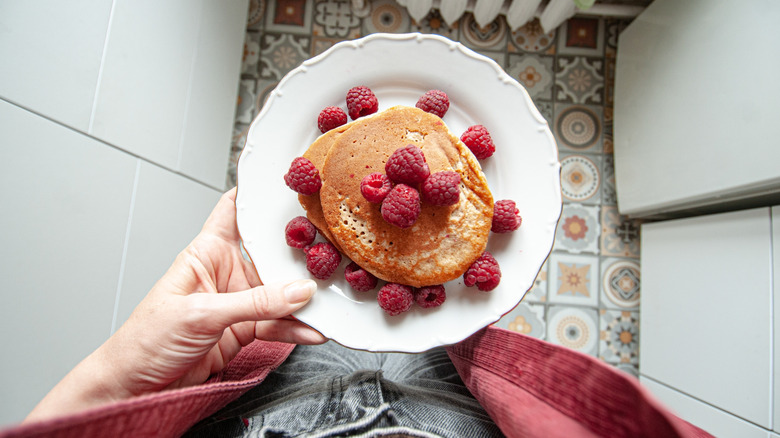
Alongside omelettes, another diner staple is, of course, pancakes. They're usually fluffy, filling, stacked high, topped with fruit or bacon, and doused in a generous drizzle of syrup. Today, most pancakes are made with all-purpose white flour and buttermilk, but back in the early-to-mid 20th century, they were sometimes listed as wheatcakes , for the simple reason that they were usually made with whole wheat flour and sometimes molasses.
Silent movie star Charlie Chaplin once spoke of enjoying wheatcakes in a 1925 interview with The New York Times, noting that he ate them alongside cereals and fruit at British politician Sir Philip Sassoon's country estate. Of course, most people didn't eat wheatcakes in aristocratic homes, but at diners.
One American diner menu from the 1950s lists an entire wheatcake section. Each portion came with butter and syrup, and, not unlike pancakes served today, customers could also choose from a variety of different sides, including eggs, ham, bacon, and sausage.
Cottage cheese with everything
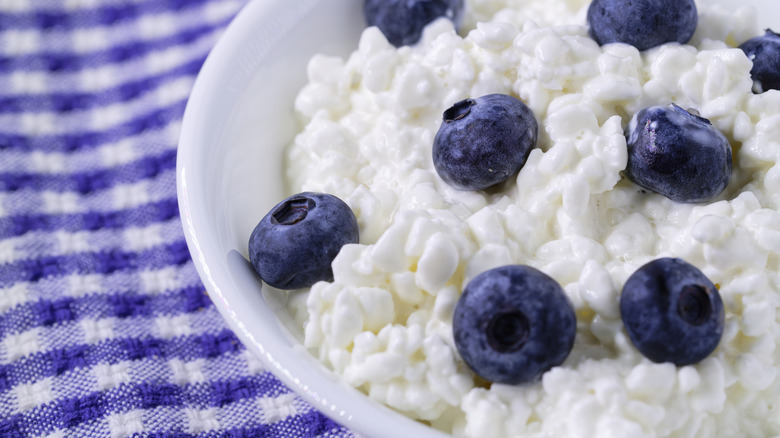
Cottage cheese is a boomerang food. It just keeps coming back. In 19th century America, it was primarily eaten in rural farmhouses or cottages — hence the name. Then, in the First and Second World Wars, it became a high-protein essential, filling in for the lack of meat. By the mid-20th century, it had a new identity as the ultimate diet food, thanks to its low-calorie content. Many diners launched diet plates during this period, and cottage cheese was a regular fixture on them for decades.
One 1967 Denny's menu, for example, lists a peach and cottage cheese salad on the salad menu. Another menu from Denny's, this time from 1975, offers a Lean and Low section, with options like a beef patty with cottage cheese, steak with cottage cheese, cold roast beef with cottage cheese, and, again, peach halves with cottage cheese. Another menu from a San Francisco diner in the 1980s lists The Skinny Lunch, which consists of a hamburger or a fish filet with fresh fruit, and, of course, cottage cheese.
You get the gist — there weren't many food items that a diner wouldn't serve cottage cheese with. Today, after a few decades of laying low, cottage cheese is popular again. However, now, you're probably more likely to see a TikToker munching on some cottage cheese toast with avocado or a cottage cheese flatbread than to see it listed with fish or a burger on the skinny section of a diner menu.
Turkey Devonshire
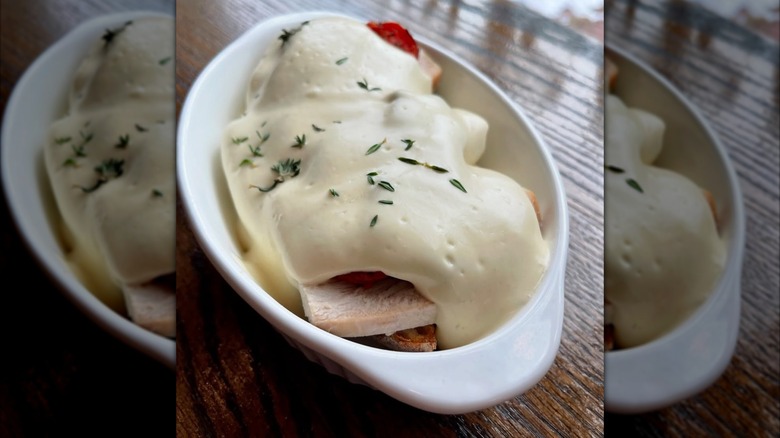
One dish you would never find in a diet or skinny section of a vintage diner menu was turkey Devonshire. The open-faced sandwich, invented in Pittsburgh in the 1930s, is incredibly rich, satisfying, and quite frankly, full of calories. It starts with toasted white bread, which is then loaded with bacon, a heck of a lot of turkey, cheddar cheese, and tomatoes, and then maybe finished with some extra Parmesan cheese on top.
The dish started out as a staple on fine-dining menus in Pittsburgh, but it then spread across the city, becoming a common fixture on late-night diner menus by the 1960s and 1970s (although in cheaper eateries it was often made with processed turkey, rather than fresh, roasted breast meat). Although it's far less common now than it used to be, you can still find it served as a throw-back special in some restaurants and diners today across Pittsburgh.
Creamed chipped beef
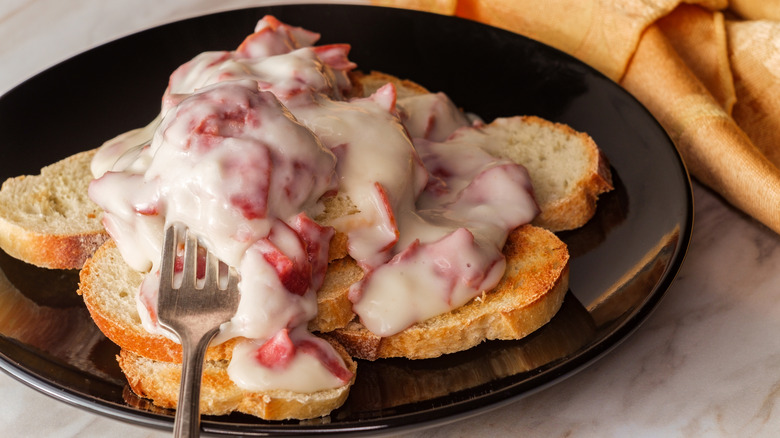
There was a time when you could walk into a diner-style restaurant chain, like IHOP or Cracker Barrel, and find creamed chipped beef on the menu. But those days are behind us, as both chains have discontinued the diner classic. However, you can still find the dish served in a few diners across the country. Tastee's in Maryland, for example, has offered it since at least the 1980s, and it's still on the menu today.
Creamed chipped beef is particularly popular with veterans, because it has been served in the army for decades (the earliest written recipe is likely in the 1910 "Manual for Army Cooks"). It's a simple yet hearty dish consisting of creamed beef, usually served on toast. Fun fact: Soldiers used to refer to creamed chipped beef on toast by distinctly unappetizing nicknames, most likely due to the look of the dish.
Liver and onions
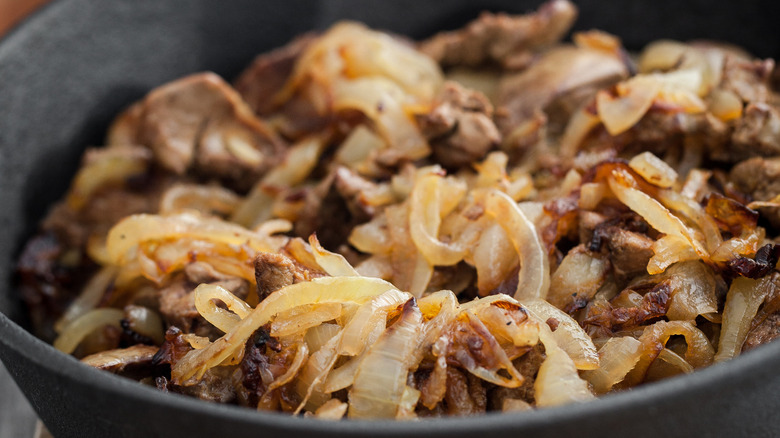
Liver and onions is exactly what it sounds like. It's the liver of an animal (usually beef or lamb) that has been coated in seasoning and then grilled or fried and served with sauteed onions. It's unlikely you'll find it on a diner menu today, given that modern demand for organ meat in the U.S. is low. But during the Second World War and even up to the 1960s, it wasn't uncommon to see dishes like grilled liver with bacon and fried onions listed on a diner menu.
From the 1970s onwards, liver started to fall out of favor, in part because people just didn't see the need to eat it anymore. The war years were over, and there were simply far tastier meats available. Today, rather than diner kitchens, most of America's liver is eaten by dogs and cats. In fact, organ meats often end up in the pet food industry.
Milk toast
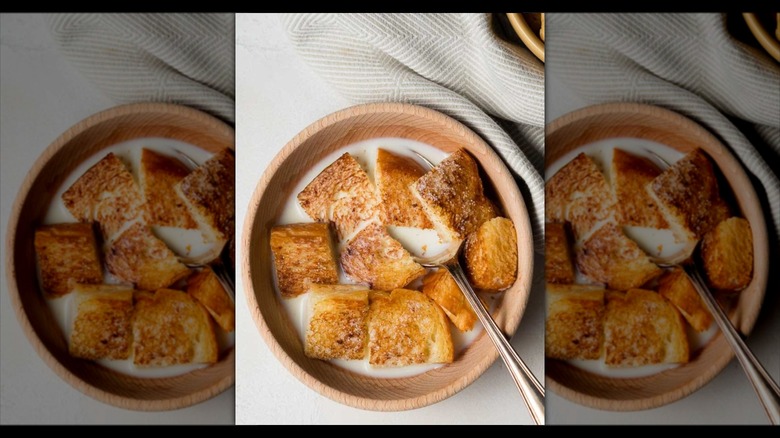
Nowadays, if you're looking for a quick breakfast, you either reach for a bowl of cereal with milk or a slice of toast. It's rare that you would combine them together to create milk toast, a dish that was popular comfort food back in the late 19th and early 20th century. It was even offered by some diners, alongside other toasty breakfast options like cinnamon toast or French toast.
Milk toast is basically just, well, milk and toast. Toasted bread is cut into small pieces and then topped with milk in a bowl. In fact, it's very similar to a bowl of cereal, but the milk is warm, and the cereal has been replaced with cubes of hearty toasted bread (preferably plain white bread or sourdough). Often, to add a little bit of sweetness and flavor, cinnamon and sugar were added to the milk.
Liverwurst sandwiches
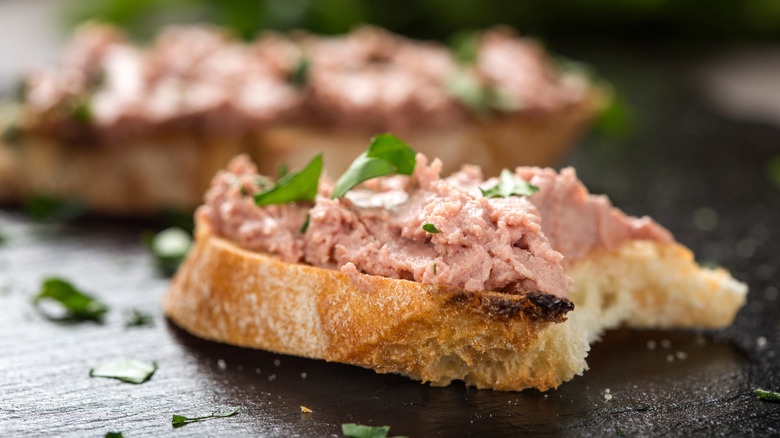
Today, you can still rely on diners to offer a good sandwich selection, mainly featuring classic options like grilled cheese or a hearty BLT. Although sandwiches were a diner staple a few decades ago, the selection of fillings that were used might raise a few modern eyebrows. One 1930s diner menu lists an extensive sandwich section with options like minced ham and liver and cheese. Another vintage menu features an even longer sandwich menu, this time with filling options like oysters, sardines (as we touched on earlier), and liverwurst.
Again, much like liver and onions, you're unlikely to frequently come across liverwurst sandwiches on the menus today. The meat, which is, as you may have guessed, a German sausage made with liver, was popular in the 20th century, largely because it was cheap. It hasn't stood the test of time, though. In 2024, Boar's Head, one of the biggest U.S. suppliers of deli meats like liverwurst, ended its production of the processed meat entirely after a major Listeria outbreak at one of its plants.
Chicken à la King
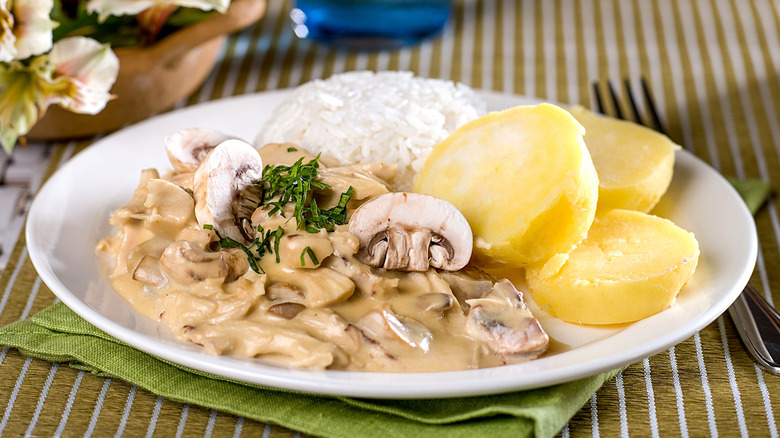
Chicken à la King sounds fancy, but it's actually just chicken and mushrooms in a white sauce, usually served over toast. This simplicity didn't hold it back from popularity in the 1950s and 1960s, when it appeared on household dining tables and restaurant and diner menus all over the country.
Often, diners would put their own spin on the dish. A 1963 diner menu, for example, lists one of the specials as chicken à la King with toast points, which are basically crustless, seasoned, and buttered triangular slices of toasted bread. Some diners would make the sauce with canned mushroom soup, or mix in frozen vegetables, like peas and carrots.
Chicken à la King is nowhere near as popular today, but you can still find it in a few eateries across the U.S. But if you're feeling particularly desperate for the canned diner version of the mid-century, you can even buy chicken à la King in a tin from grocery stores.
Breaded veal
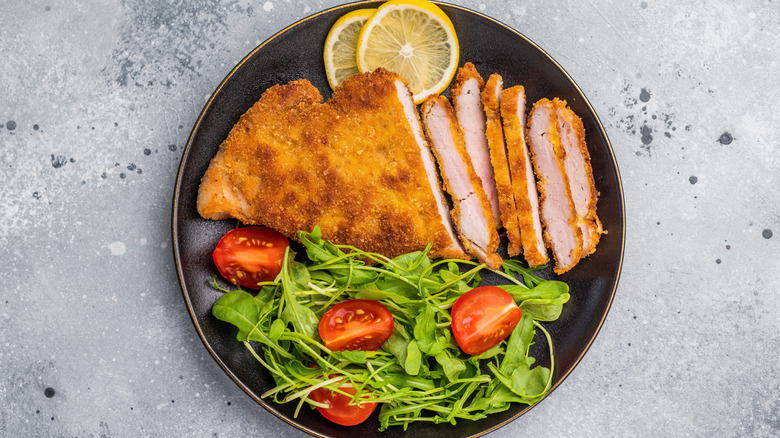
In the 1960s, people ate considerably more veal than they do today. And because demand used to be a lot higher, veal wasn't an unusual sight on diner menus a few decades ago. It was often breaded and served in cutlet form, alongside fried potatoes, coleslaw, bread, and butter.
Today, however, veal isn't a popular meat choice in the U.S., so it's unlikely you'll see it on a diner menu. In fact, by 1990, veal boycotts were becoming more common in America, mostly because of animal welfare concerns around farming methods. 2003 research that was published in the Encyclopedia of Food Sciences and Nutrition revealed that veal accounted for only 1% of all red meat consumption in the U.S. (via ScienceDirect). Veal is still somewhat discredited, so we're not really sure that you can expect a resurgence of breaded veal cutlets in classic American diners.
Calf's liver and bacon
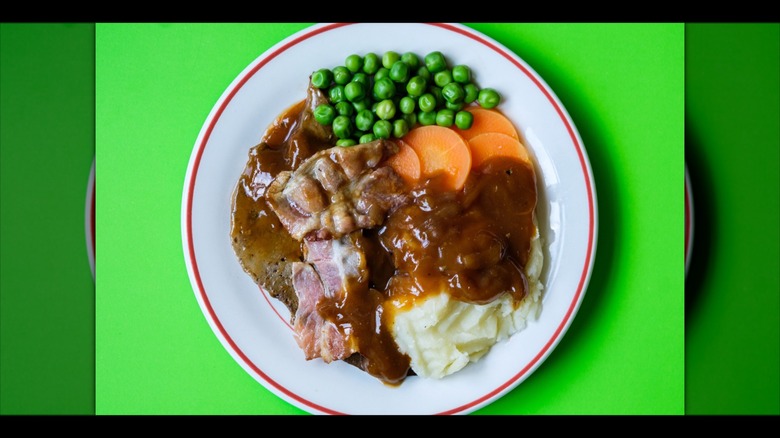
Just like veal, calf's liver comes from young cows, usually those that are under one year old. Neither liver nor veal are popular today, so it's highly unlikely you'll see calf's liver on a modern diner menu. But there was a time when calf's liver wasn't a strange dinner choice. One menu from a Las Vegas diner in 1946 lists calf's liver and bacon for $1.50, alongside other menu staples like lamb chops and sirloin steak.
Calf's liver was generally viewed differently to beef liver. It was seen as a little more upper-class, especially during the 1930s amid the Great Depression. It tends to have a stronger taste than the liver of older cows, but it's also sweet and has tender texture.
The Las Vegas diner wasn't alone in serving calf's liver with bacon. This was a common pairing at the time, and was likely brought to the U.S. from the U.K., where the combination of liver and bacon has been eaten since the 1700s.
Chicken liver
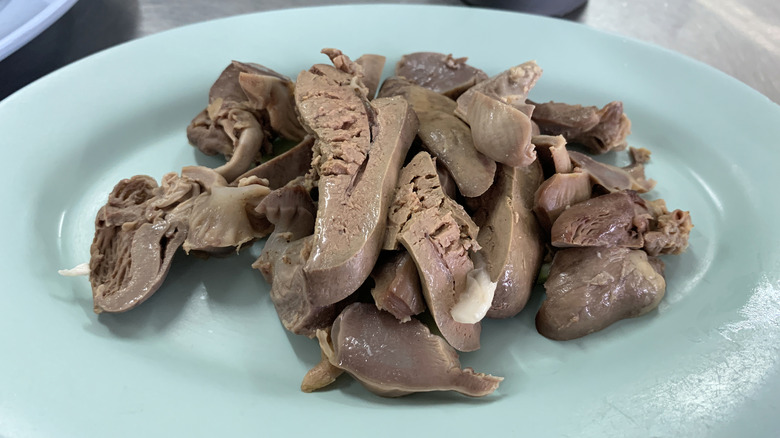
Yep, we're not done with liver yet. We've had beef liver, calf's liver, and now, we're onto chicken liver, which was another common diner menu option. Chicken liver tends to have a lighter texture than beef, and it's also milder in flavor, which makes it a little more versatile. One New York diner menu from the 1950s offers chicken liver with fresh eggs, cream, fried onions, a toasted roll, and curly potatoes. Another menu from a 1940s Las Vegas diner offers chopped chicken liver as an appetizer, alongside olives, shrimps, and tossed green salad.
Just like beef liver and other organ meats, chicken liver has fallen out of favor these days. In fact, one of the only organ meats you're likely to see on (high-end) menus now is foie gras, which is fatty goose or duck liver, although even this delicacy isn't that popular in the U.S., largely because of animal cruelty concerns, as foie gras is produced by force-feeding ducks and geese.
Salisbury steak
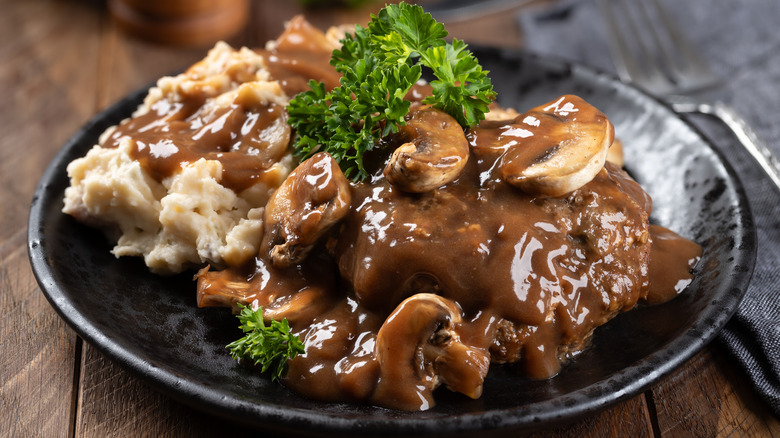
Another classic, hearty diner dish of the past is Salisbury steak, which, again, involves meat in sauce, over some form of carbohydrate. This time, it's ground beef in a creamy mushroom gravy, often served with potatoes.
The simple diner dish, which was also often the star of 1950s canned food and TV dinners, didn't start out as a diner staple and convenience food go-to. It was actually invented by a doctor named James Henry Salisbury, who wanted to help prevent malnutrition in American soldiers during the Civil War. He was sure that high-protein options, like Salisbury steak, would help avoid muscle wasting and diarrhea.
Still, despite its long and interesting history in the U.S., Salisbury steak isn't eaten that much anymore. After all, tastes have changed considerably over the years, and Americans have more food choices than ever. Diners, in general, are falling out of favor. Per NPR, in New Jersey, around 150 diners have closed their doors in the last decade alone.