

Cottage Cheese Vs Eggs: Which Is The More Nutritious Breakfast Option?

Starting the day with a high-protein breakfast is the closest thing nutrition science gives us to a cheat code for the day. The benchmark nutritionists recommend is about 30 grams of protein at breakfast for most adults, which stabilizes blood sugar, curbs the mid-morning snack spiral, and helps build muscle over time. Eggs and cottage cheese are both reliable choices because they are both unprocessed, high-protein, whole foods, rich in micronutrients, and naturally low in sugar. Which is better? The one you'll actually eat. A healthy diet doesn't have to be white-knuckling your way through foods you resent. It should be building habits you can rely on and find joy in.
Both options deliver the same core benefits of steady energy, no sugar crash, and a head start on meeting your daily protein goal. A routine scramble every morning? Great. A single-serve container of cottage cheese grabbed on your way out the door? Also great. Eating the exact same thing every day might give some people the ick, so if one morning you wake up and can't face another runny yolk, switch it up. Your body gets the same benefit either way. To get to 30 grams of protein, you'll need either about four large eggs or a cup and a quarter of cottage cheese. Both accomplish the same goal with slightly different serving sizes, and they do it without loading you with sugar. You can also combine them in delicious, convenient meal-prepped egg bites.
Cracking the case of a healthy breakfast

Eggs have carried their share of nutritional baggage. For decades, the official line was that eating eggs would send your cholesterol through the roof. That advice has been walked back: dietary cholesterol has a negligible effect on blood cholesterol for most people. What eggs actually deliver is a remarkable concentration of micro and macro nutrients in a small, versatile, inexpensive package.
A single large egg provides about 6 grams of protein, vitamin D (rare in most foods), and choline in the yolks, which is crucial for brain function, nerve health, and cell structure. The fat in eggs is mostly unsaturated, with a dose of omega-3s if you choose pasture-raised or fortified options. They're also naturally gluten-free, dairy-free, and broadly tolerated, which makes them an easy choice for anyone avoiding lactose.
From a practical perspective, eggs are endlessly adaptable. You can meal-prep egg bites in a muffin tin, top avocado toast with a jammy six-minute egg, or perfect a perfect omelette (using Tasting Table's tips) on a slow Sunday. For mornings that demand speed, hard-boiled eggs in the fridge are a grab-and-go fix. The key is finding a version you actually look forward to eating, because you'll only stick to the routine if it tastes good.
Say cheese to cultured protein
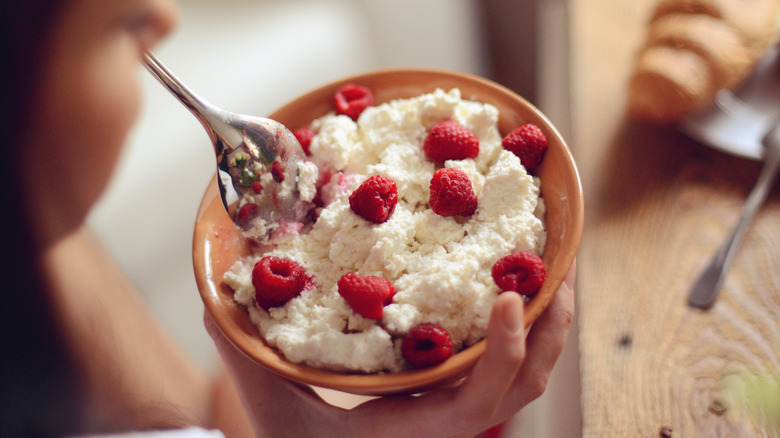
Cottage cheese deserves equal billing at the breakfast table. A cup of low-fat cottage cheese packs around 24-28 grams of protein, making it one of the most efficient protein-per-calorie foods available. It's also a rich source of calcium for bone health, plus B vitamins, and selenium. Because it's a fermented dairy product, it contains microbiome-friendly probiotics. Unlike eggs, cottage cheese does bring a small amount of natural sugar (lactose), at insignificant levels for most people, but it could matter if you're strictly avoiding sugars. Additionally, if you're lactose-sensitive, cottage cheese may cause more trouble than it's worth, although there are lactose-free options.
What cottage cheese really brings to the table is flexibility. It can go sweet or savory, and also blends into many classic breakfast recipes. You can meal-prep it into jars with seasonal or frozen fruit, stir it into pancake batter for added protein, or dollop it on whole-grain toast with a drizzle of hot honey. You can even blitz it with frozen berries to make a high-protein smoothie base. If eating the same breakfast daily feels like a drag, cottage cheese is a solid and adaptable building block for your first meal.
Cottage cheese is a no-fuss, nutrient-dense option that delivers protein alongside bone-supporting minerals and probiotics. But if dairy isn't in the cards, eggs are just as powerful. The point isn't to crown a single winner, but to choose the one that supports your body and your breakfast rhythm.