

What Does 'Microwave-Safe' Really Mean, Anyway?
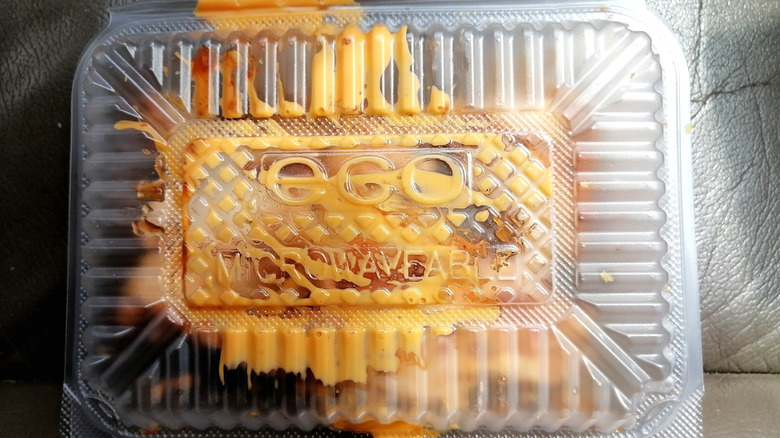
The "microwave safe" label on reusable containers may seem like a guarantee, but what if that promise is more limited than it appears? The truth is, the label is more like a few check marks on a very specific test, rather than an absolute green light. In fact, there are many reasons why you should second guess microwave safe labels before heating food.
Microwave safe simply means that the material won't melt, crack, or warp in high heat produced by a microwave, which can reach up to 212 degrees Fahrenheit. As long as the container remains intact, you're technically in the clear. The term doesn't account for less visible risks. From a regulatory standpoint, there's no universally enforced standard for what makes a container safe for the microwave. Container makers often decide for themselves whether the product merits the label. Concurring research agrees that microwave safe refers only to structural integrity, not health-related safety.
When it comes to human health, there is nothing safe about putting plastic in the microwave. According to The American Journal of Medicine, plastic containers often contain phthalates and bisphenol-A (BPA), harmful hormone disrupting chemicals that may be released into your food after heating up in the microwave. For this same reason, you should stop using those vintage plastic containers from your grandma.
Risks of microwaving plastic and what to do instead
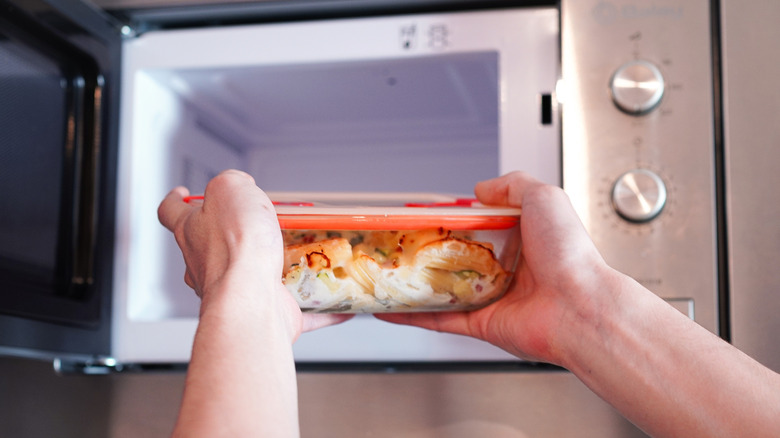
It may be convenient to reheat last night's takeout in the microwave, but research has repeatedly shown that this practice is more harmful than it seems. In one particularly alarming study by the University of Nebraska-Lincoln in 2023, millions to billions of micro- and nanoplastic particles were released from baby food containers within minutes of microwaving. When human kidney cells were exposed to such particles in a lab, about 76% of the cells died, suggesting that exposure to micro-plastics causes negative health effects. A recent class action lawsuit against S.C. Johnson, the makers of Ziploc bags, claims that consumers were told that Ziploc bags are microwave safe without describing the health risks of micro-plastic exposure. Experts say that even trace amounts of BPA can be toxic, and plastic containers that claim to be BPA-free may leach other active chemicals.
So, what's a consumer to do with all of this information? Thankfully, there are plenty of safer alternatives to plastic containers with a microwave safe label. If you're heating food in microwave, use storage containers made of terracotta, glass, or ceramic, especially for high-fat or high-sugar foods that reach elevated temperatures. If a plastic container is the only available option, check the recycling codes to find out which chemicals it contains. For example, 5 PP, aka polypropylene, is considered safer for the microwave. However, 1 PET (polyethylene terephthalate) and PVC (polyvinyl chloride) are more harmful and should be avoided. Never heat food with a tightly sealed plastic lid, as steam buildup could lead to even greater exposure to these chemicals. When plastic use is unavoidable, heat in short intervals on medium power, stir frequently, and allow standing time to distribute the heat evenly.