

Why José Andrés' Paella Might Look Different Than What You're Used To

Spanish-American chef and humanitarian, José Andrés, put Spanish tapas on the U.S. map. If you ever get the chance to visit his restaurant, Jaleo, you can expect to find a plethora of traditional Spanish dishes – just don't expect the paella to look the way you're used to. The paella Andrés serves at his restaurant is based on the authentic, Valencian recipe — one that doesn't include seafood.
"Do you know how to identify an authentic paella Valenciana? One important thing to start... no seafood!!" Andrés wrote in an Instagram post from 2023. The caption accompanies a video clip from an episode of his HBO show "José Andrés & Family in Spain." In the clip, he confirms with a local Valencian chef that paella in its original form was not meant to include seafood. Andrés goes on to state that the classic seafood paella you likely know is "not the real thing."
Developed back in the 15th century in the rice-producing region of Valencia, Spain, farmers would make paella using only what was regionally available. This included ingredients like chicken, rabbit, duck, artichokes, white or green beans, and oftentimes snails – all ingredients Andrés' recipe is based on. Though, it's worth noting that the Jaleo menu offers multiple variations — including those with seafood.
How to make paella the traditional way
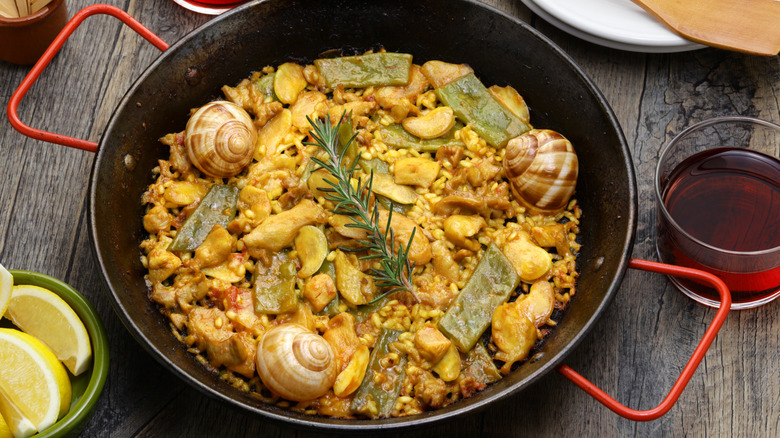
Like many Spaniards, Andrés is ardent about the proper way to make Spain's national dish. In his case, this means using simple ingredients, and the type of rice every traditional paella calls for: short-grain. Over the years, however, Valencian paella made its way to other regions in Spain, where it took on different twists using other region-specifc ingredients. For instance, on the coast, Paella de Marisco (Seafood Paella) and Paella Negra (Black Paella) made with squid ink became popular, while other regions opted for adding a combination of meat and seafood in a variation known as Paella Mixta.
For those interested in tasting authentic paella, you can order several different variations at Jaleo — each inspired by Andrés' experience making the dish with his father. The dish serves four to six people, and served in the traditional pan it's named after. If you can't make it to Jaleo, however, traditional paella can be made at home if you follow a few essential tips. But, according to Andrés, the key to optimal flavor is the rice itself, with Bomba rice from Valencia or Calasparra rice from Murcia being the ideal varieties for absorbing flavors and maintaining the perfect paella texture.