

How To Shake A Carbonated Cocktail Without Causing A Huge Mess
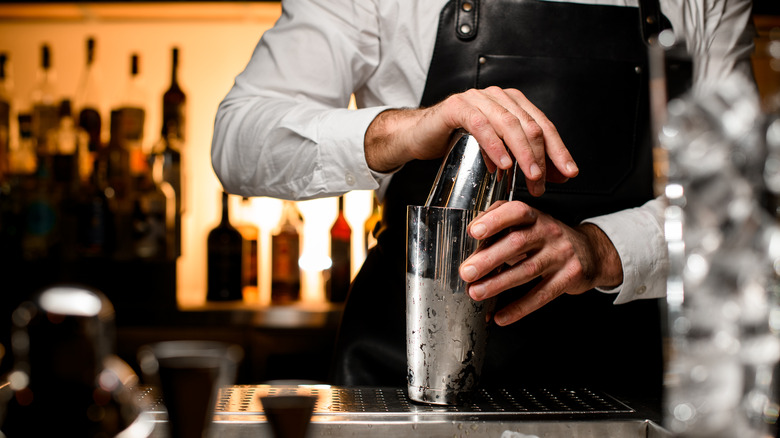
A carbonated beverage can be a fun, refreshing way to sip. This is why many cocktails include carbonation, typically in the form of club soda. Popular examples include the Tom Collins, sangria, and aperol spritz, but there are countless others as well. Some of these, such as the Tom Collins, are made by shaking the ingredients together. However, this poses a bit of a problem; as any curious kid who's ever shaken up a can of soda can tell you, carbonated beverages tend to explode when shaken. This is because shaking carbonated beverages forms a ton of small carbon dioxide bubbles that expand and explode when exposed to open air. To prevent your carbonated cocktail from exploding and making a mess, be sure to add the club soda last.
For instance, when making a Tom Collins (such as with this Meyer lemons Tom Collins recipe), you should shake the gin, lemon juice, and simple syrup together, then top the entire concoction with the club soda. This gives your drink the proper shaken consistency without making a mess of the club soda. Another example is a highball, a rather simple cocktail consisting of a spirit and a fizzy mixer like club soda. A highball can be upgraded in a number of ways, but no matter what you add to it, put the fizzy addition on last and don't shake it.
When to shake versus stir a carbonated cocktail

Before you go to town with your cocktail shaker on a carbonated cocktail, know that not all of them need to be shaken. For instance, the aforementioned sangria and aperol spritz cocktails include club soda, but are stirred and not shaken.
Shaking is a much more intense method of mixing a cocktail, and unlike stirring, it affects the texture of the drink. A shaken cocktail will have little air bubbles, creating a foamy, frothy drink. Because of the more intense method, the drink will turn out cloudy, which is why clear cocktails like the classic aperol spritz are stirred instead. Generally, this means cocktails are only shaken when they have ingredients that will already make the drink cloudy, such as the lemon juice of a Tom Collins. However, this is not a hard and fast rule, especially since many bartenders come up with their own spin on different cocktails. For instance, this red sangria recipe has a cloudier appearance thanks to the red wine, but is still stirred and not shaken.
In general, it's best to follow along with a recipe for whatever cocktail you've chosen. Once you're more familiar with each drink, you can choose to mix up the recipe as you please, but you might not like the results if you stir a shaken cocktail or vice versa. And remember, while you can freely stir in carbonated cocktail ingredients, never shake them.