

The Design Rule Small Kitchens Are Breaking (And It's Fine)
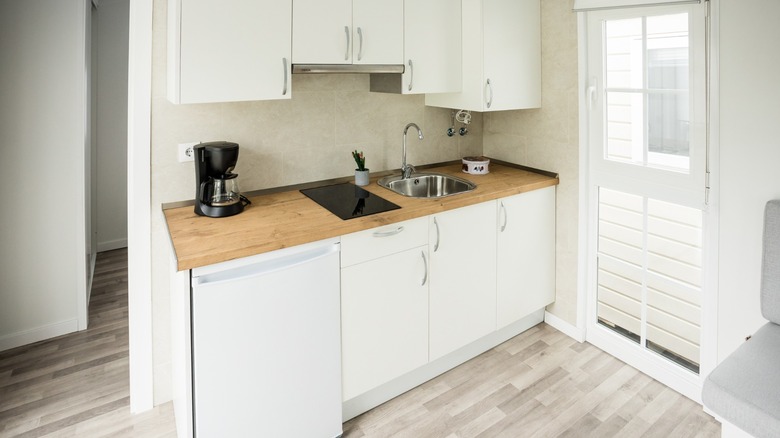
Are you a stickler for rules? Or do you like to play fast and loose, following your instincts no matter what the traditionalists say? In the world of kitchen design, the prevailing wisdom is that a backsplash belongs behind the sink and stove. Whether it's subway tile, glass mosaic, beadboard, or similar materials, there has to be something there, right? Not so fast! Today, the idea of a backsplash is being abandoned entirely, especially in smaller kitchens.
Backsplashes started with a purely functional purpose. As the name suggests, they were meant to protect walls from splashes from the stove and sink that could stain or damage nearby surfaces. Early backsplashes were typically about four inches tall, which was considered sufficient to catch errant grease or sauce. Over time, they also became aesthetic elements, adding to the overall style of the kitchen.
There are plenty of ways to shape the look and style of a kitchen. Removing the backsplash opens the door for more unified or harmonious designs that don't draw attention to the wall as a separate element. In small kitchens this can give the illusion of a space that is less busy, making the whole kitchen look bigger. A tiled backsplash, for instance, includes many small pieces and grout lines that can make the space feel cluttered.
What replaces the backsplash in a small kitchen?
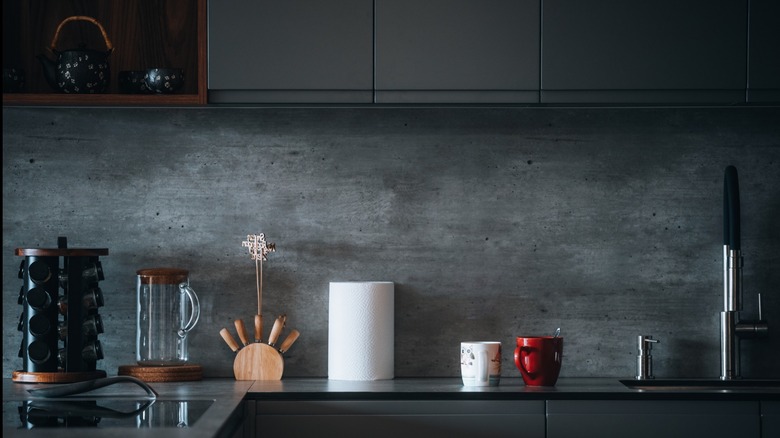
Understanding the functional purpose of a backsplash can help you decide how to go without one. Most kinds of paint are easily washable and can stand up to a lot of kitchen mess, so something as simple as designing your kitchen around a certain shade could be all you need. Having tiles or another material as a backsplash may not be necessary. Especially when you can just paint the wall to give your kitchen that cohesive look and focus more on maximizing your space.
If you need more protection, an upstand can replace a traditional backsplash. While a backsplash typically extends from the counter to the bottom of the cabinets, an upstand is a shorter panel, usually an extension of the countertop, so that it matches. An upstand is more decorative than a full backsplash, but it still protects the wall since most kitchen splashes occur in that lower area, anyway. The function is maintained in a less obtrusive manner.
Other options can include a varnished wall surface or even wallpaper with a varnish coating. As long as the surface is protected from stains, these options can work well, especially in a small kitchen space. This design approach can also create a space that does not feel like a traditional kitchen, a design choice many people find appealing. If you're working with limited room and plan a redesign, give it a try and see for yourself.