

Balsamic Vinegar Vs Balsamic Glaze: Here's Why They're Not The Same Thing
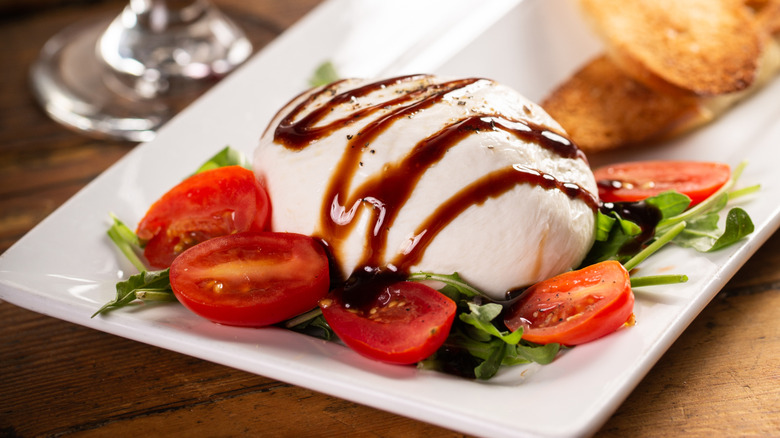
Balsamic glaze and balsamic vinegar are both very similar condiments that provide a tangy kick to any dish. However, while some believe that they are two sides of the same coin, they are actually quite different from each other in many ways. The flavor, consistency, the method of making, and the utilization for each sauce differs and has made them both distinct. The vinegar comes from the liquid of white Trebbiano grapes while the glaze is the heavy reduction of the aforementioned vinegar.
The vinegar is lighter, and the fruit is heated to produce a juice called mosto cotto; which is then brewed using a bacteria named acetobacter. The final result has a blackened hue that is sour with just a hint of sweetness in its flavor. The glaze is more syrupy than the acidic mixture but still has a dark color to it. The inky but tasty food varnish has notes of sweetness, but is slightly tart. Its texture is smooth, thick and glossy, as the balsamic reduction is easily made by heating up the vinegar and brown sugar in a saucepan until it has become more gooey than runny.
Dishes you can make with each balsamic variation

The Italian sauce is perfect for some meals that require a zingy, yet mouthwatering bite. But not all the dishes are made equally when it comes to using balsamic glaze and balsamic vinegar. Each dressing is used for different types of plates. Nothing beats the classic old-fashioned snack of hot and fresh bread dipped into vinegar and olive oil. Baguette and ciabatta pair well with the condiments, as they both have a hard crust that is great for soaking up the liquids. Vinegar is a key ingredient in making zesty balsamic marinades for proteins such as flank steak, salmon, and chicken. And you can't forget drizzling a splash of vinegar on Mediterranean or garden salads. The thinness of the mix helps penetrate and coat the food items better while it's also not too sugary.
As for balsamic glaze, it is a delectable topping for the iconic Caprese salads, or refreshing watermelon and feta greens. Jazz up your avocado toast or your peach and ricotta sandwich with a little bit of glaze for an amped up lunch. Pizza varieties such as Margherita are ideal for a little razzle-dazzle of sweet balsamic topping to intensify the savory meal. The texture is very concentrated, so glaze is best suited for these meals due to its ability to stand alone without adding extra sugar or oil to the dish.