

Why Sugar Has Been Sold In Lumps And Cubes For Over A Century
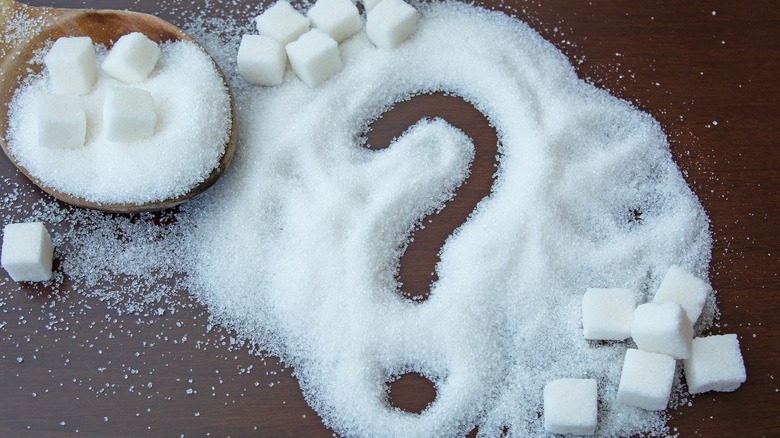
If you've ever watched a British movie or TV show and saw people picking up delicate cubes of sugar with metal tongs and plopping them into their tea, you might have wondered why they weren't just using spoonfuls of granulated refined sugar. But sugar cubes were actually a neat and tidy solution to a sticky, messy problem that had plagued Europeans for decades.
Long before sugar was sold in cubes, it was only available in loaves. In the early 1800s in mainland Europe, British grocers sold large, cone-like loaves of cane sugar or beet sugar. While these loaves were to store and transport, they weren't convenient for the customers who bought them. Grocers would either break the loaves into chunks with a hammer, or customers could buy a whole loaf and use sugar nippers to cut off a piece of sugar. The sugar nipper was a heavy, cast-iron device that looked like tongs, and while it wasn't dangerous, it was an inconvenient, messy, and sticky process. They would then grind the piece into powder or just break it into smaller pieces to put in their coffee or tea.
Over time, customers grew tired of this method. They wanted something more convenient, without the fuss and mess. And so the sugar cube was born. Because sugar cubes were small, symmetrical, pre-portioned sugar units, they were easier to measure out for baking. They also looked nicer and made for a neater presentation when serving tea to guests.
The invention of sugar cubes and popularization in Europe and America
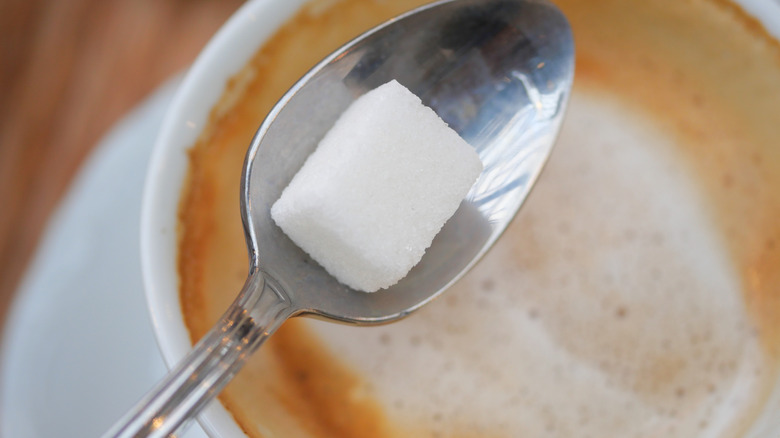
Sugar cubes were invented in Moravia in 1843 by Jakub Kryštof Rad. Rad's wife suggested that turning a large sugar loaf into small, pre-cut portions would make life a lot sweeter. Rad made sugar cubes by grating and wetting the sugar so it could be put into a mold that created 400 tidy little cubes of sugar at a time. While he did patent his invention in 1843, he didn't have much success selling his cubes outside of Vienna and Europe.
In Germany in 1872, a sugar refinery worker named Eugen Langen used a centrifuge machine to turn sugar blocks into symmetrical cubes. This method was much less labor-intensive and time consuming than Rad's process. Langen patented his product in 1874, and by 1875, he sold it to Henry Tate. Tate, who had recently sold his chain of grocery stores to become a partner in a sugar refinery, bought the rights to manufacture and sell sugar cubes throughout the British Isles, essentially becoming a sugar cube monopoly.
While sugar cubes quickly became popular throughout Europe, they didn't make their way to the United States until the 1930s. They are still used for coffee and tea, but have also found a niche use in mixology. Sugar cubes are essential when drinking absinthe and are a key ingredient in champagne cocktails, the classic Old-Fashioned, and the classic Sazerac recipe.