

The Stove Mistake You Make Every Time You Cook That Can Shorten Its Lifespan

Some kitchen appliances are fairly easy to live without while you wait on a replacement, but the stove simply has no good substitute. To prevent this expensive gadget from failing too soon, clean spills and stains off the surface every time you cook. The nooks and crannies in the burners may be among the most frustrating kitchen items to clean, but leaving the appliance filthy is a massive mistake that shortens its lifespan.
When you leave food spills on your stovetop, they can not only grow harmful bacteria, but also inhibit functionality and cause long-term wear and tear. Greasy, clogged burners on gas stoves can weaken the flames or prevent ignition altogether. Over time, a range that must struggle to work will suffer permanent damage to its essential parts. Electric stoves also experience performance issues and wear down much faster when they are caked in grime. The mess only becomes more stubborn each time you skip maintenance, as cooking on a dirty stove burns and fuses leftovers to the surface.
This is especially bad news for glass cooktops, which are easy to scratch or discolor (and expensive to replace). Wiping the top after every use prevents staining, and you won't have to resort to things you should never use to clean your glass stovetop, like rough scrubbers and harsh chemicals. With regular maintenance, all three types of stoves can last for over a decade with little need for repairs.
Keep your stove in great shape for longer
Cleaning off your stove after every use might be simpler than you think. For minor splatters on a glass cooktop, let it cool, then wipe it down with a microfiber cloth dipped in water. If a pot of sauce overflowed onto the stove, try the scratch-free method for cleaning your glass cooktop, which uses a cleaning solution and a razor blade to scrape off stubborn gunk.
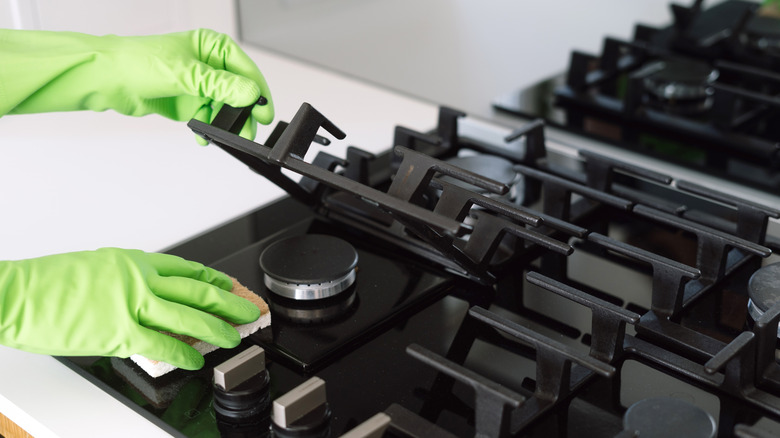
With gas and electric coil stovetops, avoid mistakes when cleaning your stove burners, such as leaving gas ranges plugged in. Once you know how to safely lift up or remove your appliance's components, give the burners, stovetop, and grates a gentle but thorough wipe with a cloth and a cleaning spray or dish soap. Make sure no food or soap residue remains, and that should cover it for daily maintenance.
Gas or electric stoves should also be deep-cleaned once per week. How you clean your stove burners depends on how dirty they are, but for a gas stove, you usually remove and soak the burner caps and grates, then scrub them (along with the burner heads and stovetop) with a sponge and mild cleaner. Clogged burner ports, which are where the gas comes out, can be carefully cleared with a thin needle or pin.
Electric coils, however, should never be submerged in liquid. Instead, carefully remove and wipe them down with a damp cloth, or turn the burner on for a few seconds to burn off any residue. Once cool, you can use a small brush to remove any lingering debris.