

What Is The 5-5-5 Rule For Hard-Boiled Eggs That Are Easy To Peel, And Does It Actually Work?
We may receive a commission on purchases made from links.
There are few kitchen irritations as specific, or as maddening, as trying to pick off tiny clinging shell shards, especially when you're batching a dozen eggs for egg salad or a tray of deviled eggs. The 5-5-5 method promises easy-peel hard-boiled eggs with very little drama. Just five minutes at pressure, five minutes natural release, five minutes in an ice bath.
In a pressure cooker, eggs sit above the water on a rack, which means they're cooked by pressurized steam rather than boiling water sloshing them around. Steam transfers heat efficiently and quickly penetrates the shell. Combined with a full chill in ice water, it often yields shells that slip off in big pieces rather than shattering into the world's most irritating confetti.
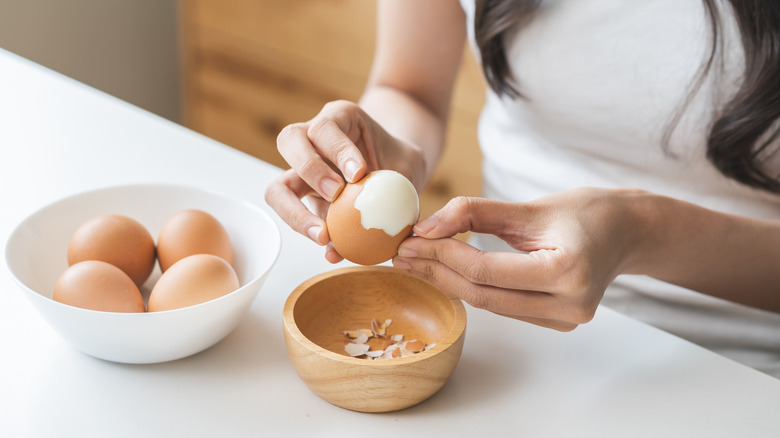
The method is simple: In your pressure cooker, load cold eggs on a rack, add one cup of water, seal, cook five minutes at high pressure, wait five minutes before venting, then chill in an ice bath for five more minutes. Peel your eggs under a slow trickle of water, starting at the wider end where the air cell lives. If your eggs are very fresh, like from the farmers market, add a minute at pressure or let the natural release go to seven; fresher whites cling harder and benefit from a touch more heat.
You'll know it worked when shells slide off in large panels and the whites are smooth, not cratered from fighting shards. Yolk color and doneness are easy to tune, so for a less-cooked center, try 4-5-5; for fully set deviled-egg-ready yolks, stick to 5-5-5 and don't skip the full ice bath, because the last step is the difference between "peels like a dream" and "why did I do this to myself."
Here's to peeling good, all the time
A couple of variables matter, namely egg age and rapid chilling. Older eggs tend to peel more cleanly because the white's pH rises over time, loosening its grip on the inner membrane; the ice bath finishes the job by contracting the albumen and separating shell from white.
When the method doesn't work, it's usually fixable. Start with refrigerated eggs on a rack and one cup of water. For large eggs at sea level, 5-5-5 lands you in classic hard-boiled territory with clean peels. If your eggs are very fresh, add one extra minute at pressure or extend the natural release to seven minutes; fresher whites cling more tightly and benefit from the extra heat/steam. If you're at altitude, increase your cooking time by 5% for every 1,000 feet you're above 2,000 feet altitude.
A couple of small details help: don't stack loose eggs in a pressure cooker without a rack; avoid overfilling past manufacturer guidance; and peel under a trickle of running water, it'll slick the membrane and carries away shards. If you'd rather skip pressure entirely, a straight steam-for-10 approach on the stovetop also peels just fine. But if you've got an Instant Pot on the counter, 5-5-5 is fast, repeatable, and scales to a dozen-plus eggs without babysitting.
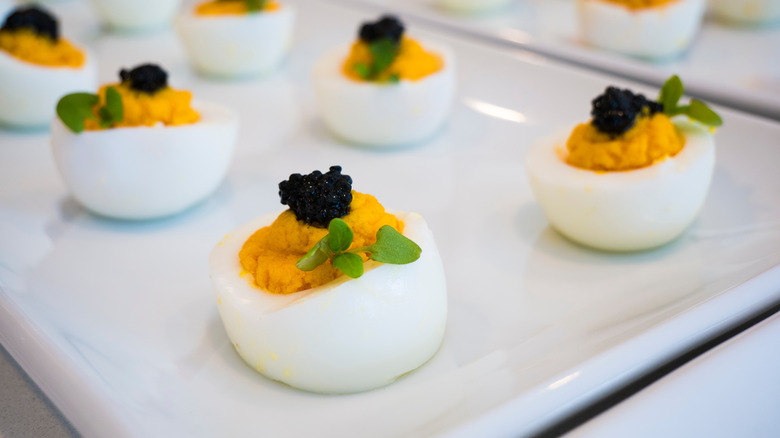
To put the eggs to work, try classic deviled with Dijon and chives (add caviar if you're fancy), dill-pickle egg salad with a splash of brine, chopped eggs with warm bacon balsamic vinaigrette over spinach, lesser known gribiche sauce spooned over roasted potatoes, or do 4-5-5 jammy halves over ramen. Once you have a knack for the 5-5-5 method, you might as well cook a carton.