

The One Part Of A Salt-Baked Fish You Absolutely Want To Avoid Eating
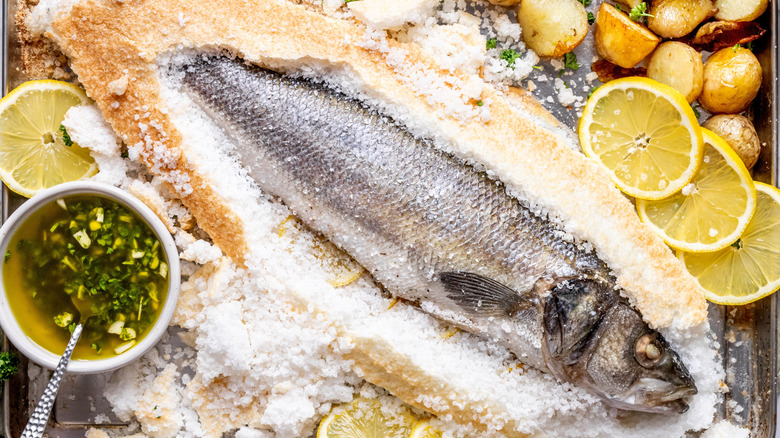
Salt-baking is a unique but effective way to cook meat or even vegetables. The process entails completely surrounding an item in salt before cooking it to trap in moisture and really lock in the seasoning. Many different meats can be salt-baked, but the method is commonly used on whole fish, as it simplifies the process and looks visually impressive when an entire seasoned fish is placed on the dinner table. However, there is one part of a salt-baked fish that is nearly inedible: the skin.
While the salt seeps into the meat of the whole fish and seasons it nicely, it completely coats the skin and scales, creating a salty mess with almost no flavor left. While most fish skins are completely safe and nutritious to eat — with some exceptions, such as the skin on skate fish and other popular deep-sea fish — all of that value is undermined by the sheer excessive saltiness of salt-baked fish skin. The taste will be replaced with that of a mouthful of ocean water, and the nutritional value is null and void thanks to the excessive amount of salt, which is bad for your heart. Therefore, be sure to remove the skin before eating.
How to properly cook and serve salt-baked fish

Cooking a salt-baked fish is no herculean task. In reality, it's quite simple. As this Tasting Table recipe for salt-baked fish with fingerlings and fennel indicates, you'll want to blend your salt with any other spices you use as well as egg whites and water to form a sort of paste before coating the fish in it. Alternatively, you can simply cover it very thoroughly with salt and other dry ingredients, pressing it to form a cover with no holes for moisture to escape. Be sure to use the right kind of salt for salt-baking, as some work much better than others. Many recipes also stuff the inside of the fish with additional seasoning and ingredients like fennel or lime wedges.
After the fish cooks to the proper internal temperature and you remove it from the oven, you'll need to both crack the salt crust and then remove the skin to ensure you're left with only perfectly seasoned meat. If you're serving the dish at a gathering, this step is often done at the table, as revealing the fish can be a fun bonding experience that gets everyone excited for the meal. Then, you can remove the spine and dice up the fish to serve. If cooked correctly, the fish will be perfectly moist and evenly seasoned, making for the perfect dinner.