

Does Pouring Boiling Water Down The Drain Really Unclog A Kitchen Sink?
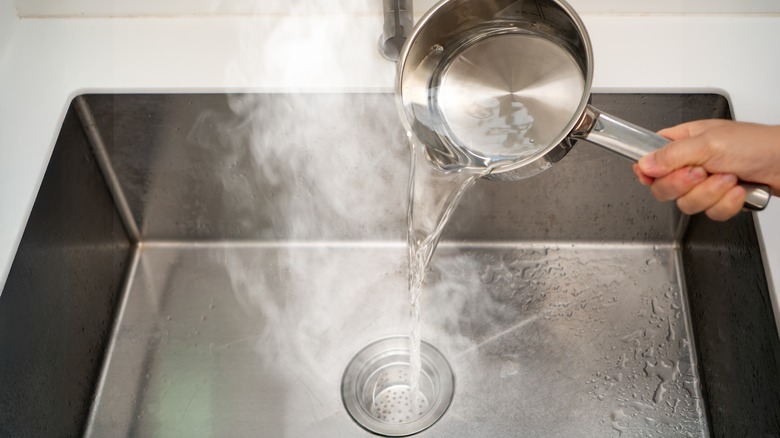
When a kitchen sink starts the dreaded slow-drain slog, it's tempting to grab some boiling water and scald away the blockage. That can work in certain scenarios, such as loosening light grease — but you may get more than you bargained for. Modern plumbing materials, including PVC or PEX plastic pipes, aren't designed for high heat, so boiling water can soften, warp, or weaken pipes at connection points while it winds its way through — if it even gets that far. Sometimes, the scalding-hot water merely pushes clogs further down, exacerbating the problem you were trying to solve, while creating new issues such as damaged pipes.
It's true that boiling water, when poured slowly, can dissolve certain types of fats and loosen organic buildup, so it's not completely taboo if your pipes are made from sturdy materials. That means mainly metal pipes, which can handle the high temperatures of boiling water. Even with metal pipes, however, boiling water is unlikely to sufficiently dissolve things like clumps of hair, mineral buildup, or thick grease and fats. And if metal plumbing pipes are older, as many are these days, super-hot boiling water can damage the weakened, aging structural components.
Boiling water is a tempting solution to kitchen sink problems like clogs and blockage — after all, it's readily available, eco-friendly, non-toxic, and costs almost nothing. But given the drawbacks of that method, it helps to explore options. Fortunately, plenty of them exist, some more effective or viable than others.
Drain-clearing alternatives to boiling water
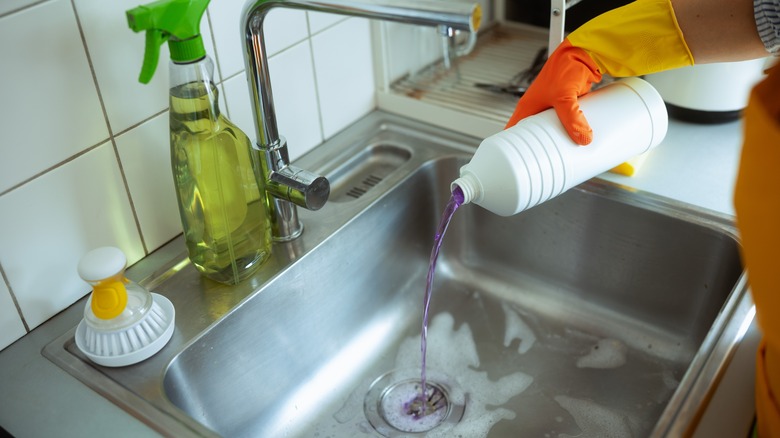
For unclogging drains without boiling water, three primary solutions exist. First is the standby approach of harsh chemical drain cleaners, which definitely work, though at a potentially high cost. While dissolving hair, grease, and just about anything causing the blockage, the aggressive caustic chemicals generate heat that can corrode metal pipes, warp PVC ones, damage supporting fixtures, and even wreak havoc in the bacteria balance of septic systems. That's not even counting the toll they take on human health, including toxic fumes, burns, eye irritation, and injuries from chemical splashes.
Many turn to home remedies such as the classic baking soda and vinegar trick for clearing drains. These are most effective for minor sink clogs or routine preventive maintenance. The fizz emerging from the combination may help with small gunk and funky smells, and it's gentle on most any kind of plumbing pipes. But many professionals feel it's not a heavy‑duty fix for real clogs like hair, hardened grease, and solid obstructions. An alternative in the non-commercial category is trying a plumber's snake or plunger.
Finally, there's another effective and relatively gentle category: enzymatic-based drain cleaners. They're considered a safe middle ground, breaking down organic matter with bacteria and enzymes — without plumbing damage or harsh chemical exposure. The downside is that you need patience, as they take longer to work. For more insights and ideas, check out our guides on avoiding kitchen drain mistakes and clever hacks for cleaning kitchen sinks.