

The Safety Reason You Should Clean Up Kitchen Spills Immediately
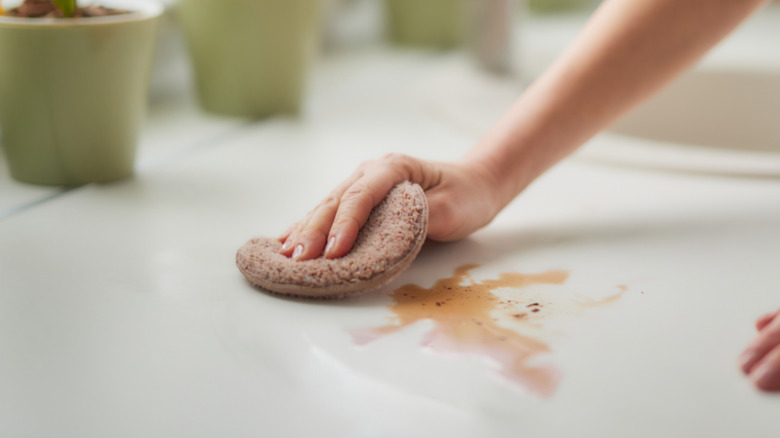
A puddle of water near the sink or a splash of oil on the stovetop doesn't usually seem very urgent, and it's easy for home cooks to think, "I'll just get to it later." But science tells us that even a small spill creates the perfect conditions for trouble. The Center for Disease Control (CDC) estimates that one in six Americans gets sick each year due to foodborne illness, and a dirty, damp kitchen is a major reason why.
For centuries, no one knew that invisible organisms were to blame for sickness. Physicians laid blame for outbreaks on miasmas of mysterious vapors, and kitchens weren't treated as sites of microbial risk. It wasn't until Louis Pasteur and Robert Koch demonstrated germ theory that people began to grasp how easily bacteria multiplied in moist environments. Today, we know that organisms like Salmonella and Listeria can double in number every 20 minutes when left on a warm, damp surface. A few drops of chicken juice that hit the counter while prepping dinner might look innocent, but within only a few hours those droplets become a thriving colony, invisible to the eye but dangerous on contact.
A sticky spill of soda or syrup doesn't give bacteria an instant feast. In its undiluted form, sugar actually draws water out of microbial cells (a phenomenon known as osmotic pressure), preventing them from growing or dividing. But, once the sweet mess is diluted by steam, water, or just ambient moisture, it gives bacteria, yeasts, and other hardy spoilage microbes the moisture and nutrients they need to thrive. That means if you spill soda or wine, make sure to wipe it up quickly — a kitchen safety rule you shouldn't ignore.
Bacteria can easily slip, slide and multiply
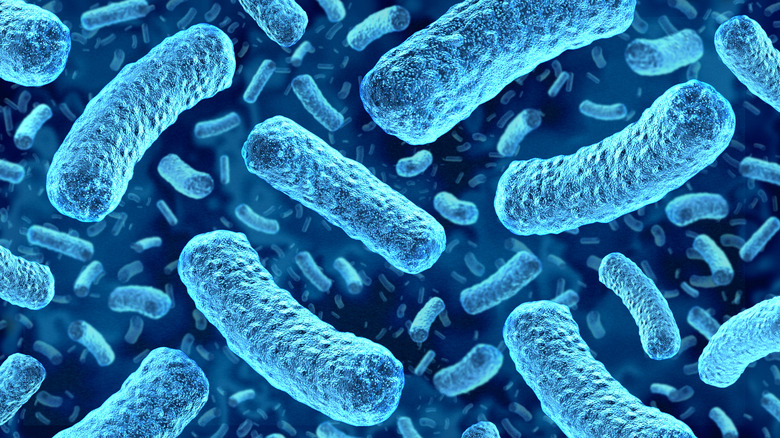
The problem with a spill is that it never stays just where it began. Liquids travel along seams in countertops, into the cracks of tile grout, and across the soles of shoes — and germs are opportunists. A splattered teaspoon of the best chicken marinade may end up smeared across the kitchen within minutes, invisibly carried on hands, sponges, implements, and footsteps.
Before germ theory, outbreaks of waterborne diseases like cholera and typhoid baffled scientists because disease seemed to leap through entire communities without warning. We now know that the culprit wasn't strange air but contaminated surfaces and water, and the same rules apply on a domestic scale today. A droplet left unchecked becomes a vehicle because microbes excel at persistence. Listeria monocytogenes, often linked to major meat recalls, can survive and even grow at refrigerator temperatures. On a damp tile or sticky countertop, it's even more comfortable. Consistent devotion to habits of cleanliness interrupts invisible pathways of transmission.
And then there's the injury side. That thin film of oil is a slip hazard, waiting to turn the floor into a skating rink. Falls are the leading cause of household accidents, disproportionately affecting children and older adults, and emergency rooms report thousands of kitchen falls each year. A splash of oil you meant to clean later can turn into a broken wrist or hip, which may be the beginning of a cascade of health problems. Both risks, microbial and physical, converge on the same solution: immediate cleanup breaks the chain before it begins.
From bad air to better habits
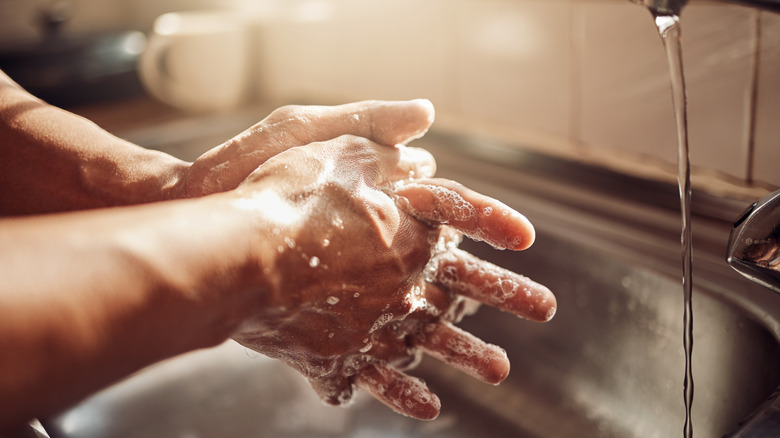
History is full of moments where small habits reshaped public health. In 1847, Ignaz Semmelweis scandalized his peers by insisting doctors wash their hands between dissecting cadavers and delivering babies. Mortality rates plummeted, but his incredulous colleagues resisted, unable to accept that doctors could cause illness or that unseen particles could dictate life and death. Today's kitchen is no different. Routine practices, like wiping up a spill right away (or not), accumulate enormous consequences.
Microbes don't care about human schedules; they double and spread while we chop onions or sit down to dinner. The U.S. Department of Agriculture (USDA) has documented how trace contamination on a countertop can leap to ready-to-eat foods with a single touch. That means a smudge of raw chicken juice wiped two hours late may already have transferred to salad greens, bread, or fruit. The statistics are sobering: 48 million cases of foodborne illness occur each year in the United States alone, according to the CDC, many surely beginning not with a dramatic failure but with a tiny lapse in hygiene.
Soap and other cleaners work against bacteria, viruses, and grease because microbes live inside lipid membranes of varying degrees of fragility. The molecules in soap wedge into that fatty layer, prying it apart until the cell bursts. Add friction from scrubbing, and most bacteria, along with many viruses, are physically destroyed or rinsed away. That's why even quick wipe-downs with soapy water remain one of the most effective defenses against contamination. The next time a spill happens, remember that a speedy, soapy wipe is the difference between a harmless accident and a microbial opportunity.