

Why Domino's Was Forced To Abandon Its Famous 30-Minute Delivery Promise
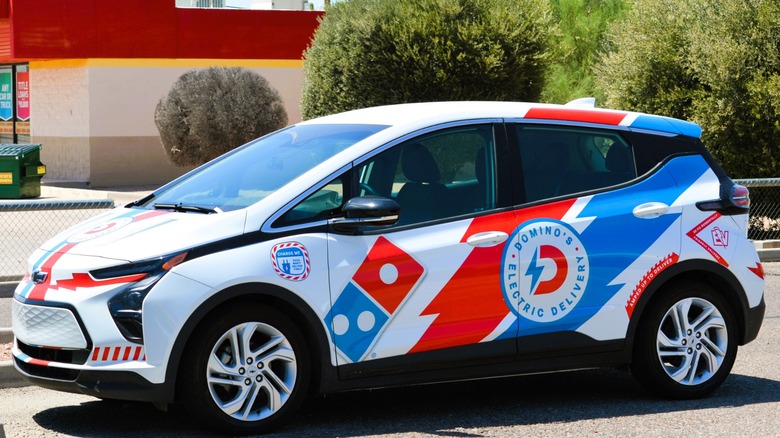
Thirty minutes or it's free. If you're over a certain age, you know exactly what that statement means. But many members of Gen Z may never have heard it. The phrase was once a well-known rule of pizza delivery in the 1980s and all but vanished in the 1990s. It dated back to 1979, when Domino's, in an attempt to compete with Pizza Hut, promoted its pizza as a better and faster alternative. At the time, Pizza Hut did not offer delivery. The promotion was hugely popular — until the unthinkable happened. A driver, in a hurry to meet the deadline, was involved in a collision.
One of the first major accidents occurred in 1985. With reportedly only seven minutes to spare to meet the 30-minute guarantee, a teenage Domino's delivery driver pulled out of a parking lot into traffic and immediately hit another car, causing injuries and damage. How did the manager of the Domino's store respond? They handed the pizza to another driver and told them there was still time to deliver it. It sounds absurd today, but drivers — many of them teenagers — were under intense pressure to deliver pizza on time. Compensation and bonuses were directly tied to how well stores upheld the 30-minute guarantee.
In 1989, another accident had more severe consequences. Jean Kinder was broadsided when a Domino's driver ran a red light, resulting in serious head and spinal injuries. A jury awarded her $78 million in punitive damages, though she later settled for less. That lawsuit ended the guarantee, but it was still not the worst of the consequences for Domino's.
30 minutes or less
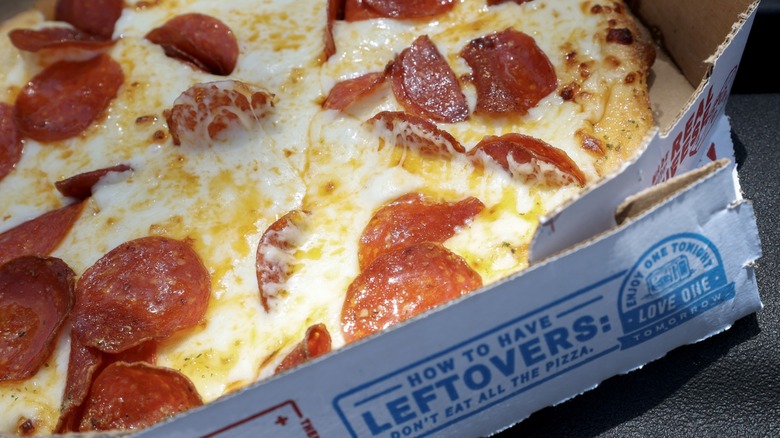
Domino's chose 30 minutes because most of their deliveries already came in under that time limit, even before the guarantee. By 1986, the company changed the deal so that instead of a free pizza, customers received $3 off if their order did not arrive within 30 minutes. In 1990, another crash resulted in the death of a woman and injuries to her passengers. That led to a $2.8 million verdict against the company. After the massive loss in court, Domino's eliminated all guarantees, with 1993 marking the final year it was offered — at least in the United States.
Internationally, the practice has lived on in some places. Domino's in India has a 30-minute guarantee if you order fewer than four pizzas, though it does not apply under certain conditions. In Malaysia, customers get a free pizza voucher if delivery takes longer than 30 minutes. Other countries, including Colombia, have discontinued the practice. Meanwhile, in New Zealand, customers can opt into a 20-minute guarantee by paying an extra $3, with eligibility determined by an algorithm.
Many other chains, inspired by Domino's, created their own guarantees with various conditions. Pizza Hut in the U.K., for example, has a 30-minute Speed Guarantee, with a discount on the next order if delivery is more than 10 minutes late. As of this writing, however, this offer is on hiatus. Canada's Pizza Pizza also offers a 40-minute guarantee, or it's free (with conditions). While everyone wants their pizza hot and fresh, most of us would agree that getting it there safely is the best idea.