

16 Classic Bean Dishes From Around The World
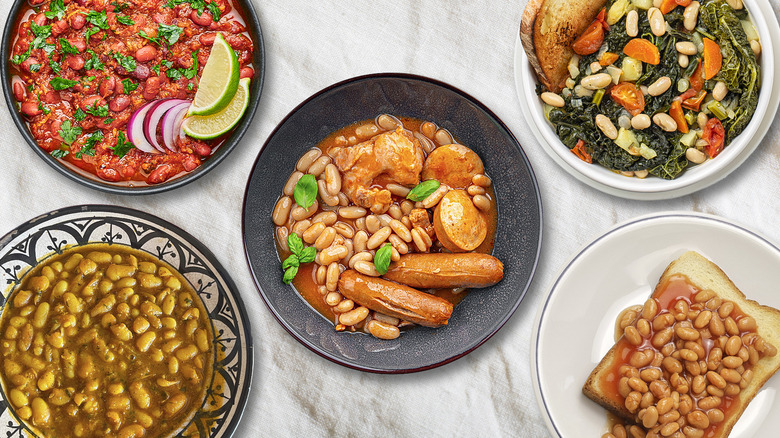
Beans are one of the oldest foods in the world. They were eaten by the Aztecs, the Incas, and the Ancient Egyptians, and have sustained communities all over the world for thousands of years since. Today, they're a popular plant-based protein, not only because they are a good source of nutrients like fiber and essential vitamins, but also for their versatility.
As the dishes below prove, beans are multi-talented. They can be added to hearty stews and soups, served on toast, mixed into umami-laden sauces, eaten for breakfast, stirred into curries, stuffed into bread, and that's just the tip of the iceberg. When it comes to beans, the limit to their potential is seemingly nonexistent. Want to learn more? We've gathered some of the best bean dishes from around the world, from Japan to Latin America to the Caribbean to the U.K. and beyond.
Anpan (Japan)
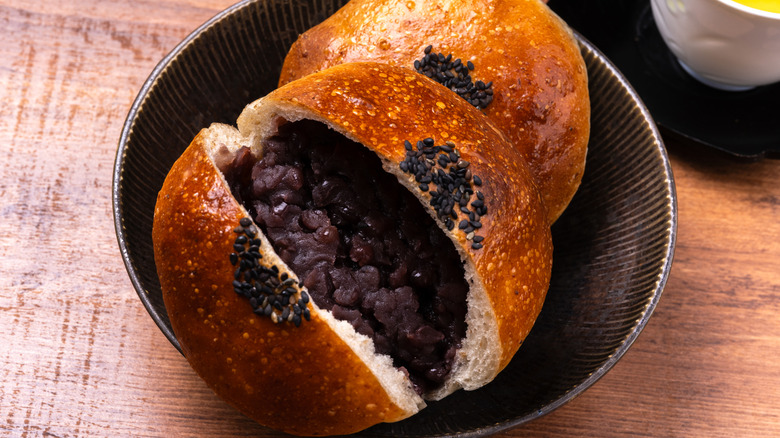
Anpan is one of Japan's most famous and beloved sweet treats. It's simple, but that doesn't make it any less indulgent. It's basically a sweet bread roll, which has been filled with anko, a type of paste made with dried red beans, sugar, and a touch of salt. The bread is then topped with poppy seeds or black sesame seeds. Sometimes, anpan is filled with shiro-an, which is very similar to anko, only it's made with milder white beans instead.
Anpan is incredibly popular, and you'll find it in bakeries across Japan. But if you want to taste the most authentic version of the bun, you'll have to head to Kimuraya in Tokyo's Ginza district. It was here that anpan was invented in the late 19th century, although by whom, exactly, isn't quite clear. Some state that it was Kimura Yasubei, the founder of the bakery and former Samurai soldier, who came up with the idea. Others, however, maintain it was Yasubei's son, Eisaburo, who first created anpan in a bid to make bread more appealing to Japanese people. Regardless of who invented the dish, the truth remains that it was a big hit. By the end of the 19th century, the bakery was reportedly selling 100,000 of the sweet buns every day.
Habichuelas Guisadas (Dominican Republic and Puerto Rico)
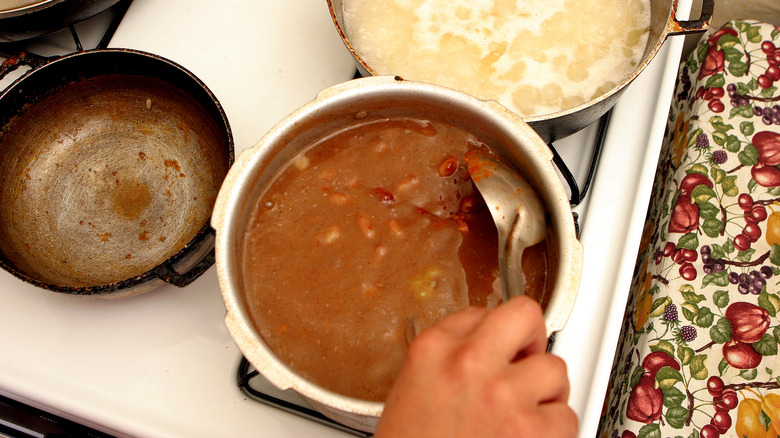
If you love rich, umami-packed bean soups and stews, it's almost certain that you'll adore habichuelas guisadas. The simple dish usually consists of beans, which are stewed with spices, herbs, onions, and vegetables. It is often served as a side dish or on its own with fluffy white rice. The key ingredients in habichuelas guisadas vary depending on where you are. In the Dominican Republic, for example, it is often made with dry, red beans like pinto or kidney beans. This is soaked, boiled, and combined with ingredients such as cubanelle peppers, cilantro, coriander, oregano, and thyme.
In Puerto Rico, the beans are often stewed in tomato sauce with ingredients like sofrito, ham, calabaza (pumpkin), and sazón. The latter is a Puerto Rican seasoning blend consisting of spices such as cumin, turmeric, sea salt, sweet paprika, onions, and garlic. However, it's important to note that each household, restaurant, and individual tends to have their own take on habichuelas guisadas.
Baked beans on toast (U.K.)
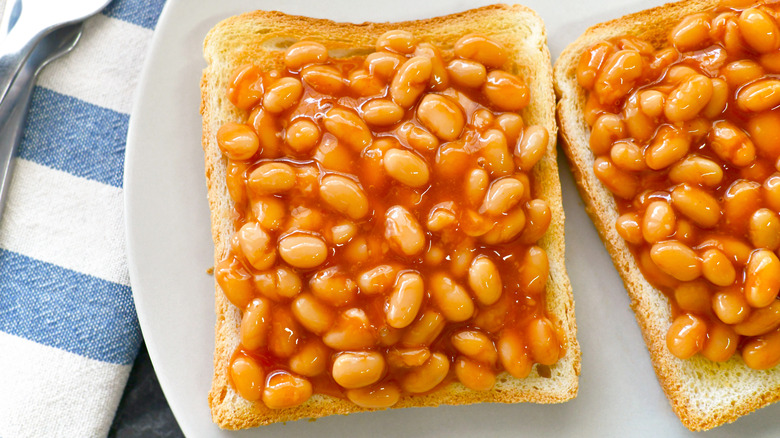
If you enter a grocery store in the U.K., one thing is for certain: You'll find the shelves lined with cans of baked beans. Each supermarket has its own version, which is sold alongside big-name brands like Branston and Heinz. Usually, the beans are haricot or cannellini, which are cooked in a tomato sauce seasoned with salt and spices such as paprika and onion powder.
Baked beans can be enjoyed in different ways, from baked potatoes to the full English breakfast, but one of the most popular? Beans on toast. It's a common breakfast or lunchtime choice, usually prepared at home, but you'll also find it served in cafés and greasy spoons.
Beans on toast is as simple as it gets, but it has been a beloved meal in the U.K. for decades. It's a British classic, but it actually came about thanks to an American brand. Heinz brought baked beans to the U.K. in the late 19th century, and by the 1920s, it had a factory in the country. Today, Brits consume more than 2 million cans of baked beans every day.
Ribollita (Italy)
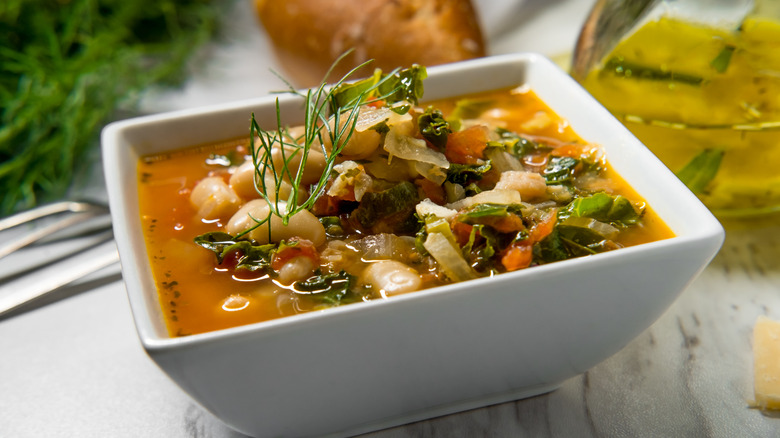
If you're in Tuscany and in the mood for something hearty, filling, and incredibly satisfying, look for ribollita soup. The dish is nothing fancy, but it delivers on comfort and flavor, with key ingredients like white beans, onions, carrots, celery, and stale bread. Yes, stale. In fact, if you've got some bread that needs to be used, that's usually a sign to whip up a hearty broth of ribollita.
Ribollita is simple by design. It was born out of cucina povera, which is an Italian cooking technique that prioritizes simple, easily accessible, and cheap ingredients like beans and vegetables. Cucina povera translates to "the kitchen of the poor." Learn more about the Italian cooking philosophy that can help you save money on food. Ribollita, specifically, was created by poor people in rural Tuscany as a way to re-use leftover bread that the rich didn't want. It was usually cooked to last and can be eaten over a long period. This is why it's called "ribollita", which translates to "reboiled."
Black bean sauce (China)
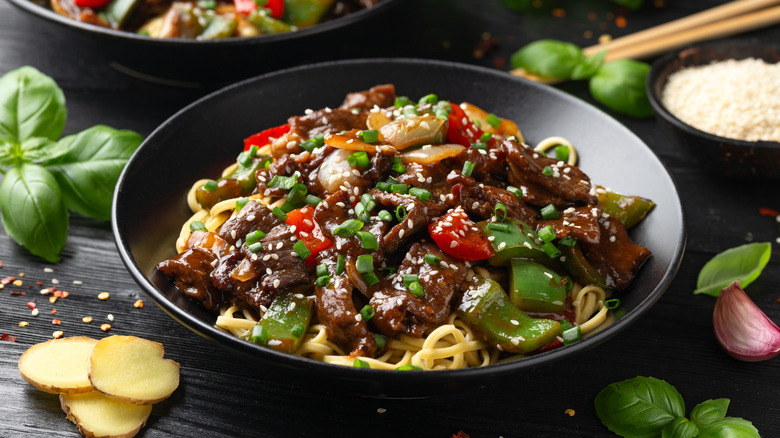
Black bean sauce is an incredibly versatile cooking sauce from China. It's a staple in Cantonese cuisine and can be served with everything from stir-fried tofu to chicken, beef, and pork. The key ingredient in black bean sauce is, of course, black beans (black soy beans, usually). But it's a little more complex than it sounds. The beans, known as douchi, are usually fermented, which gives them a much deeper and more intense flavor. After that, other ingredients are added to boost the flavor, like garlic and sometimes chili, and even dried tangerine peels.
Douchi is one of four fermented soybean ingredients in Chinese cooking. The others are soy sauce, fermented soybean paste, and sufu (which is basically fermented tofu). It has an extended history in China, and can even be traced back more than 2,000 years in the country. Evidence of douchi was found in a sealed tomb from 165 B.C.E. in present-day Hunan Province.
Loubia (Morocco)
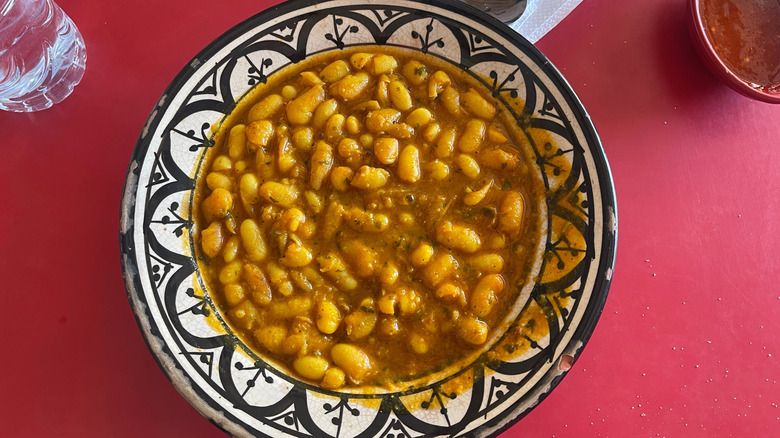
Beans feature heavily in many African dishes. In Nigeria, for example, ewa riro is a popular dish of flavor-packed, creamy stewed beans. In Kenya, maharagwe is another creamy bean dish, made with red beans, tomatoes, and coconut milk. In North Africa, Morocco specifically, loubia is a favorite.
Like the Italian ribollita, loubia is one of those dishes you seek when you're in need of something warming and comforting. It's a hearty bean stew, usually made with white beans, tomatoes, garlic, herbs, and a variety of spices like paprika, cilantro, parsley, cumin, ginger, and cayenne. In its most basic form, loubia is a vegetarian dish; however, some households choose to add meat, like lamb or cow's feet, to the recipe.
Loubia isn't just enjoyed in Morocco; it's a staple across North Africa and the Middle East. Every country has its own twist on the classic recipe. In Algeria, for example, it's often made with dersa, which is a spicy chili paste prepared with garlic, chili, cumin, and paprika.
Frijoles negros (Cuba)
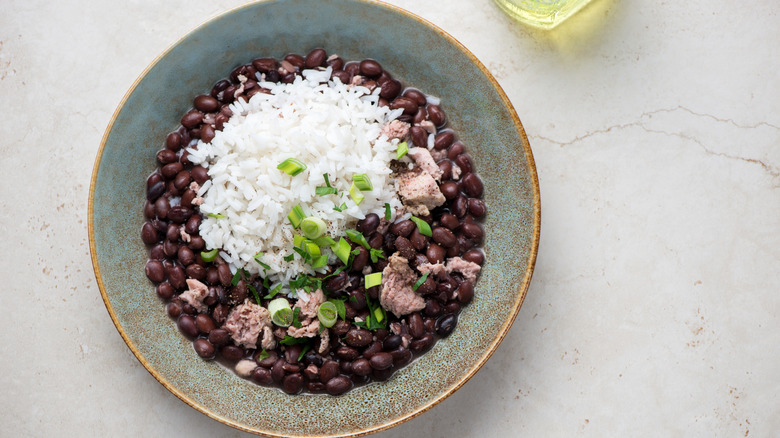
If you've ever visited Cuba or a Cuban restaurant, you've likely come across frijoles negros (which translates to "black beans"). The dish is a staple in the country, usually served for dinner with everything from plain rice and pork and chicken to avocado and salad.
There's more to frijoles negros than just black beans (although they are the fundamental ingredient). Its deep, umami-rich flavor also comes from ingredients like sofrito, cumin, oregano, diced white onions, and ham hocks or pig tails, which are slow-cooked for around two hours. Some households omit the meat to make it completely plant-based.
When served with white rice, frijoles negros are sometimes referred to as Moros y Cristianos. This translates to "Moors and Christians," and is likely a reference to the Reconquista. This was a period of Medieval Spanish history when Christians fought to recapture territory from the Moors, starting in the 8th century.
Cassoulet (France)
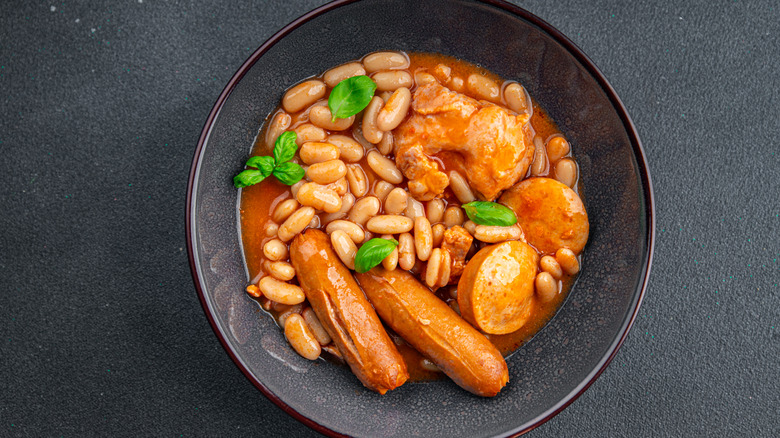
Fans of French cuisine will likely already be familiar with cassoulet (If not, here's how to make a classic French cassoulet). It's a hearty, nourishing one-pot slow-cooked stew made with white beans, ragout, and mixed meats like chicken, pork, sausage, and duck fat. It's loved across France and around the world for its deep, rich flavor and comforting, tender mouthfeel.
The dish was likely first created by Medieval peasants in Languedoc, and can still be enjoyed across the southern region today. But the type of cassoulet you'll find in households and on restaurant menus? That depends on your location; however, you might enjoy one of the three styles of French cassoulet.
If you're in Castelnaudary, for example, it is made with a combination of lingot beans, pork, fowl, onions, seasoning, and a bouquet garni (a mix of French herbs, tied in a bouquet). In Toulouse, cassoulet is usually made with lamb, mutton, and pork-rind sausage. Carcassonne's version, on the other hand, is sometimes made with partridge. It is also possible to find plant-based versions of the iconic French dish, made with ingredients like tofu and vegan sausage.
Rajma masala (India)
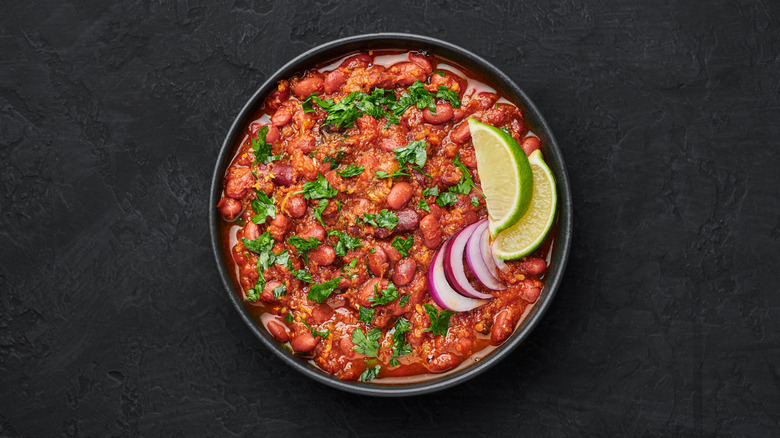
Kidney beans are a relatively new addition to Indian cuisine. While they've been eaten across Latin America for thousands of years, they likely didn't arrive in India with the French until the late 19th century. Today, however, they're a culinary staple. In Northern India, for example, rajma masala is a popular dish. You might like our instant pot rajma recipe.
The flavorful, rich, and creamy curry, which likely originated in the Punjab region, is made with kidney beans, onions, tomatoes, garlic, and spices, like ginger, coriander, garam masala, and chili powder. The type of chili powder depends on the spiciness of the dish. Some favor the milder levels of spice from Kashmiri chili powder, for example, while others prefer the kick of lal mirch powder.
Another popular bean dish from India is dal makhani. It also originates from India's Punjab region. Although it's more buttery than rajma masala, it is usually made with whole black lentils, red kidney beans, spices, and plenty of ghee and butter.
Sopa Tarasca (Mexico)
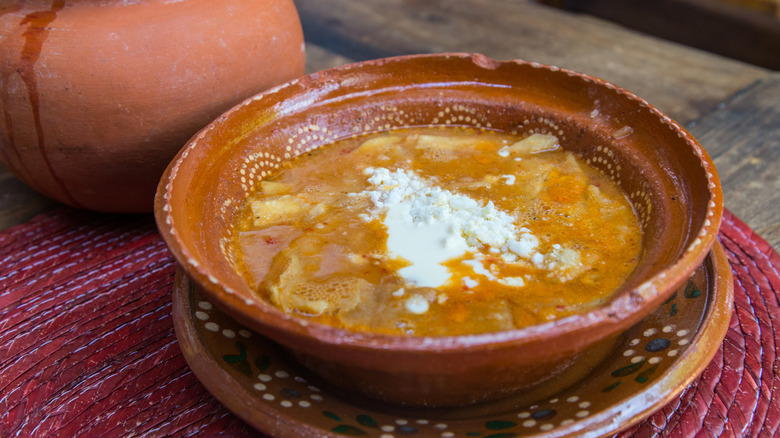
Beans are a quintessential Mexican ingredient, and it makes sense, considering that 31 species are native to the country. Pinto, which has been cultivated in Mexico for centuries, is particularly popular in the northern regions of Mexico, as well as in the western state of Michoacán. In fact, Michoacán is the birthplace of sopa tarasca, also known as pinto bean soup.
Sopa tarasca is a common sight on dinner tables and restaurant menus across Michoacán. It's a simple, creamy, roasted tomato soup, made with Mexican staples like ancho chile peppers, cooked pinto beans, and queso fresco. Not only is it full of flavor, but it's also incredibly satisfying, especially when made with strips of tortilla.
Sopa tarasca isn't the only Mexican bean dish. Other iconic bean-y staples from the country include Mexican black beans and frijoles refritos, which are the same as the Tex-Mex favorite, refried beans. Care for a one-pot instant refried beans recipe?
Diri ak pwa (Haiti)
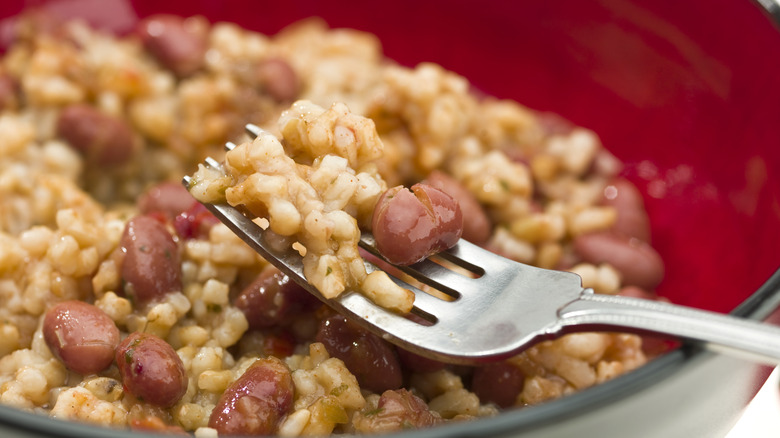
Across the Caribbean, rice and beans are a popular combination. In Jamaica, for example, it's often called rice and peas, but it's made with red kidney beans. In Haiti, the rice and beans combo is known as diri ak pwa.
The dish is a mix of rice and beans (usually red), of course. But the flavor comes from the vegetables and spices, like onions, shallots, garlic, green peppers, and epis. The latter is a seasoning base used in a lot of Haitian recipes, and typically blends ingredients like thyme, lime, scallions, cloves, garlic, parsley, and Scotch bonnet peppers for some added heat. Another popular ingredient choice for diri ak pwa is piment bouc, which is a type of hot pepper, usually smashed with a pestle and mortar.
Diri ak pwa is often enjoyed on its own, but it can also be paired with a range of other dishes, including more vegetables and meats. Another variation on the dish is diri ak sos pwa. This is a similar recipe, but it involves a bean sauce instead.
Feijoada (Brazil)
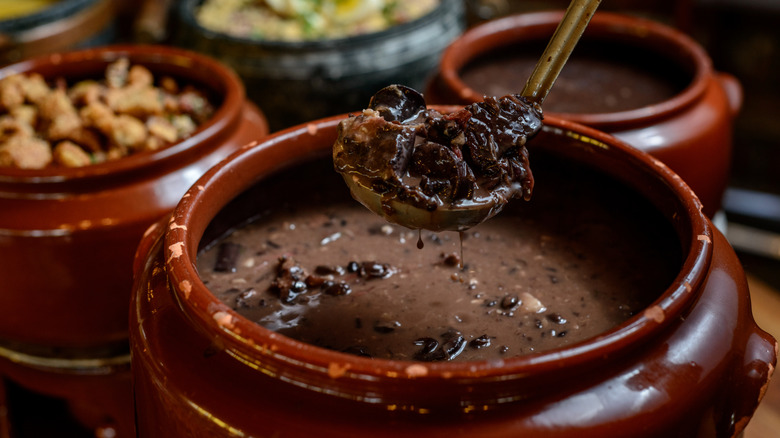
Feijoada is an emblem of Brazil. The slow-cooked stew is the country's national dish, made with ham, onions, garlic, herbs like cilantro and parsley, and beans. The variety of beans depends on the region; in Rio de Janeiro, it's usually made with black beans, but in Bahia, red or brown beans are preferred. How it's served also depends on the region. In São Paulo, it's often eaten with a range of sides like cassava and crispy pork skin. Similar to a French cassoulet, feijoada is full of deep, rich flavor and lots of umami. While it's usually made with meat, it's easy to make the dish plant-based by doubling up on the black beans.
There are a few origin stories for feijoada; some believe it was first created by enslaved people, made with scraps of meat and beans. However, some experts believe it was probably influenced by European settlers, who were looking for easy, low-cost meals. Feijoada is a big deal in Brazil, and you can find it served in restaurants across the country. However, make sure to check the day before you head out to try it. Many restaurants have specific days dedicated to feijoada (usually Wednesdays and Saturdays).
Ful Mudammas (Egypt)
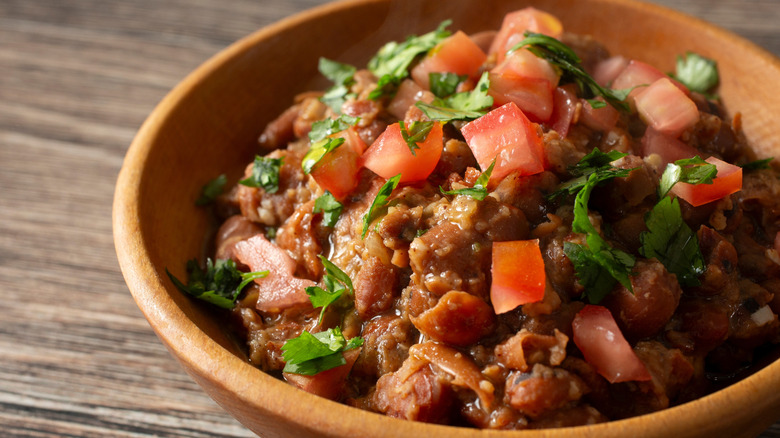
There is a little competition for the title of "Egypt's national dish." Some say that koshari, a popular spicy street food made with a mix of lentil rice, tomato sauce, pasta, and crispy onions, deserves the top spot. Many, however, maintain that it is ful mudammas that should have the crown. The dish has been around for a long time. In fact, the name likely nods to its origins. Ful means "beans" in Arabic, while mudammas means "buried," which could refer to how it was once cooked, with a pot buried in hot coals.
The hearty dish, made with mashed fava beans, cumin, olive oil, garlic, lemon juice, and parsley, is similar to shakshuka, as it's often served for breakfast with boiled or fried eggs. It's warming, hearty, filling, and incredibly satisfying, which is why it's not just loved in Egypt, but in many North African and Middle Eastern countries.
Each country has its own twist on the breakfast dish. In Lebanon, for example, ful mudammas (also known as ful medames or foul mudammas) might be made with a mixture of fava beans and chickpeas. It is served on a platter with bread and vegetables.
Gigantes plaki (Greece)
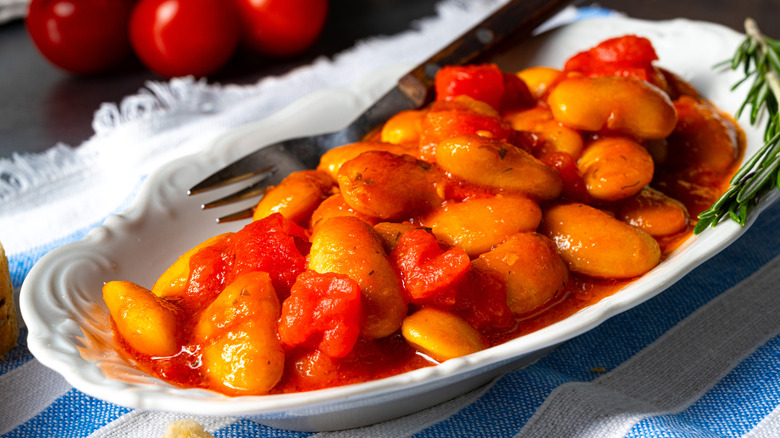
The clue is in the name, but this popular Greek dish consists of giant (gigantes) beans, which are cooked plaki-style. Essentially, this means that they have been roasted with tomatoes, vegetables, and olive oil. This cooking method is the key to the appeal of gigantes plaki — the beans become tender and soft, while the tomatoes, onions, and herbs bring the rich, aromatic flavors.
Usually, gigantes plaki is made with a specific type of large, white bean native to Northern Greece. They look similar to a white kidney bean or butter bean in color and shape, only they are much larger and meatier. Fun fact: The really large versions of gigantes beans are called elephant beans.
Gigantes plaki is usually served with crusty bread to soak up all of the rich tomato sauce. Often, it's eaten mezze-style, alongside other Greek staples, like olives, stuffed peppers, feta cheese dip, and taramosalata.
Waakye (Ghana)
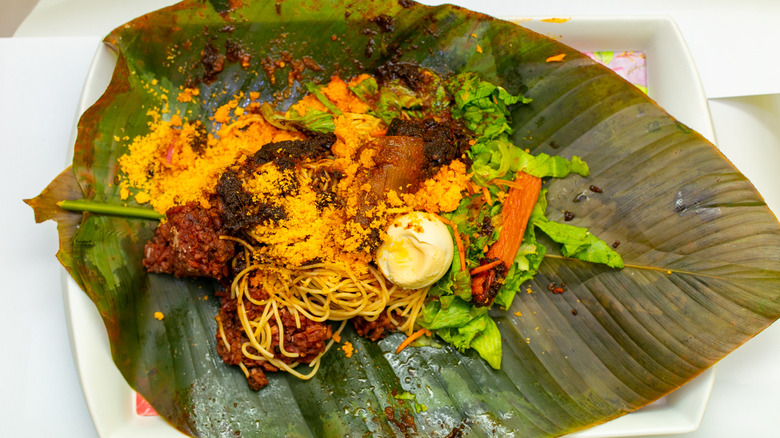
If you're on the hunt for street food in Accra, Ghana, you'll likely come across waakye, especially if it's breakfast time. The salty, umami-laden dish is incredibly simple, made with rice, beans (usually black eyed peas or cow beans), and the key ingredient: dried sorghum leaves. The leaves, also known as waakye leaves, give waakye its signature flavor and pinky-red color. Baking soda might be added, too, which helps to bring out the leaves' herbaceous and bitter flavors.
Often waakye, which originated with northern Ghana's Hausa communities, is served wrapped in a banana leaf, often accompanied by a spicy mutton or goat stew or boiled eggs. While it's usually eaten first thing in the morning, there are no real rules about when to enjoy waakye. Some prefer to seek it out last thing at night, for example, and many waakye sellers (known as waakye joints) stay open late for anyone with the after-party munchies.
Chili (U.S.)
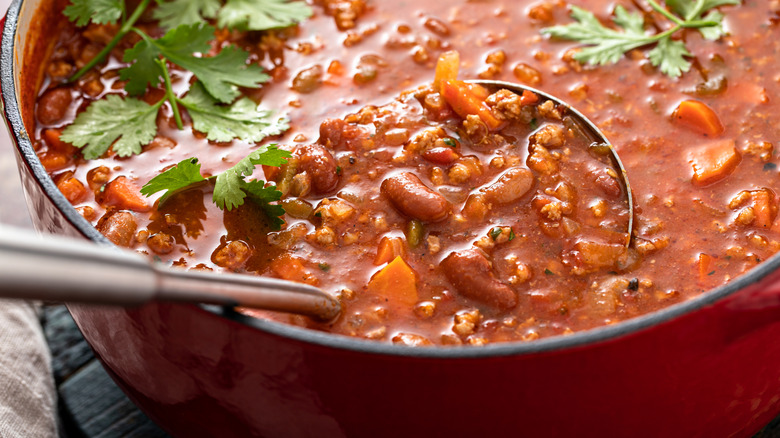
Chili is a Tex-Mex classic. The thick, spicy stew-like dish, often made with ground meat or vegetables, is comforting, easy to make, and full of flavor, thanks to the combination of ingredients like tomatoes, paprika, cumin, and chili powder.
Many states have their own twist on chili, and they don't all include beans. In Texas (often considered to be the birthplace of chili), the dish is usually just made with ground beef, tomatoes, chili peppers, and herbs and spices, for example. If you want the bean-laden version, Oklahoma-style chili is a good bet. They're just like Texan chilis, but often with beans.
Chili is an incredibly versatile dish, and many households and restaurants have their own signature take on it. Many add multiple types of beans to the mix; three-bean chilis, for example, are a firm favorite for many cooks.