

The Short Loin Is Where All Your Favorite Beef Cuts Come From
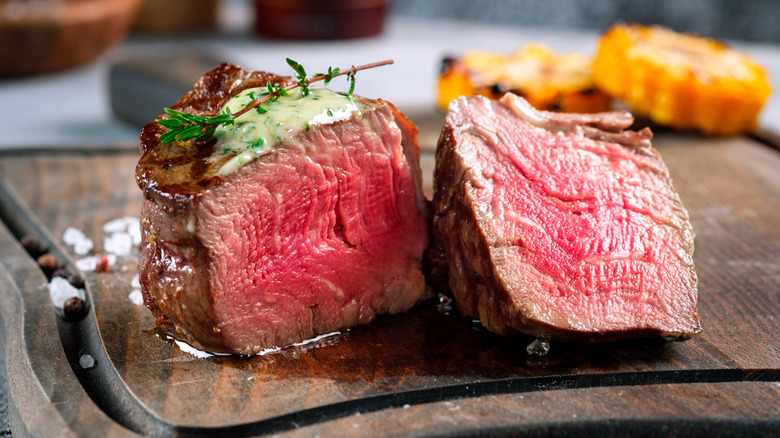
You may have never uttered the words short loin in a restaurant, but if you love a good steak, that's probably where your cut of beef came from. Most people know they like certain kinds of steak — filet mignon, sirloin, t-bone — yet they probably couldn't tell you why those steaks are so good. Cows produce an amazing array of popular beef cuts with wildly varying properties, and only a few of them are actually suitable to become a high-quality steak. This is because the tenderness and flavor of a cut of beef is determined by how much or how little work that muscle does for the cow, with cuts that see a lot of movement being more tough and sinewy. And of all the different areas of the cow, the short loin gets to relax the most.
Individual cuts of beef are cut from larger pieces called primals, which are sections of the cow that share similar characteristics. The short loin comes from the loin primal, which is located between the rib primal and the back end of the cow, which is called the round. The loin is usually split into two sub-primal sections: the short loin and the sirloin. The sirloin is the back of the loin closer to the hip bones, while the short loin is closer to the ribs. Because it comes from the center of the cow, far away from any movement, the short loin has almost all of the most tender cuts of steak.
The tender short loin is home to porterhouse, filet mignon, and strip steaks
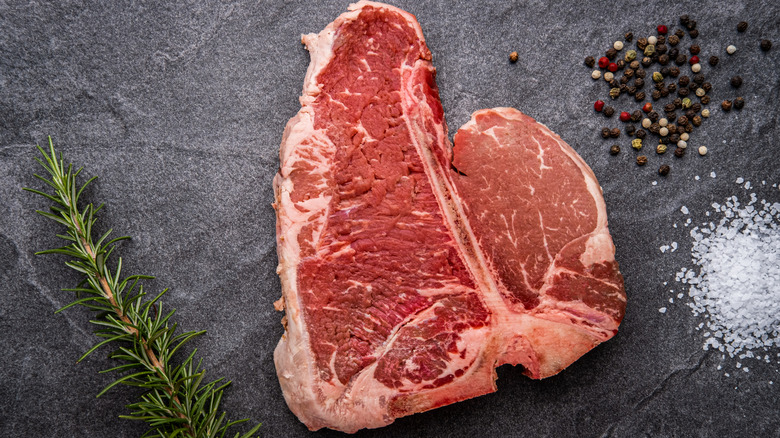
The short loin is a relatively small subprimal, and so it only produces a few kinds of steak, but you'll recognize every one. The main division in the section is between the tenderloin and the strip. The tenderloin, true to its name, is the most tender cut of steak and gets cut up into the highly desirable filet mignon. The strip is not quite as tender but is more well marbled, and becomes New York strip steaks.
The other two famous cuts from the short loin are porterhouse and t-bone. These two steaks are very similar and really only differ in size. Both combine the strip with part of the tenderloin. Porterhouse is the larger of the two, containing both an entire strip and entire cut of tenderloin in one, while t-bones contain a smaller sliver of tenderloin. Because both steaks contain part of the tenderloin, cutting them prevents a butcher from producing tenderloin individually.
The one downside to the short loin is that the cuts are quite lean, so they are at risk of being dry if overcooked. Because of their tenderness and lack of fat, the best way to cook steaks from the short loin is quickly over high heat to rare or medium rare, with either stovetop searing or a grill being ideal choices. Steaks from the short loin are precious things after all, so you don't want to waste them.