

This Common Appliance Could Be Ruining Your Food's Flavor

A slow cooker is quite possibly one of the best investments you could make for your kitchen. It's one appliance that can cook anything from a hearty leg of lamb to a spice-laced dish of Carne Picada at the touch of a button. But slow cookers aren't perfect. If you aren't careful with how you use them, believe it or not, these wonders of the modern kitchen can actually ruin your food instead.
Compared to the same dish cooked on the stovetop or in an oven, food from a slow cooker can sometimes taste bland and dull (some people call this the "slow cooker flavor"). Well, your taste buds aren't tricking you — slow-cooking actually mutes flavor. In the slow cooker, steam coming off the food gathers on the lid, then drips back down. This closed circle means your food essentially stews in its own juices with almost zero evaporation throughout the entire process.
That doesn't mean you have to kiss your slow cooker goodbye and leave it to gather dust in the attic. While food certainly can get bland, there are a couple of things you can do to make your slow-cooked meal taste less ... well, slow-cooked.
How flavors transform in a slow cooker
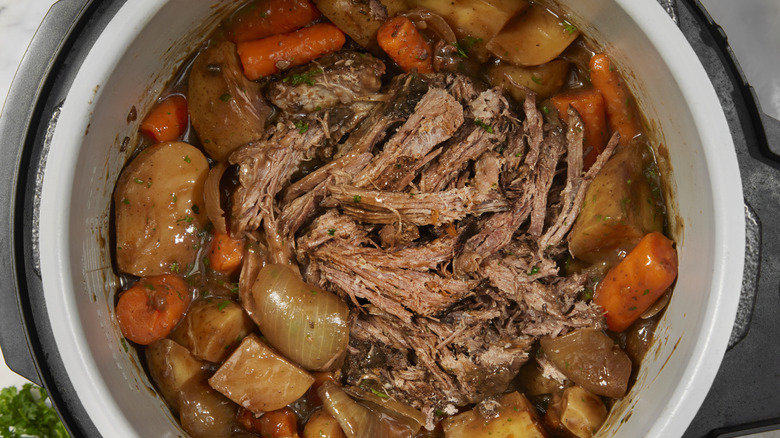
Want to banish bland slow cooker meals for good? First thing you'll need to do is learn how flavors change in the slow cooker. For instance, did you know that sweet flavors actually intensify in slow-cooked dishes? That's all thanks to the caramelization of the natural sugars found in your ingredients — which might explain why your beef stew sometimes tastes unexpectedly dessert-like. Now, here's where most people go wrong: If your recipe relies heavily on spices and bright acidic notes, these flavors can fade during those slow-and-low cooking hours.
The solution is being smart about when you add all these flavor-giving ingredients. Instead of dumping your seasoning in at once, treat your spices like a two-act play. Start with about half of what your recipe calls for — this creates your flavor foundation. Then, stir in the remainder about 30 minutes before serving. This final flourish is what transforms a dish from "slow-cooker bland" to "brilliantly slow-cooked." And as for acidic ingredients like lemon juice and vinegar, save them for the home stretch (30 or 45 minutes before serving). Add them any earlier, and you run the risk of their brightness dulling out.
And here's a parting pro tip: If we had to pick one common mistake that ruins the most slow-cooked meals, then it's probably salting at the very beginning. Remember, all the flavors in the pot will change after a couple hours of cooking — salt is no exception. It's very easy to miscalculate and end up with a salt lick instead of the tender crockpot coq au vin you've been looking forward to all day. So start with just a small pinch. You can always add more salt at the end, but you can't take it out!