

This Straightforward Step Keeps Martha Stewart's Vegetable Garden Looking Its Best

While the name Martha Stewart may conjure up images of a perfectly poised and polished hostess with the mostest, don't get it twisted — the homemaking icon certainly isn't afraid to get her hands dirty, especially when it comes to her garden. Stewart famously enjoys eating home-grown produce, which she cultivates on the grounds of her 153-acre farmhouse in Katonah, New York. And with a range of gardening shows, segments, books, and even a line of gardening tools under her belt, you can trust that she knows a thing or two about working the land.
Alas, even someone with a thumb as green as Stewart's can run into poor performers from time to time. But rather than coddling the crops that just won't take, Stewart and her team of gardeners take a rather straightforward approach: They simply give undesirable plants the boot. "With a garden this large, it's important to check it every day and keep up with its care," Stewart explained in an Instagram post regarding the growth of her summer produce. She continued, "My gardeners and I have been spending a lot of time in this large half-acre space. We always check on what's doing well and remove what is not and then replant when needed."
The result? "All the vegetables look fantastic," she shared, adding that her tomatoes are well-supported, her eggplants are tender, and that there are lots of peppers sweet and hot peppers to go around.
Why you should always weed out and replace poor crops
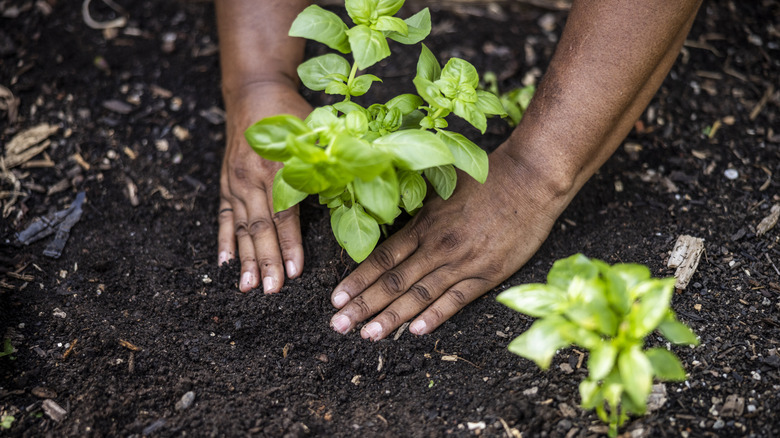
After pouring a ton of time, energy, and loving care into your kitchen garden, it may be difficult to cut your losses and accept defeat when faced with sickly looking lettuce or withered herbs. But taking a page from Martha Stewart and giving your under-performing crops some tough love is necessary to benefit the greater good. For one thing, it diverts resources like water and nutrients to the plants that actually are showing promise. Since the plants will have less competition, it could ensure that they are able to grow in the best conditions.
Plus, clearing the space allows you to replace the failed crop with something else, helping to maximize your yield and keep your garden productive through the season. As Stewart notes in the same Instagram post, she adopts a technique known as succession planting, i.e., the continuous planting or staggering of crops in the same bed "so there is always something ready to harvest." For folks interested in following suit, some veggies that are simple to grow at home include resilient leafy greens, peppers, and scallions. You could also go with legumes like bush beans, which are actually Stewart's go-to for succession gardening.
Yes, it does require a more active and involved approach to managing your garden, but keeping an eye on all of your crops, and acting fast to remove and replace any duds, will help you to achieve a vibrant, thriving, and productive produce bed that Stewart herself would be proud of.