

The Safety Reason You Should Send Cold Food Back At A Restaurant
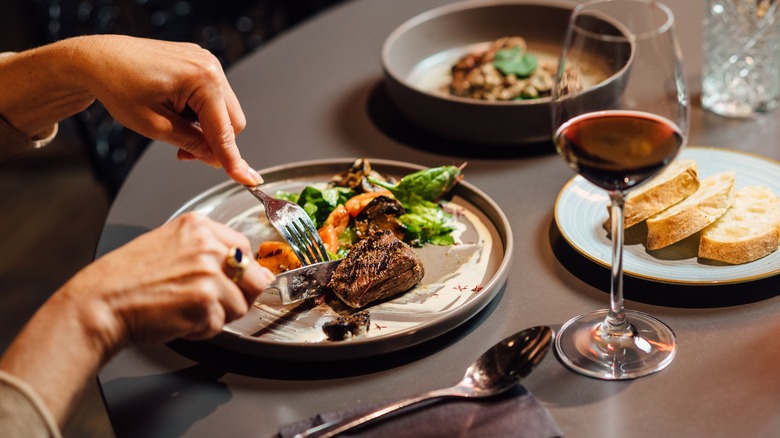
Many of us cringe at the idea of having to send food back at a restaurant — the attention, the confrontation, the fear of being called a "Karen" ... all of that might just push us to suck it up, pay for a meal we didn't enjoy, and never return to the restaurant again. But as a diner, you have to understand that, sometimes, sending your food back to the kitchen is absolutely warranted. One of the possible (and justifiable) reasons for doing so is when a meal that's meant to be hot arrives to the table cold.
First, you're paying for a hot meal, and that could be reason enough. But even if you don't mind eating lukewarm or straight-up cold food, there could be a food safety issue at play here. Per the USDA, "Bacteria grow most rapidly in the range of temperatures between 40 and 140 [degrees Fahrenheit], doubling in number in as little as 20 minutes." That's why this temperature range is called the danger zone. The general advice is to never leave any perishable food out of refrigeration (in the danger zone) for more than two hours. While it's highly unlikely that your plate has been sitting out at the restaurant for that amount of time, the improper food temperature indicates that something in the kitchen isn't working as it should be — timing, organization, management, etc. Cold food is, therefore, one of the health code red flags you shouldn't ignore at a restaurant.
Cold food is more than just an inconvenience
There are a few possible reasons for your food arriving cold. It could have been sitting out for a few minutes, waiting to be served in a very busy restaurant. Another reason might be that the kitchen already had the dish prepped and chilled, but they didn't warm it up appropriately before bringing it out to you. In both of these cases, you're totally fine asking the server if the kitchen can heat up your dish. As long as the food is reheated to a safe temperature of at least 165 degrees Fahrenheit, it's safe to eat. But do be fair to the restaurant and only send back food that arrived to your table cold, not something that cooled down over time as you were chatting with your friends. It also helps if you're following the polite, expert-approved etiquette for sending back your food.
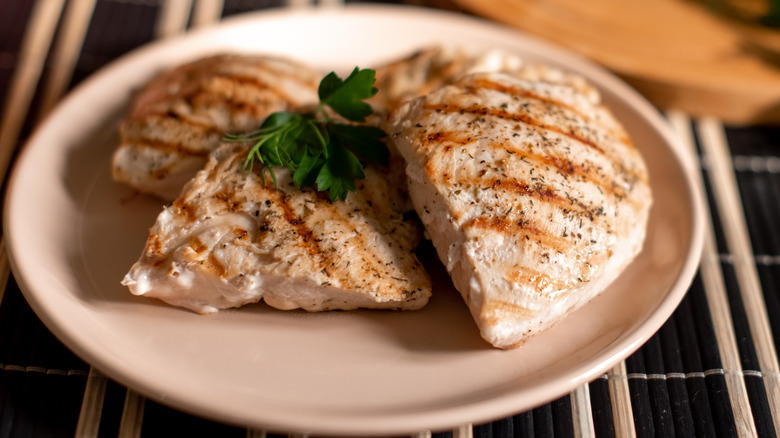
A much more serious reason for the cold food, though, are undercooked or raw ingredients. For example, any poultry that's still cold and pink meets the clear signs you should send a dish back. In that case, your food should be prepared anew, not just quickly warmed up. Since you can't really know what goes on in the kitchen behind the scenes, a good hack is to cut the raw dish into two pieces to ensure the new one actually gets made from scratch.