

This Candy Was The First Wrapped Penny Candy In The US

Let me see the Tootsie Roll! Candy has always held a special place in the nation's heart, especially the iconic Tootsie Rolls. The old timey confectionary was in fact the first penny candy sold in the nation back in the 1800s. Penny candies were exactly that: Small single-serving pieces of sweetness that were sold for just one cent each. The popular rolls were beloved by children and parents alike, and even iconic vocalist Frank Sinatra loved the candy for dessert.
In the 19th century, small general stores began selling sweets and bon-bons, which gave rise to the nostalgic penny candy stores we'd recognize today. Five-and-dime retail markets such as Woolworth's would set out large colorful buckets of the sugary treats, and consumers would be able to pluck any amount they wanted to mix and match their assortment. The one cent sweets were often favored for parades and were also frequently sold in bulk by the pound. During eclectic and joyous processions that went up and down streets, onlookers would gleefully throw candy into the air.
The history behind the Tootsie Roll's wrapping
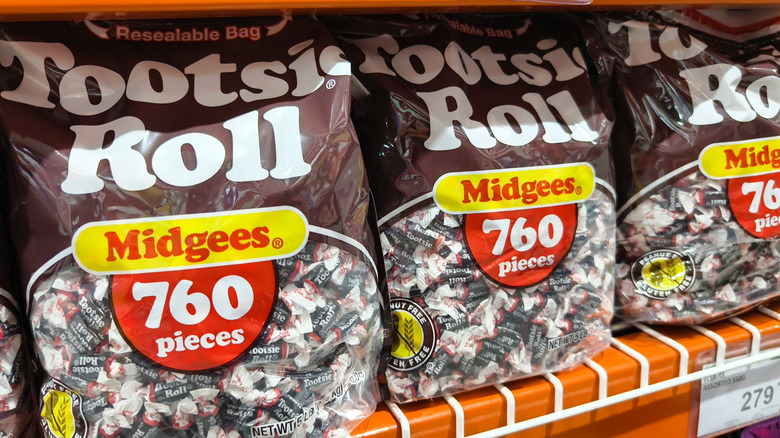
Tootsie Rolls first appeared in 1896 when creator Leo Hirschfield manufactured the little chocolate nubs in honor of his daughter, Clara. Her nickname was "Tootsie," and she was 5 years old at the time of the candy's inception. Hirschfield was an Austrian-Jewish immigrant who moved to New York City in 1884. He hand rolled the tiny candies and made them with cocoa powder and sugar. He wrapped them in paper and molded them into a small log shape. The original sheath had brown and gold tones that matched the dark sweets inside.
While other penny candy were swaddled in colorful wrappings to grab the wide-eyed pupils of small children, Tootsie Rolls were kept in darker hues to appeal more to the eyes of adults and seem sophisticated. The chocolate taffy-like candy were trying to stand out from the penny sweets crowd with their less fluorescent paper blanket. Paper wrapping machines also came into the mainstream by 1908, coincidentally during the same year Tootsie Rolls first were promoted to customers. Putting the sugary treats in a wrap was important, as it helped make them more transportable, easier to hold, and prolonged their shelf life especially during wartime.