

A Spirits Expert Explains What Defines Amaro, And How It Can Be Used As An Alternative In Gin Cocktails

The world of amaro is exciting to discover. The one hurdle is that this beverage category can get a little complicated. What truly is an amaro? How can you start drinking amari? And considering they're botanical by nature, can you use them in cocktail recipes where you'd use the other famously botanical liquor, gin? To help start your journey, we turned to an expert: Molly Horn, chief mixologist and spirits educator at Total Wine & More.
"One of the more challenging aspects of amaro as a category is how broad of a spectrum [it] spans," Horn says. "You have everything from aperitivo bitters (bittersweet red or white aperitifs such as Luxardo Bitter Bianco, Aperol, and Campari); to sweeter, softer, fuller-bodied Amari (like Montenegro and Amaro Nonino); to Fernets (Fernet-Branca, Contratto Fernet). ... I am personally of the opinion that 'amaro' includes aperitifs and digestifs, meaning any liquid based in whetting the appetite or aiding in digestion; is a bittersweet herbal liqueur made by infusing an alcoholic base; and includes proprietary and theoretically medicinal herbs, fruits, roots, spices and/or flowers."
Unlike some alcoholic beverages, such as bourbon, an amaro doesn't have to meet legally specified criteria to earn its label. As Horn observes, the lack of any governing body for the drink is why the definition can get a little hazy. But an amaro should definitely contain what's known as a bittering agent — like gentian, wormwood, or cinchona — and a sweetener such as refined sugar, honey, beet sugar, or agave. As far as using amaro in gin cocktails, it all depends on the recipe and how light or dark the amaro is.
How to approach using amaro in gin cocktails
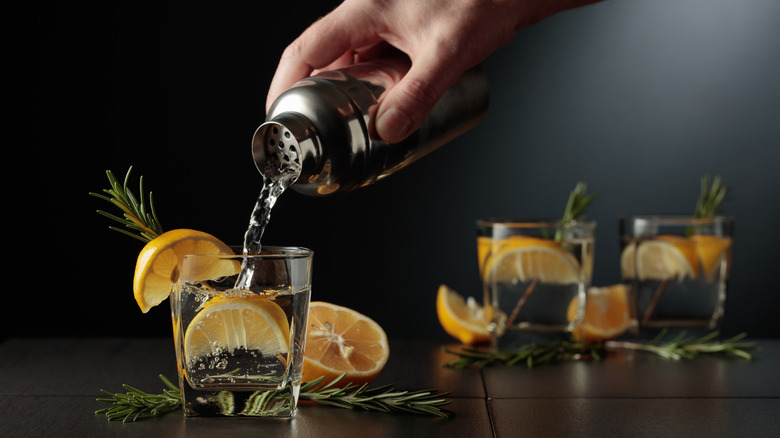
Amaro is too broad a category to declare it an instant gin swap. You'll still get deliciously complex botanical notes but a different overall finish, and you must pay attention to the amaro and cocktail recipe.
"In general you want to stick to lighter, fresher gin cocktails that incorporate citrus," Molly Horn says. "These are going to have the most flexibility when it comes to making alternative versions with amaro. ... In addition to trying out Bianco-style aperitifs (such as Luxardo Bitter Bianco, Cocchi Americano, and L'Aperitivo Nonino) [in those cocktails], these types of recipes would also work with lighter-bodied amari that showcase a sweet herbal bitterness as well as notes of pine or licorice harkening back to juniper, such as Amaro Montenegro or Cardamaro Vino Amaro. Alpine amari such as Braulio can work well in more savory or spirit-forward style gin cocktails but again will yield a very different end result."
When you begin exploring amaro, make sure to try things neat to get a sense of their flavor profiles. To start mixing certain examples into cocktails, Horn recommends using Bitter Bianco instead of a London dry gin in a riff on the classic French 75. Something bright but a little sweet like Aperol would pop in a lime-y gimlet, and a richer Braulio would complement the creamy froth of a Ramos gin fizz. When in doubt, make your gin and tonic an amaro and tonic to double down on beautiful botanicals.