

What To Look For On Corn Tortilla Packaging To Know You're Getting The Real Deal

A good corn tortilla is an almost perfect food. It's simple, delicious, and it makes an incredible vehicle for countless toppings and fillings. From a traditional taco to migas, quesadillas, or just crunchy chips, corn tortillas are incredibly versatile. Most of us don't have the time or confidence to make them ourselves, so we buy them from a store. That's perfectly fine, since there are a lot of great brands. But if you want the best possible tortillas, Chef Jorge Guzmán, executive chef at Sueño, has the inside scoop.
"The only ingredients for a good tortilla is water, corn, lye or cal (calcium hydroxide)," Guzmán said. "That's it, maybe salt, but nothing more." There are many types of tortillas, but if you regularly buy corn tortillas and check the ingredients, you've probably noticed that many store-bought tortilla brands list far more ingredients. So what does it mean if your tortillas have additional ingredients?
"Any ingredient[s] other than water, corn, salt, and lye are red flags," Guzmán explained. "It means your tortilla has preservatives and other fillers. Those brands that carry all of those ingredients are just no bueno. It makes for a really poor tasting tortilla that will last months in your fridge — that's not normal."
Finding the perfect corn tortilla
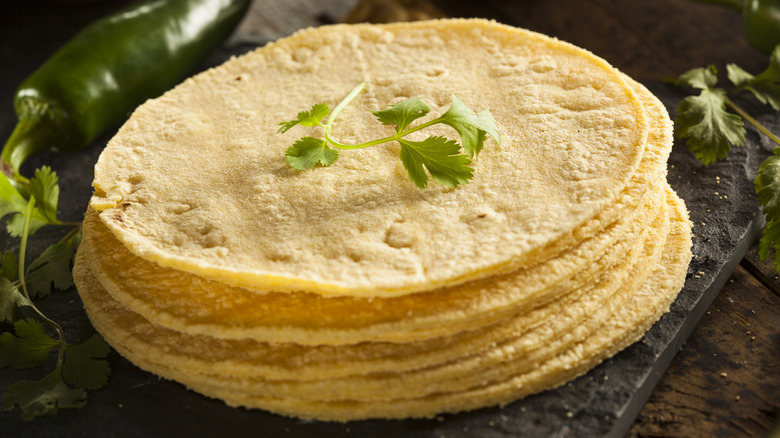
If you've never made corn tortillas or looked closely at the ingredients, you might not know what Guzmán means when he says to choose tortillas made with lye or cal. Lye and cal are used in a process called nixtamalization. This process transforms plain corn, which is difficult to digest and low in nutrition, into a flavorful, nutritious staple.
In simple terms, lye or cal, which traditionally came from ash, breaks down the hard shell around a kernel of corn that we can't digest. The rest is not only easier to digest, but the nutrients are more bioavailable, so your body can make better use of them. And it tastes better. So those two ingredients are essential for making tortillas in the traditional way. This is how Mesoamericans have been doing it for over 1,000 years.
Grocery store tortillas may not use lye or cal. They can achieve similar results with more modern techniques. You'll find preservatives like potassium sorbate and sodium benzoate in commercial tortillas. Other additives act as dough conditioners to make the tortilla softer and more pliable, while some are meant to increase fluffiness or make them reheat better. The taste differs from a traditional tortilla and is often considered inferior by most people when they can compare the two.
Preservatives can save time and money by extending shelf life, but there's a reason homemade food is often preferred over store-bought. If you've never had simple, traditional corn tortillas, try some and see for yourself.