

9 Customizations Starbucks Baristas Wish You'd Stop Ordering
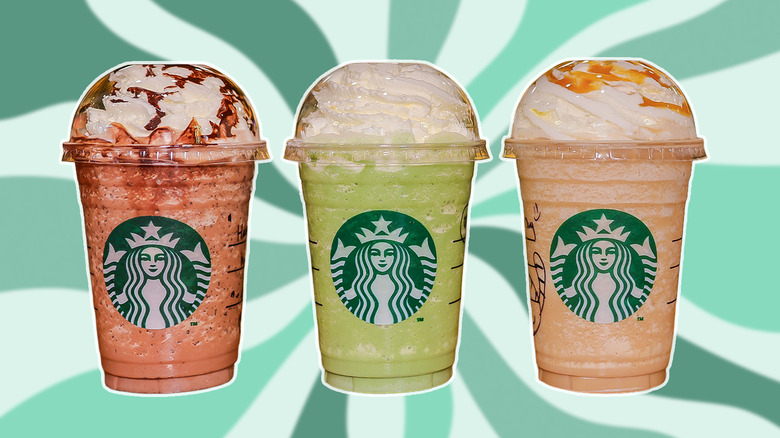
Starbucks has built its empire on the promise of customization. From the way your name gets scribbled on the cup to the dizzying menu of toppings, syrups, and milks. Prefer soy over oat milk, half-caf instead of full, or a sprinkle of cinnamon dolce on top of your matcha? Done. But here's the catch: what feels like a creative masterpiece to you can often feel like a logistical nightmare to the barista making it.
TikTok is filled with Starbucks "secret menu" items that are less drinks and more experiments. And then there are the Frappuccinos with eight or more customizations. To the uninitiated, they're quirky and fun; to the person behind the counter, they're eye-roll material that throw off the line, slow service for everyone else, and often taste nothing like you'd expect.
It's not that Starbucks baristas don't want you to have your perfect drink — they'll happily oblige. But there's a fine line between personalization and overkill, and some customizations cross it spectacularly. From the notorious Unicorn Frappuccino that had baristas covered up in "fairy powder" to hyper-modified cold brews that resemble melted dessert soup, these are the orders baristas wish you'd stop making their everyday reality.
1. Starbucks secret menu, TikTok, or AI-generated drinks
We know you think those TikTok-famous or "secret menu" Starbucks creations are fun, but the baristas who have to make them have a different take. Here's the thing: Starbucks doesn't officially have a secret menu — it's a customer invention, fueled by influencer posts. While most employees don't mind making a custom drink, the problem arises when customers order using only a trendy name — like the "Harry Styles Refresher" — without providing the actual recipe. That puts the barista in a tough spot because they can't guess the exact ingredients in it.
Another challenge is that many of these viral recipes include syrups or ingredients that are either seasonal or have been discontinued. Now, add in AI. Some customers walk in with AI-generated inspo scraped from social feeds and get upset if their order isn't an exact match. These drinks are confusing, hard to memorize, and exhausting.
Baristas say it's even worse during rush hours, as these orders often involve multiple modifications that fill up the sticker and slow down service. TikTok has supercharged the trend, sending hordes of customers in search of elaborate mashups that take triple the time of a normal order. These off-menu creations push workers to their limits. A Starbucks shift supervisor in New York told The Guardian that overblown orders turn what should be a simple drink into a production — and with no extra labor hours built in, employees struggle to keep up. "These orders are driving us insane," they said.
2. Iced drinks with no ice or water
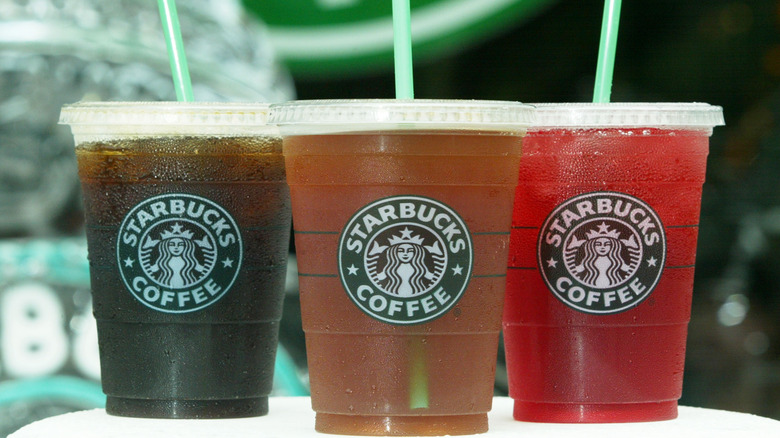
Another pet peeve customization for Starbucks baristas is iced drinks ordered with no ice or no water. On the surface, it might seem like a smart hack: less ice or water means more of the "good stuff," right? But behind the counter, these tweaks create issues in stores.
Refreshers are the best example. These colorful, fruit-based beverages are made with a concentrated juice base, which is supposed to be diluted with water and poured over ice. Customers who ask for "no water" are essentially requesting a full cup of that pricey base — and it doesn't take many of those orders before the store runs out completely. One barista admitted on Reddit that no-water Refresher requests are the quickest way to drain a location's stock, insisting corporate ought to introduce new policy on modifications.
Then, there's the no-ice crowd. Certain beverages, like shaken espressos, are specifically crafted to include ice, which not only chills the drink but also aerates it and ensures the flavor is properly balanced, so no-ice shaken espressos are a big no. Without ice, baristas are left handing over lukewarm espresso. There's also a group of customers who ask for their drinks to be shaken with ice but then want all the ice removed, which adds extra work and alters the drink's texture. Even worse are no ice orders for drinks with cold foam, as the latter disintegrates faster and blends into the liquid.
3. Any drink where the milk is substituted with vanilla sweet cream
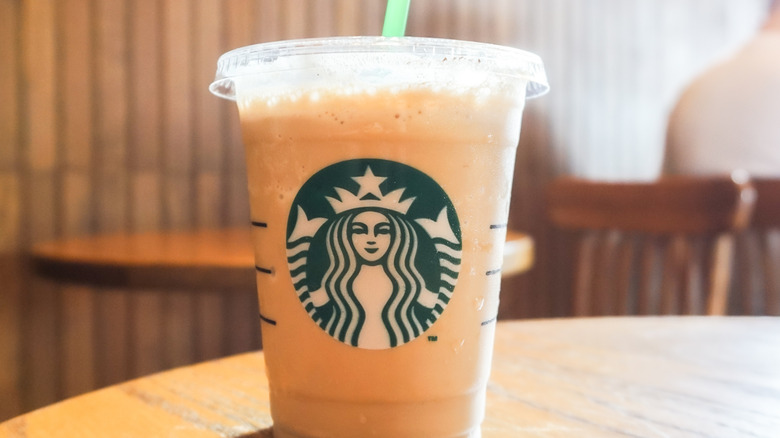
Baristas will tell you there's a big difference between swapping in almond milk and asking for vanilla sweet cream as the base of your latte. Sweet cream isn't a standard milk — it's a special mix of heavy cream, 2% milk, and vanilla syrup, batched daily in pitchers or made in big storage cubes. It's meant to top cold brew or get whipped into cold foam, not to carry the weight of an entire drink.
Unlike plant-based milks, there's only so much sweet cream to go around. When customers insist on using it as their main dairy, it drains supplies intended for specialty drinks, leaving baristas scrambling to ration what's left.
It doesn't help that making the vanilla sweet cream is labor-intensive. Each batch takes time to prepare, the measurements are annoying, and any unused pitchers and cubes get tossed because they are only good for up to 48 hours even in the fridge. Additionally, it tends to separate and lose quality after this time, even before it becomes unsafe.
4. Seven-plus modifications in a single drink
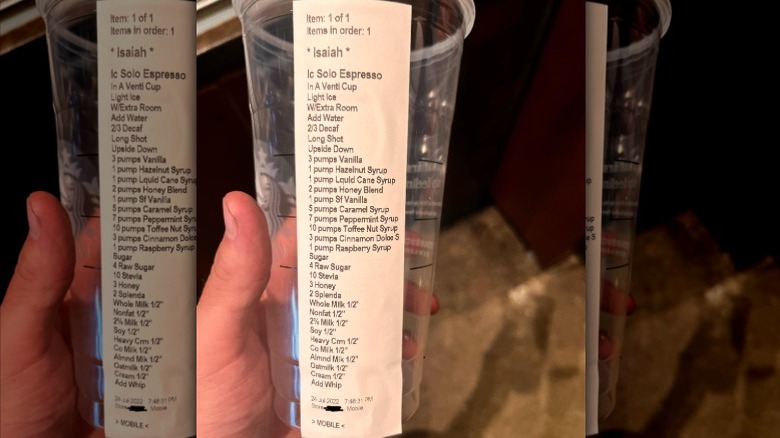
Baristas generally don't flinch at one or two substitutions — swapping oat milk for dairy, skipping whip, or reducing syrup. But the moment an order balloons past seven modifications, it becomes a logistical nightmare. These drinks often take up the entire sticker label with requests: double-blended, extra caramel drizzle, light ice, three different milk bases, a pump-and-a-half of multiple syrups, plus toppings that belong to entirely different drinks. Each line is another step to juggle, usually while balancing a queue of dozens of simpler drinks. Over-the-top customizations additionally test the limits of what can physically fit in a cup. Baristas often face drink orders with excessive pumps, layers of foam, and endless add-ons that are nearly impossible to execute smoothly.
Some of the most infamous customizations hit 10+ tweaks. One viral case came from barista Josie Morales, who shared a Frappuccino with 13 modifications and joked online about wanting to quit. The post cost Morales her job, but it also exposed just how exhausting and unsustainable these over-the-top orders can be for staff.
The workload isn't just in preparation; it's in decoding what the order even means, gathering ingredients, and then remaking it when it inevitably doesn't match what the customer pictured. For staff, multiple mods don't just slow service — they mean way more work for a single drink with no extra pay, raising stress behind the counter. It's especially frustrating in the drive-thru.
5. Swapping in cold foam where it doesn't belong
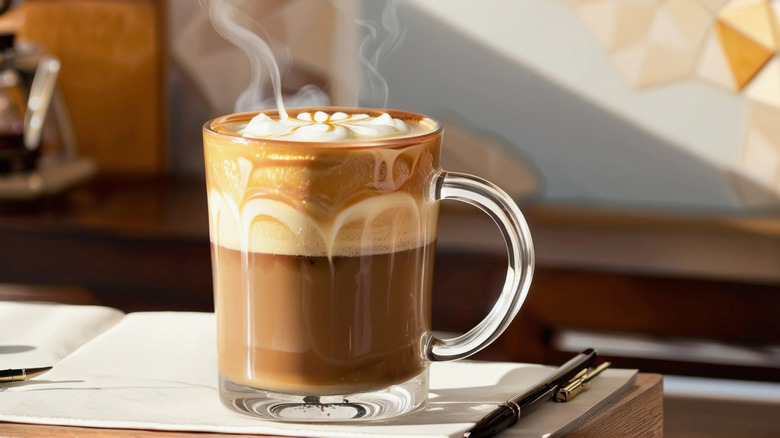
Few customizations spark as much quiet frustration as cold foam, especially when it ends up on drinks where it simply doesn't work. One barista pointed out that cold foam has become so trendy it feels like everyone and their cousin wants it added. Designed for cold beverages, cold foam collapses almost instantly when added to hot drinks, leaving baristas wondering why they went through the trouble of making it in the first place. Despite this, customers regularly ask for it on lattes, mochas, and other steaming orders, often expecting it to hold its shape, then complain when heat melts it and their drink goes from hot to warm even after being warned in advance.
Even on iced beverages where it does belong, the trend has ballooned. Many baristas note that cold foam is tacked onto nearly every drink these days – regardless of whether the flavor pairing makes sense — with some customers piling it on top of beverages already drowning in whipped cream, drizzles, and toppings.
Baristas say others push it further by layering multiple foams — or worse, ordering six different drinks, each with its own unique foam. Some workers have even had to make six of the over 13 different cold foam flavors back-to-back or throw out perfectly good leftovers just to immediately remake the same flavor for the next order. Because every cold foam has to be blended fresh, these requests are among the most time-consuming. The most heinous cold foam flavor, baristas say, is the salted caramel cold foam. Baristas must portion vanilla sweet cream into the foamer, add two pumps of caramel syrup and mix in two salt packets, then blend until smooth with fine bubbles, which slows the line compared to standard toppings.
6. Adding honey or more than four sugar or Splenda packets to drinks
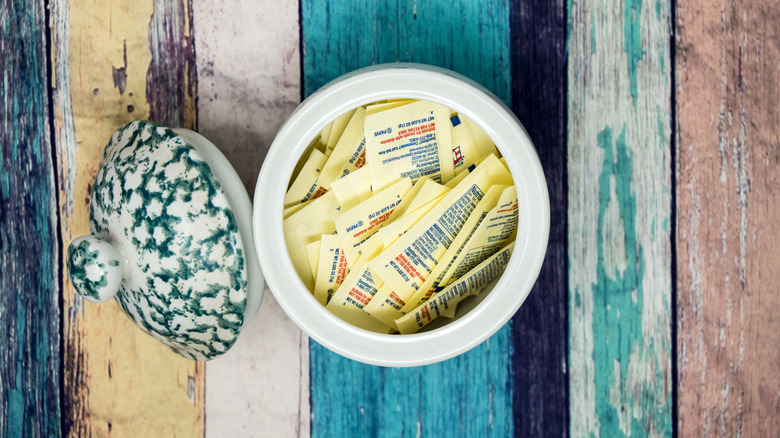
When it comes to customer add-ins, few things test a barista's patience like multiple honey and sugar packets. On paper, it sounds simple: squeeze, stir, and serve. But in practice, honey is a sticky nightmare — literally. Opening packets is inconvenient and irritating; it clings to spoons, drips down counters, and worst of all, refuses to blend in with chilled drinks. One frustrated barista joked on Reddit, "Honey doesn't like to be cold or shaken." Instead of dissolving smoothly, it sinks, clumps, or requires an extended stir, slowing everything down when the café is slammed.
Another employee mentioned stirring in honey packets alone takes an extra 15 seconds. This might not sound like much, but in Starbucks, where staff are constantly pushed to be as efficient as possible, it can be hectic. And while there's no public limit on sugar or Splenda packets, many baristas say going beyond four packets makes them about cry or vomit, especially for orders with up to 24 Splendas. These customizations do not violate any policy, but tearing open bulk sweeteners during peak hours slows everything down and creates clutter.
7. Hot no foam drinks
If you order your latte "with absolutely no foam," know that behind the counter, the barista is quietly groaning into the steam wand. "No foam" orders consistently top the list of the most difficult drinks to make. Eliminating foam entirely is challenging because steaming milk naturally creates foam.
Removing it requires extra steps: baristas must under-aerate the milk then physically scoop off foam with a spoon. Simply skipping aeration isn't ideal since it can affect the milk's taste. Partners report that trying to achieve absolutely no foam often produces a high-pitched screech from the steam wand, and, for fun, they ensure customers can hear it too as a thanks for the inconvenience. Others steam slightly more milk than needed so micro-foam has space to separate, waiting 10–15 seconds before pouring.
These techniques are time-consuming and imperfect. Certain complex orders — such as a chai with half nonfat, half soy, no water, and no foam — can behave unpredictably, wasting extra tools, creating cross-contamination risks, and heightening frustration. Maintaining heat, consistency, and the right texture while handling multiple no-foam orders during a rush is super stressful.
8. Extra-hot drinks above 180°
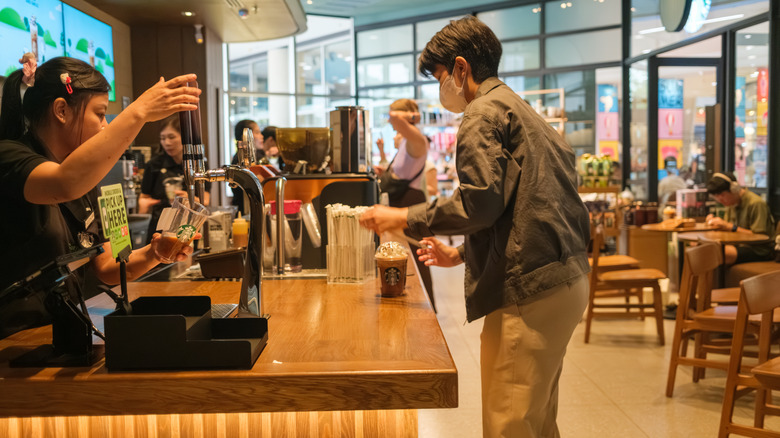
For those who swear by piping hot Starbucks coffee, that "extra hot, please" might feel like the perfect request. But behind the counter, baristas will tell you it's one of the orders they wish customers would stop making. Under normal operations, Starbucks steams milk to about 160° Fahrenheit, which is plenty warm but still safe to handle. There's even a "kid's temp" option at 130°F for anyone who wants to sip right away. But when a customer asks for extra hot, baristas have to crank it up to 170 –180°F.
The real trouble starts when customers demand temperatures well above that, like soy based drinks at 190°F with no foam. These are notoriously difficult to steam, often bubbling over or scalding whoever's holding the pitcher. One veteran barista admitted a venti soy green tea latte at 180°F had literally burned almost every partner at their store. Others recall customers who insisted on 200°F drinks, with one barista explaining that achieving such temperature takes multiple steaming pitchers just to avoid overflow. To make matters worse, these drinks are often sent back if they don't meet the customer's exact idea of "perfect."
Training manuals officially cap drinks at 185-190°F for safety, and many baristas stop there, emphasizing they're within their rights to refuse making a drink that hot. But in practice, some stores cave to regulars who demand near-boiling cups.
9. Excessive caramel syrup and drizzle requests
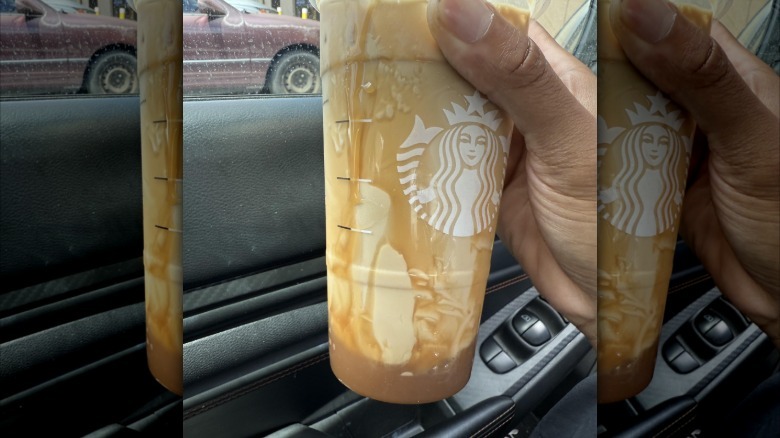
Extra caramel, whether syrup or drizzle, is high on the list of baristas' pet peeves when it comes to Starbucks' endless customization options. We're not talking about a neat crosshatch on top of your caramel macchiato. Some customers request that every square centimeter of their cup be coated with caramel drizzle — an intricate, time-consuming process.
The problem isn't just annoyance — it's resources. Caramel drizzle is portioned and intended as a garnish — caramel syrup as a sweetener — not the foundation of a drink. When multiple customers ask for their cups lined or excessive pumps, stores can burn through stock faster than deliveries arrive. Extra drizzle requests have even led to short-term shortages.
Baristas often vent about just how extreme some Starbucks caramel requests get, like a customer asking for 16 pumps of caramel, or another insisting their venti cup be lined with caramel drizzle all the way to the bottom. One employee recalled someone wanting 2 full inches of caramel in their macchiato. Others say people can be downright obsessive about caramel drizzle, noting it's becoming increasingly common, with one joking on Reddit that for some customers, "extra" really translates to "make me regret asking for extra."