

6 Facts About The Very First Starbucks Coffee Shop
Coffee culture has been part of the mainstream for decades, and folks around the world are always chasing the perfect cup of coffee. Seattle is considered one of the main birthplaces of modern coffee culture, which emerged alongside a number of alternative trends like grunge rock and social tech. Even though Seattle no longer has the most coffee shops per capita in the U.S., it continues to hold onto its reputation among coffee drinkers, particularly because of its status as the hometown of one of the world's most renowned chains: Starbucks.
Starbucks is a household name by now, thanks to its widespread brand, which includes café locations, coffee beans, and even grocery items such as creamer, which are packaged by Nestlé. It's tough to imagine how a simple Seattle coffee shop grew into more than 32,000 iconic cafés in a whopping 80 countries, but everyone has to start somewhere. In 1971, Starbucks started like any other coffee shop, with just one small location and plenty of help from friends. Although it's possible to visit what Starbucks calls its first location, the actual flagship Starbucks was located at 2000 Western Avenue, a building that was demolished only a few years after Starbucks opened its doors. The story of the very first Starbucks is one with plenty of surprising facts, even for those who consider themselves Starbucks mega-fans. Here's what you need to know about the location.
There was only one paid employee when it opened
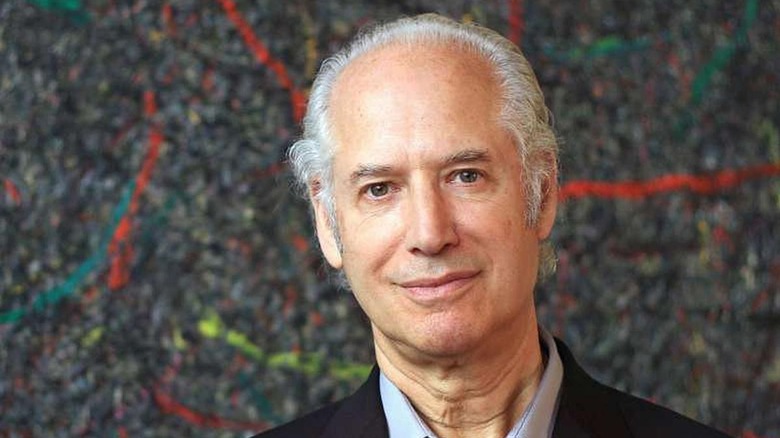
One of the most iconic parts of the Starbucks experience is ordering your drink from a talented barista. During rush hours, it's almost mesmerizing to watch baristas coordinate behind the bar to make orders lightning fast. Even though it doesn't seem like Starbucks could ever survive without those green-vested heroes, when the first Starbucks opened, it was run by just a single person. Founder Zev Siegl took up the task of serving every customer himself when the coffee shop first opened. The recognizable green apron didn't even appear until 1987.
Most restaurants don't open with a full kitchen staff, especially if it's only a coffee shop, so it makes sense that the very first Starbucks would have only one employee and for that employee to be one of the owners. Of the company's three founders, Siegl was the only one who had quit his job to start Starbucks, making him the perfect candidate to work as its first — and at the time, only — paid employee. Luckily, Starbucks was such a success that Siegl didn't have to brew coffee alone for long.
The original color scheme was yellow and brown
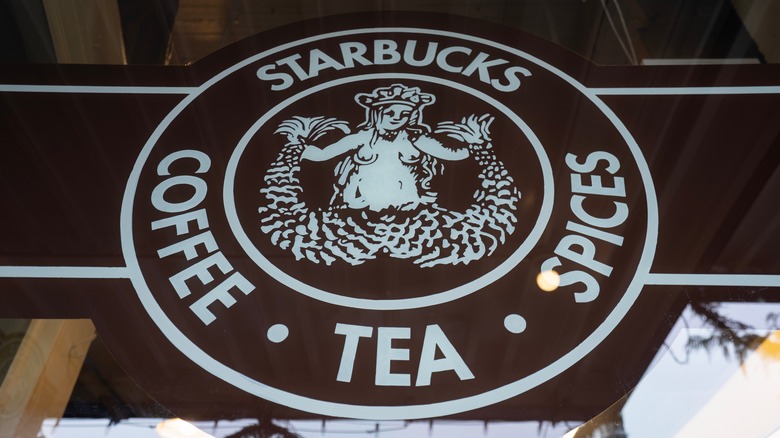
The first Starbucks location didn't use the iconic green and black color scheme. That modern take on city cafés wouldn't arrive at Starbucks locations until 1987. Instead, the building and decor offered a warm palette of yellow and brown. The reason for this may simply be that the original building had yellow brick walls, making it easy to use brown trim to create an aesthetic. The window of the very first Starbucks displayed the original logo, too, complete with the first iteration of the Starbucks siren. However, that original siren was brown and white, not green and black.
The Starbucks mascot has been a mythological siren since the beginning, though she has undergone numerous changes over the years. From the simplified lines to the star-tipped crown on her head, the siren is nearly unrecognizable from the first version. The original illustration captured a more classical version of a siren, acting as a nod to the brand's namesake, the classic novel "Moby-Dick." Although the yellow and brown Starbucks color scheme may be long gone, when you visit the so-called "original Starbucks" at Pike Place Market, you'll be able to see the original brown logo hanging in the window, which is just as alluring as the modern one, at least to Starbucks fans.
It mostly sold hand-scooped coffee beans in bags
It's important to remember that Starbucks set out to be a completely new kind of coffee and tea experience. Its specialty was in ... well, specialties. Starbucks imported a wide selection of coffee beans from all around the world, over 30 varieties in total at first. The first Starbucks shop also sold plenty of teas alongside its unique coffees. In fact, the bags of coffee and tea it sold were its main source of income. Starbucks also sold hot, drinkable coffee but usually offered it as a sample to entice shoppers to buy bags of roasted beans.
In the beginning, Starbucks mostly sold hand-scooped coffee beans in bags. The first store was set up so that it was easy to scoop and serve beans to patrons. Each coffee variety was stored in a rectangular box with a window, allowing people to see how dark or light each coffee bean option was. For many customers, this was the first time they had been able to compare coffees based on roast levels and source locations side by side, which was certainly a unique experience.
The first Starbucks coffee beans were roasted by Peet's Coffee
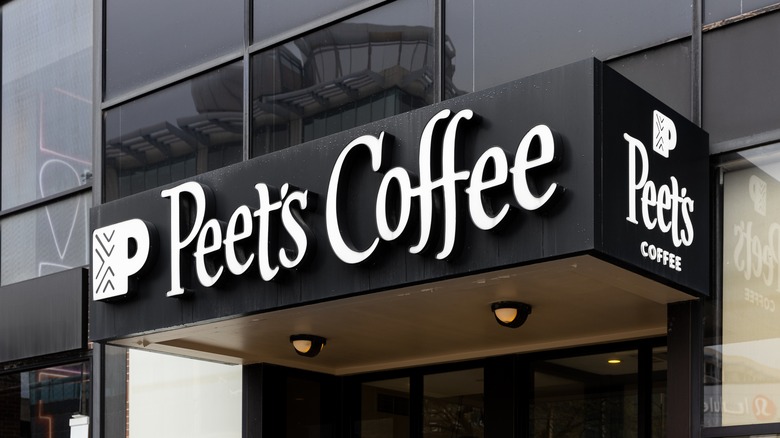
Collaboration between competing brands is something that's largely gone by the wayside, but it wasn't too long ago that entrepreneurs could rely on support from their community to achieve success. This was especially true among niche groups, such as coffee connoisseurs on the West Coast, making it just a little less surprising to learn that Peet's Coffee was responsible for roasting Starbucks coffee beans during their first few years.
Peet's Coffee is a well-known brand that can still be found on grocery store shelves across the country. When the three Starbucks founders asked Alfred Peet for help with their new business, he graciously provided training to ensure that the coffee shop had the highest quality products. In 1973, Peet even trained a roastmaster for Starbucks, a man named Jim Reynolds. The two companies continued to have a good relationship with each other, even after Peet's was sold in 1979. In 1984, Starbucks founder Jerry Baldwin bought Peet's Coffee and Tea, continuing the two companies' close ties for a number of years.
Lattes and food weren't on the menu
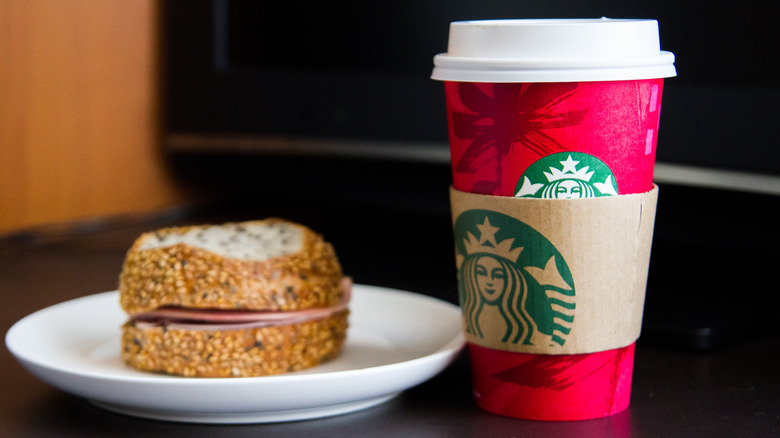
Another iconic element of Starbucks that gained the brand worldwide recognition is its use of Italian words for its cup sizes and a number of the drinks it served. Venti, Americano, Frappuccino, and mocha latte weren't part of most people's vocabulary before Starbucks made an impact on culture around the globe. And yet, these terms weren't a significant part of the very first Starbucks store. In fact, the first Starbucks coffee shop didn't even sell caffè lattes.
Lattes didn't show up until more than a decade later, after Howard Schultz, who joined the company in 1982, traveled to Italy and thought to transform the Starbucks experience forever. In May 1984, the first Starbucks store with an espresso machine was opened, though now you can get a latte even at the "original" Starbucks location at Pike Place Market. However, they still won't serve food at this location. Food wasn't offered for decades at any Starbucks location; breakfast sandwiches were finally added to the menu in 2003.
The original building was demolished in 1976
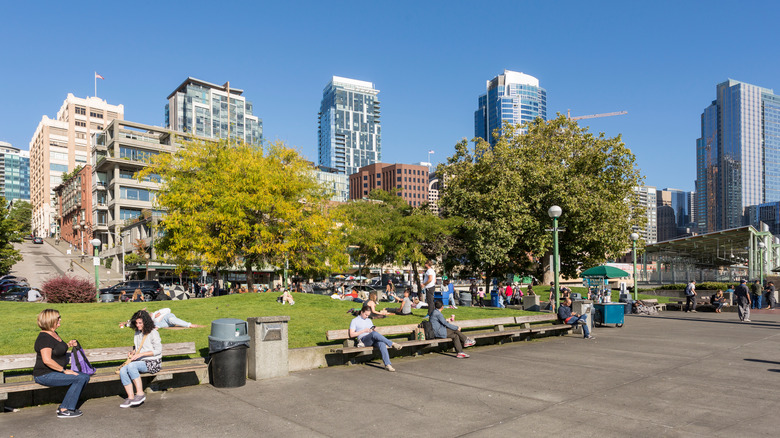
Starbucks touts its original location as a mecca for coffee lovers around the world, but what many people think is its original location isn't actually at 1912 Pike Place. Instead, the first Starbucks was just one shop in a large building located at 2000 Western Avenue, at the north end of Pike Place Market. Of course, Starbucks only stayed there until 1976, when the building was slated to be demolished. That decision got the first Starbucks moved a bit closer to the wharf, and the "original" Starbucks has been there ever since.
So, what happened to the real first Starbucks location? You can still visit it, but nowadays, it's called Victor Steinbrueck Park. It offers a calm, beautiful green space nestled between the skyscrapers of Seattle and the chill Pacific Ocean. If you're already visiting the original Starbucks shop, it's worth the extra bit of walking to see how the first Starbucks location has been transformed into another kind of relaxing oasis that fans can appreciate.