

The Expert Way To Season And Prep Lobster Tails Before Baking
We may receive a commission on purchases made from links.
Even if you're a New England native, lobster tails are the height of sophistication and luxury. A special occasion food, lobsters deserve a lot of attention and care from preparation to cooking. Tasting Table, therefore, consulted Kory Foltz, culinary director at Sunseeker Resort, for his expert advice on preparation tips to maximize the flavor and texture of lobster tails.
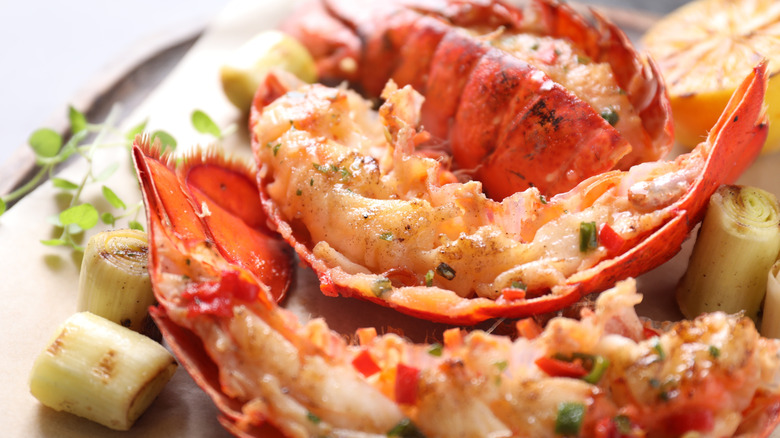
The first preparation step to take is scoring, a technique that many chefs use on foods from proteins to vegetables to bread. Lobster tails are easy to score, requiring little more than one vertical slice. "To score lobster tail, cut down the middle of the shell without cutting all the way through, then gently lift the meat up," Foltz said. In addition to a stunning presentation, scoring the lobster aids in the cooking process. Foltz told Tasting Table that scoring exposes more of the meat, which "helps the lobster cook evenly and faster while also allowing heat to hit the meat directly."
After scoring, the lobster tails are ready for seasoning. While one of Tasting Tables' tips for cooking lobster tails suggests adding a variety of spices, Foltz recommends keeping it simple. He said to "brush the lobster meat with melted butter or olive oil, then season generously with salt, pepper, garlic, and a touch of paprika for color. You could add lemon juice or fresh herbs for that extra flavor punch." The slightly sweet, slightly briny, and umami-rich profile of lobster tail needs little embellishment.
Baking tips for perfectly cooked lobster
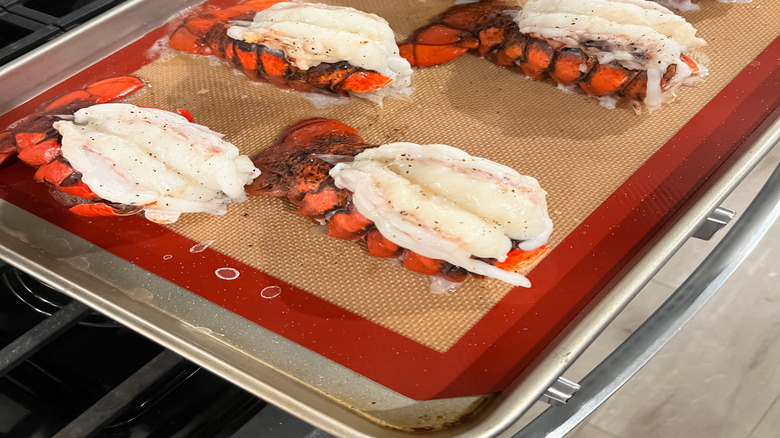
No matter how you cook lobsters, "the key is not to overcook them — lobster gets tough and rubbery if you go too far," Foltz explained. So, he recommends baking lobster tails at a moderate temperature for a longer period as opposed to broiling lobster for a couple of minutes. Whereas high-heat grilled lobster and broiled lobster tail recipes are faster, the chef argues that "a little patience and attention go a long way for a tender, juicy lobster tail."
His preferred lobster cooking method is to "bake lobster tails at 350°F for 12-15 minutes...you can also check the internal temperature — around 140°F is perfect." A meat thermometer is an important tool for any home chef as it's the most reliable way to ensure food is done, whether you're cooking lobster or a fine cut of steak. Before prodding the lobster tails with a thermometer, Foltz points out various visual and tactile cues to watch for, like an "opaque [color] and firm to the touch, not translucent or mushy." He continued explaining, "if the meat pulls away from the shell slightly, it's a good indicator that it's done. A little poke with a fork or knife should feel firm but not hard."
Once you've pulled the lobster tails out of the oven, you can always upgrade them with creamy sauce pairings like a hollandaise. For a comforting approach, pair lobster tails with french fries or incorporate them into macaroni and cheese.