

If You Have A Small Garden, This Is The Fruit Tree Of Your Dreams

Many gardeners dream of having a small orchard of fruit trees, but fruit trees take up a lot of space. Even just a few can quickly occupy an entire backyard garden. That's where this magical wonder comes in: the fruit salad tree. These magical trees are grafted together from multiple different fruit trees so that a single rootstock can produce a variety of fruits. While it may sound like something that you'd read about in a fantasy novel, these trees are quite real and rely on some simple botanical principles.
Grafting fruit trees is actually a very common technique, so much so that almost all commercial fruit trees are grafted. This is typically done in order to ensure a consistent product, though traits like cold hardiness and pest and disease resistance can also be achieved. Fruit trees are bred to produce a particular fruit, but these fruits are often cross-pollinated. If you planted one of the seeds, the resulting fruit would likely be quite different and potentially even inedible. Instead, a seed is planted to grow rootstock, and then it is grafted with a cutting from a particular variety known for high-quality fruit.
Essentially, this makes the top of the tree a clone of the cutting, producing consistent, reliable fruit. The fruit salad tree is only special insofar as it contains a variety of compatible grafts, each producing different fruits. There are some limits to which types of trees can be grafted together, however. You cannot create a tree that grows both oranges and pears, though there is one incredible tree out there that produces 40 different types of stone fruits.
Different types of fruit salad trees
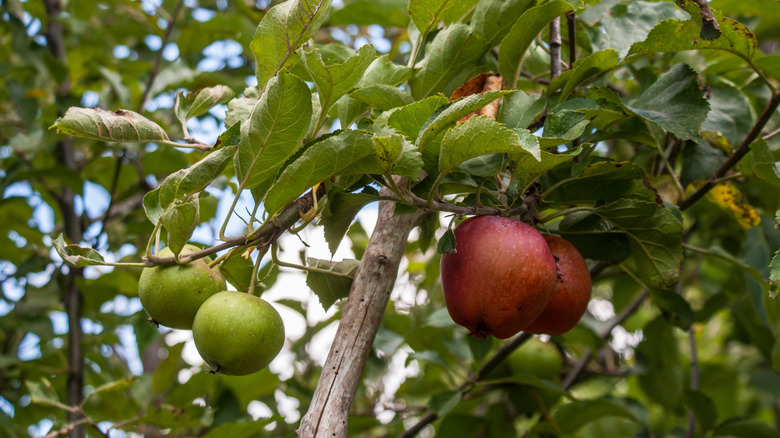
Fruit salad trees are split into four different groups — apples, pears, citrus, and stone fruit — but within these groups there can be great variation in the number of fruits on a single tree, with many commercially available trees producing four or more different fruits. When it comes to apples, there is a huge variety of fruit. Your fruit salad tree certainly won't have access to all 5,000 varieties grown among the massive apple collection in Geneva, New York, but there are still many options to choose from. For example, you can pick up a three-variety tree that bears green, red, and yellow apples for a little taste of everything.
Likewise, a four-in-one pear fruit cocktail tree can fill your garden with several different and unique types of pears from a single rootstock. You can have D'Anjou pears for poaching, juicy Bartletts for munching, and crisp Asian pears for slaw. Citrus trees are sometimes considered among the worst for beginner gardeners to grow because they need plenty of sun and no freezing weather. But if you live somewhere with a sunny, mild climate (like the California coast), they can be quite easy and produce lots of fruit. With lemons, limes, and oranges all growing on the same tree, your home bar will be well-stocked with fresh juices.
While you probably can't get your hands on a stone fruit tree that will bear 40 different fruits — unless you get deep into the art of grafting — there are plenty of options out there for trees that produce combinations of different peaches, plums, and nectarines. The stone fruit species also includes apricots, almonds, and cherries, however, so you may be able to graft something really special in this group.
Caring for your fruit salad tree
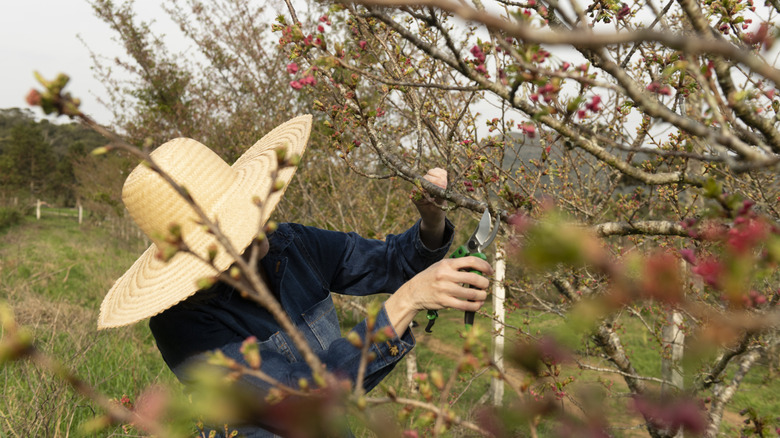
Unfortunately, given the complicated nature of fruit salad trees, they are not the most beginner-friendly fruit trees to plant in your garden. But if you only have a small space, the abundance of different fruits can certainly make them worth the extra care and attention that they require.
One of the biggest concerns with fruit salad trees is that, if one of the grafts is a more vigorous variety than the others, it can take the lion's share of the nutrients from the rootstock and lead to the others dying off. This is certainly something to keep an eye on, as it can undo all of the benefits of a fruit salad tree, leaving you with just one type of fruit tree attached to a rootstock that may not allow it to produce as well as if you had bought a single-variety tree to begin with — but careful pruning can help. By ensuring that each of the different grafts has a similar amount of foliage, you may be able to help control this issue by keeping the different offshoots on an even playing field.
Beyond pruning, caring for your fruit salad tree is much like any other fruit tree. The tree should come with instructions for what makes it happy and healthy, which will include details on things like how to plant it, how much sun and water it prefers, and how well it will tolerate cold and drought. Follow these instructions closely, and you'll soon be up to your elbows in different fruits.