

Your Roasted Tomatoes Will Turn Out Soggy Unless You Follow This Prep Step
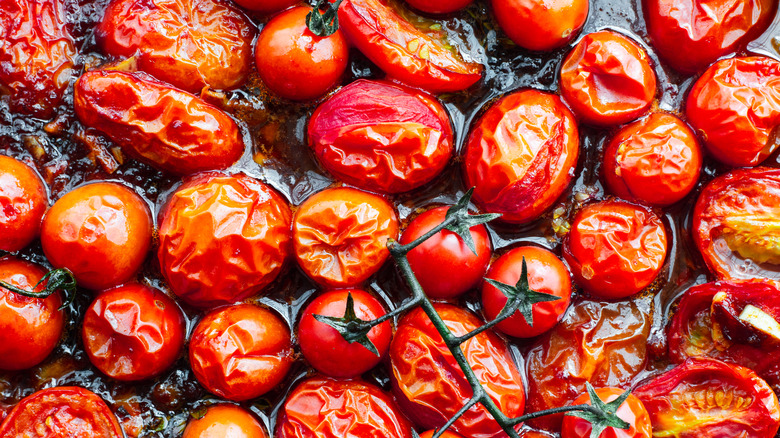
Roasting is one of the simplest ways to make tomatoes more delicious. The high, dry heat of the oven evaporates moisture while caramelizing the fruit's natural sugars, leaving you with concentrated flavor and a tender, jammy texture. Tomatoes are naturally high in sugar compared to some other vegetables, and, when exposed to sustained heat, those sugars brown and develop the appealing, savory complexity associated with caramelization. It's why roasted tomatoes taste richer, sweeter, and more versatile than their raw counterparts.
But overcrowding can ruin the process. If tomatoes are piled into a pan or crowded together in a heap, steam gets trapped. As a result, instead of crisping or caramelizing, the fruit stews in its own juices, leading to soggy, watery results. The fix is simple: just give them space. To make the perfect roasted tomatoes, line them up in a single layer on a sheet pan, with at least half an inch between pieces. That way, the air circulation will let the oven's heat evaporate liquid instead of sealing it in.
One more little thing: always place tomatoes cut-side up (skin side down), exposing the wet surface to dry heat. That way, moisture can evaporate and the flesh will concentrate instead of steaming, creating concentrated bites that are chewy at the edges and soft in the center. For sauce or easy peeling, cut-side down creates more steam and loosens skins, but it yields a wetter pan. A little foresight in pan placement is all that separates a tray of flavorless mush from tomatoes you'll want to eat straight off the sheet pan.
Hot tips for roasty tomatoes
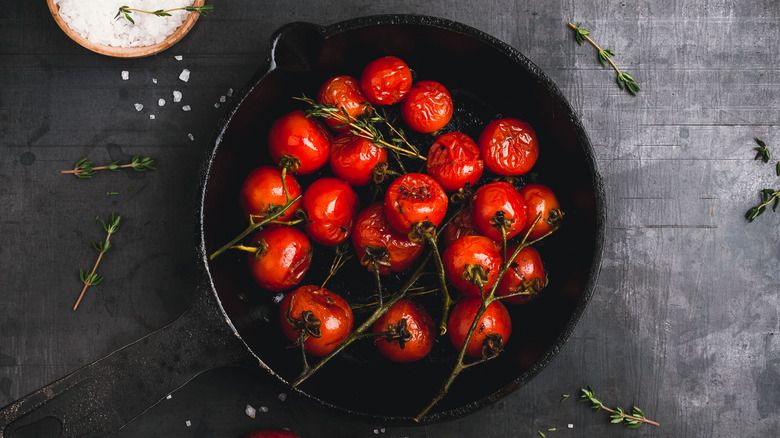
Once you know the trick, the method is simple. Preheat the oven to about 400 to 450 degrees Fahrenheit, then line a sheet pan with parchment or foil for easier cleanup. Halve or slice your tomatoes, depending on size, and arrange them cut-side up with breathing room between each piece. Drizzle lightly with olive oil, sprinkle with salt, and, if you like, add herbs such as thyme or oregano. Roast for 20 to 40 minutes, depending on how concentrated you want the flavor. Smaller cherry tomatoes will wrinkle and caramelize quickly, while larger plum or beefsteak slices may need longer to collapse into jammy softness.
From there, the uses are nearly endless. Layer roasted tomatoes onto sandwiches or grain bowls, where their concentrated flavor adds brightness without excess moisture. Chop them into omelets or quiches for pockets of sweetness that won't water down the dish. Toss them with pasta, blend them into dips or bruschetta, or serve them as a side with burrata and crusty bread. Roasting even works as a meal prep move: A batch stored in the fridge can anchor salads, soups, and sauces all week.
The point is less about effort and more about intention. Roasting brings out tomatoes' best qualities, but only if you avoid steaming them in their own juices. A little spacing and the right pan placement will unlock flavor that rivals sun-dried tomatoes, without leaving your kitchen.