

Is Making Your Own Orange Juice Worth It?

We may receive a commission on purchases made from links.
If you've ever been to southern Europe, you'll have noticed a few pieces of equipment behind the counter at every café. An espresso machine is a necessity, an ice cream scoop is usually somewhere to be seen, and, if you look closely, you'll likely spot a citrus juicer, too. This is because when you order juice in a lot of European countries, the norm is to be handed a freshly-squeezed glass — and a lot of people would be horrified to serve you anything else.
Whether manufacturers want us to believe it or not, you can immediately tell the difference between bottled and fresh juice. The latter is not only brighter, but it also tastes more balanced, with a subtle sweetness that's smooth on the palate. Bottled juice, meanwhile, can almost pack too much of a punch, especially if it contains added sugar. When I first moved to the U.S., it took a while to get used to, but there's no denying that store-bought orange juices are convenient — and, sometimes, that just wins.
As delicious as homemade juice is, it can also be a pain, and it's not always worth it. First, you need to gather a lot of oranges. If you're wondering how many oranges it takes to make juice, the answer is a lot — and they're not always cheap. You also need to learn a little bit about the varieties, as some popular oranges, like Navels, don't make the best juice. They also have different seasons.
Making orange juice can be messy
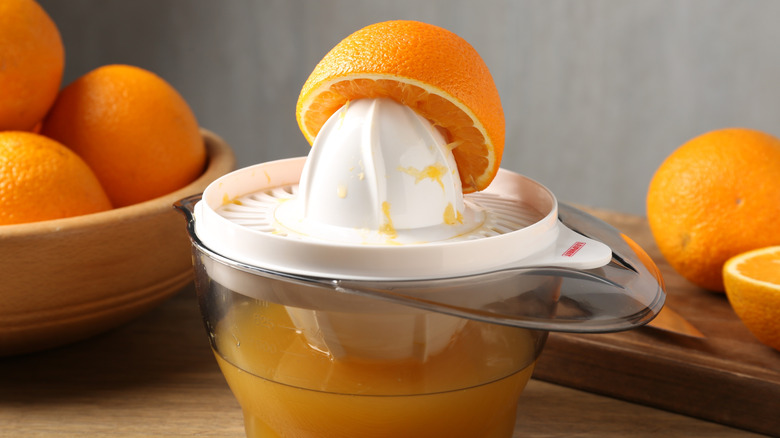
Once you have your oranges, you need to go through the effort of cutting and squeezing them, which can make things, quite literally, a little sticky. You can juice an orange with only the back of a knife or use your hands, but you really need a better system if you're juicing often. Old-fashioned hand reamers, which you press into a halved orange, work, but they're messy and cumbersome, and you have to watch out for seeds.
The more modern countertop ones, where you press and twist the orange onto the reamer, usually have a carafe and sieve, but they don't always yield a lot of juice and can be a little clunky. There are also motorized versions that take out some of the labor, but they cost more and can have a lot of parts. Citrus presses, like the ones you see in Europe, are fast and efficient. However, they take up counter space and can be expensive, with some ranging around the $200 mark.
If I'm making a big batch of juice, I use my centrifugal juicer, which is fast, efficient, and extracts a high yield. However, you have to remove the skins from the oranges before juicing, and it's a pain to clean, so I don't break it out too often. Although I bought my juicer secondhand, they can get pricey if you buy them new, and they're also quite large.
If you have the right equipment and patience, squeeze it fresh
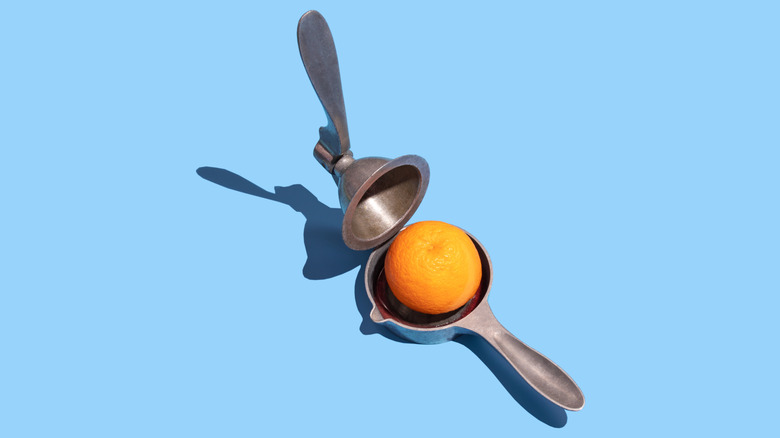
In the bakery where I work, we use handheld citrus squeezers. These are compact, simple to use, and even easier to clean. They fit right in the drawer, and the popular KitchenAid version costs under $25 on Amazon. If you just want a few glasses of juice every so often, and can get your hands on one of these, it's definitely worth making your own juice. That way, you can also rest assured that your juice won't contain any added sugar or preservatives. Best of all, a lot of handheld citrus squeezers are dishwasher safe, so it's just a matter of cutting, pressing, and tossing the squeezer away. Plus, you can find really good deals on oranges in bulk at places like Costco.
If you want bigger batches of juice, don't mind some cleanup, and have an electric juicer, you should also go for it. That said, it's probably not worth spending too much money on a big machine just for orange juice, unless you make it often. After all, these machines are larger and more annoying to clean, and fresh orange juice typically only lasts a few days in the fridge, so you can't really prepare it in bulk if you don't plan on drinking it shortly after. If you're making mimosas for a crowd and don't want to spend a lot of time squeezing and cleaning, skip the hardship altogether and go with store-bought — we won't tell the Italians.