

Don't Be Alarmed If Your Potatoes Look Weird After You Bake Them In The Slow Cooker
Fans of the slow cooker will know that this seemingly humble appliance isn't just for making stews or casseroles. It's your hack to hands-free cooking a whole range of dishes from pulled pork to pasta, creamy dips, or baked potatoes.
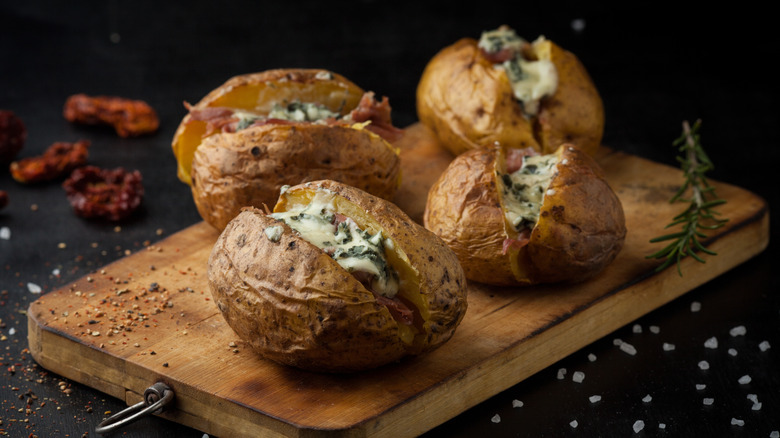
If you're trying this method of baking potatoes for the first time, you might be surprised when they come out looking a little different. Slow cooker baked potatoes often open up to reveal darker colored insides than their oven-baked counterparts.
This is nothing to do with user error, it's simply down to the Maillard reaction. This chemical reaction occurs when starches and sugars in the food are exposed to dry heat, resulting in the development of new flavor compounds. It's the same process that turns bread into toast or creates a nice crust on your steak. When it comes to slow cooked potatoes, you'll find they develop a rich nutty flavor and toasty aroma.
Why the Maillard reaction occurs
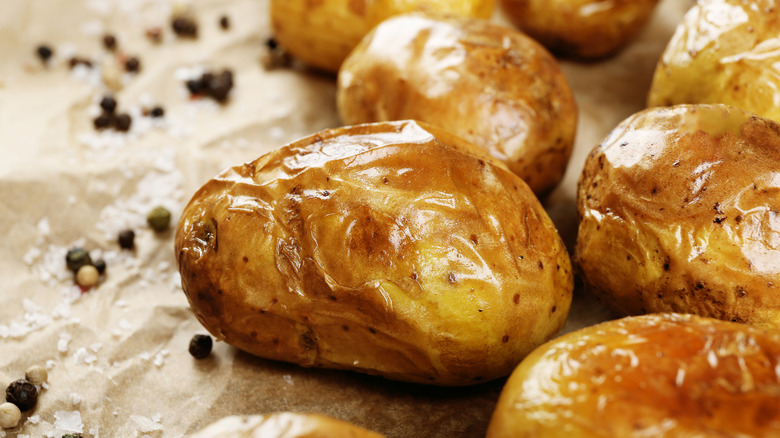
Knowing that the Maillard reaction occurs with dry heat, you might be wondering why this doesn't happen when you bake potatoes in the oven. The answer is that it can, but it doesn't have the same effect. The higher temperate and shorter cooking time means that only the skin ends up brown, while the inside remains moist and white. The extended time you need to soften potatoes in the slow cooker gives the moisture in the potatoes longer to evaporate, and more time for the Maillard reaction to work its way in.
We think this richer flavor is worth celebrating, but there are some things you can try to help reduce the interior browning if you prefer. You're looking to avoid extended exposure to dry heat and prevent the potatoes from drying out. This could mean cooking at a shorter time on a higher heat or wrapping the potatoes well in aluminum foil to prevent steam from escaping. You could also add a little water to the bottom of the pot, but too much will lead to steamed rather than baked potatoes.
Alternatively, you can try using waxy potatoes such as red bliss or new potatoes. They're not generally the preferred potatoes for baking, but these have less starch and more moisture than other potato varieties and won't be quite as affected by the reaction.