

10 Mistakes To Avoid When Dining In Italy

Italian culture is one where people like things to be done just so. Rules are important, and nowhere is this more evident than in Italian dining. Whether you are dealing with a fast-casual joint at a train station — where you must pay for your selections before even heading to the counter — or a fine dining institution, where courses are carefully planned out, you will be expected to follow the rules of the establishment, whether it pleases you or not. Here, the customer is not always right.
To some, these rules and regulations may seem restrictive. Americans, for instance, are accustomed to being able to order whatever they want at a restaurant, and if it's available, they can have it. But in Italy, rules are designed to maximize the dining experience for everyone. They are a way to tell the customer that the restaurant knows what it's doing. So, let's take a look at some of the main rules you might encounter when dining in Italy so that you may learn how not to fall afoul of them and maximize your enjoyment.
Order fettuccine Alfredo
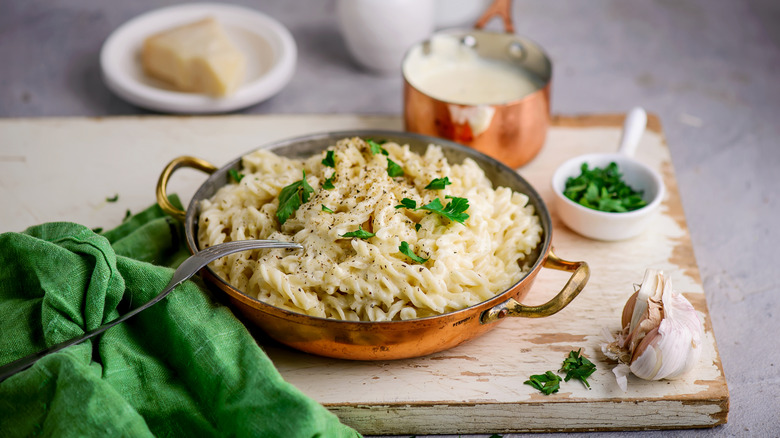
One thing to know about Italian food in Italy is that it's not always going to be like what they serve at your local restaurant in Akron, Ohio. And it's not remotely going to resemble what you get at an Olive Garden. In other words, don't try to order fettuccine Alfredo, mac and cheese, or spaghetti with meatballs. These dishes are firmly American, perhaps Italian-American, but have nothing to do with the motherland.
Fettuccine Alfredo, for one, is not something most Italians know about. First, although an Alfredo sauce was invented in Italy in the early 1900s, it was simply made with butter and Parmesan cheese, unlike the American concoction of Alfredo that can have chicken, cream, and even cream cheese. Similarly, spaghetti with meatballs was invented by an Italian immigrant to New York City sometime at the turn of the 20th century, while mac and cheese, after having been invented in Italy centuries ago, disappeared from Italian menus and can no longer be found on restaurant or family meal tables.
Ask for too many changes or substitutions
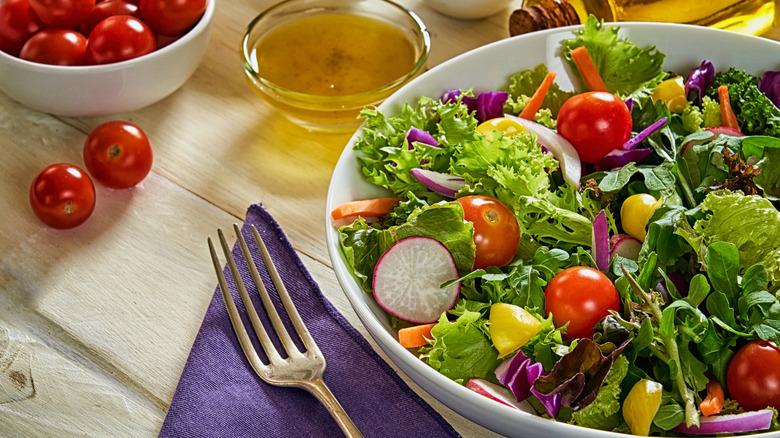
Everyone in America seems to know at least one person who asks for a slew of substitutions whenever they go out to dinner. They'll have the salad without the onions, or the pizza with goat's cheese instead of gorgonzola, or they'll want the anchovies taken out of an intricate, tasty sauce. In America, many restaurants will try to accommodate these requests.
Not so in Italy. You may even receive a rude glance from a waiter if you try to ask for too many substitutions. While many restaurants happily attempt to meet dietary restrictions, by serving gluten-free pasta, for instance, servers seem to be able to sniff out customers who are merely picky rather than intolerant of some ingredient. You may even find some restaurants that have strict policies about what they can or cannot serve: On a recent trip to an ice cream shop, I was denied the chance to add a waffle cookie to my ice cream because those go with cups, while alas, I had purchased a cone.
Request a doggie bag
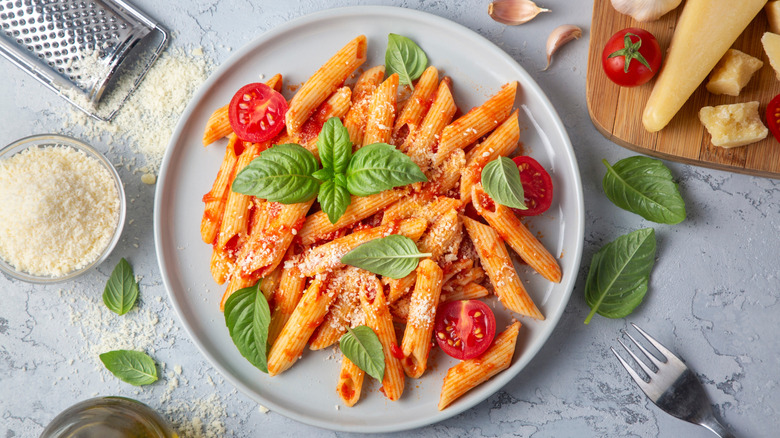
If you're used to American restaurant portions, you may be surprised to find that a dish in Italy, all other things being equal, is about ¾ the size of what you get at home. Indeed, the portion size in Italy is designed to be eaten all in one sitting, and if you leave any of that delicious pasta behind, you may end up offending the chef.
Not only that, but you might get a few strange looks if you end up walking around Rome or Florence with a take-out container in hand (if you can even get one in the first place). Instead, you're expected to come to the restaurant with enough appetite to eat a typical-sized meal. You're also expected to know how much you can handle in one sitting. That is, don't overorder just to end up not being able to finish your meal.
Demand ice in your drink
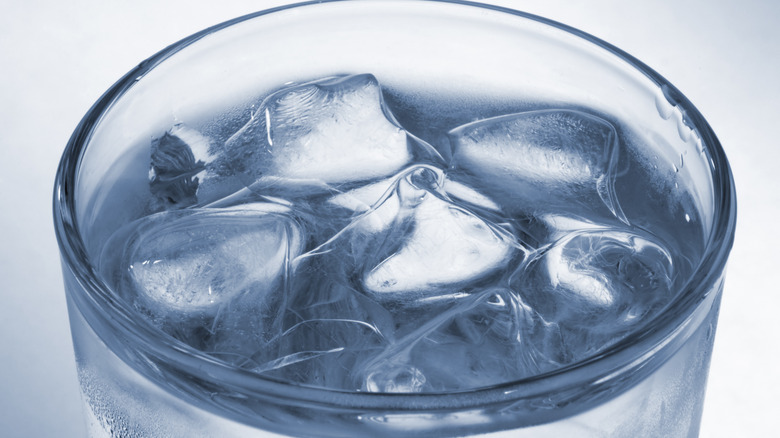
No matter how hot it gets in the summer, and in places like Rome and Naples, it gets unbearably hot, you won't find ice in your drink, and sometimes your water won't even have been refrigerated. Italians prefer their water at room temperature, and even when it is cold, refrigerator-cold is typically enough, without the need for ice.
It gets worse. Even if you do ask for a bucketful of ice to go in your drink, the restaurant might not even have it on hand. They may be reserving it for cocktails, or they may simply not have a large stash of it. And if you're thinking of just buying a bag of ice on your way home and fixing your drinks as you see fit back at the Airbnb, think again. Many Italian grocery stores don't sell bags of ice, so you may have to make your ice the old-fashioned way, by filling an ice tray and waiting for it to freeze.
Show up at a restaurant at 6pm
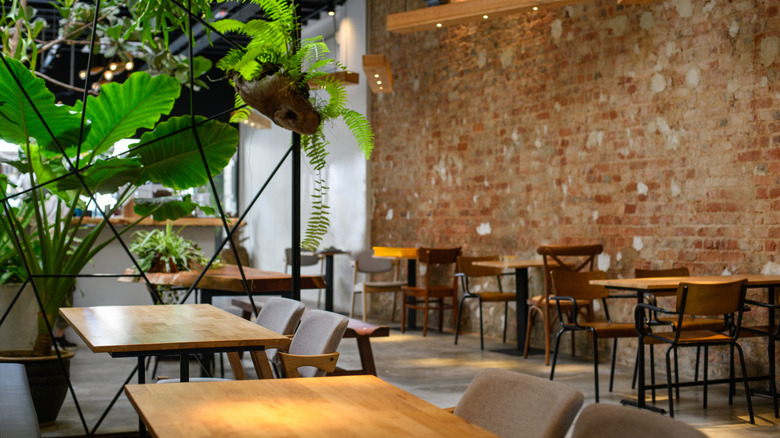
Europeans, including Italians, tend to eat later than Americans. Even families with children will typically have dinner around 8 p.m., while restaurants are unlikely to be open before 7 p.m., unless you're dealing with a tourist trap catering to Americans. As such, it's best not to show up at a restaurant at 6 p.m. expecting it to be open. Restaurant timings are very different, and you may be waiting a while.
Instead, go for a little spritz or an aperitif somewhere. While you sip your drink, you will most likely be treated to little bites like small pizza squares or mini sandwiches, or at least a few bowls of chips. All this won't be too filling, but it may just tide you over to that 8 o'clock reservation. And if you're lucky, once you get to the restaurant, you'll be hungry enough to gobble up two entire courses without the need for a doggie bag.
Order a first and second course
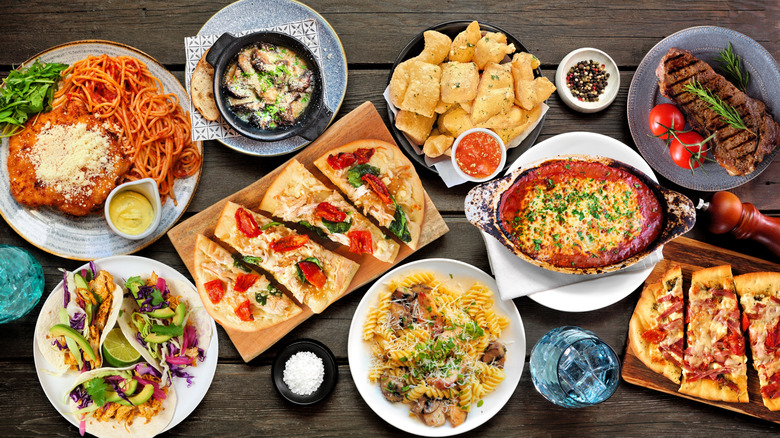
As enticing as it may sound to order a multitude of courses for your meal at that cozy little restaurant down a back alley in Rome, don't feel like you have to. The three or four-course meal idea may sound very European and all that, but in reality, Italians don't typically order a first course and a second course, unless they're particularly hungry, or unless it is established that the portions are very small, as in a tasting menu or prix fixe menu.
In fact, each dish you receive should be enough to fill the average adult for a few hours. More specifically, a first course will include a full plate of something carby, like a risotto or a pasta dish, while a second course will be a large steak or a filling portion of fish, though in this case, you may also have to order a side to fully satisfy you, such as boiled potatoes or grilled vegetables.
Eat all your bread before your meal comes
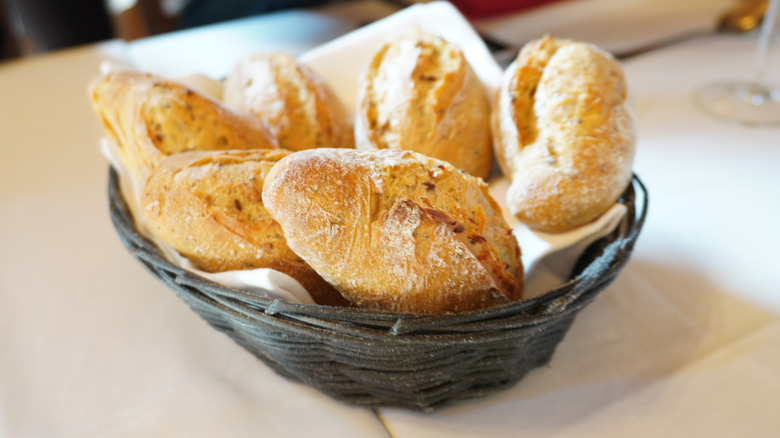
In Italy, as in America and elsewhere, a basket of bread may be brought to your table at some point after you've ordered but before your appetizer or meal arrives. It might feel enticing to gobble up this bread, and maybe ask for some olive oil or butter to go with it. But don't be fooled. That bread isn't there for you, or at least not yet.
In Italy, bread is not typically paired with anything before the meal. It's there to help you finish your meal, more than anything. In fact, once your pasta with ragu arrives, and you find that you have more sauce than pasta at the end, that bread will come in handy to help you scoop up that sauce. This act is called "scarpetta," whereby the bread takes on the role of a shoe that scoops up the sauce (recalling a shoe cleaning off dirt).
Leave a big tip

While there's nothing wrong with leaving a big tip, your server might chase you down thinking you forgot your money on the table. Tips are not usual, unless you're in a very touristy area where servers have developed a taste for it. Sometimes Italians may tip after a meal, but when they do, they usually just leave a few coins on the table, and certainly don't pay anywhere near 15-20% of the bill.
This is because, as shocking as it may seem, waiters in Italy receive a living wage and don't need tips from customers to make ends meet. In other words, they are paid directly by their employers, the restaurant, and not by the customers who dine there. That said, if you make clear that you would like to leave a large tip because you had a great experience dining somewhere, the gesture would not go unappreciated.
Request a coffee before the meal is over
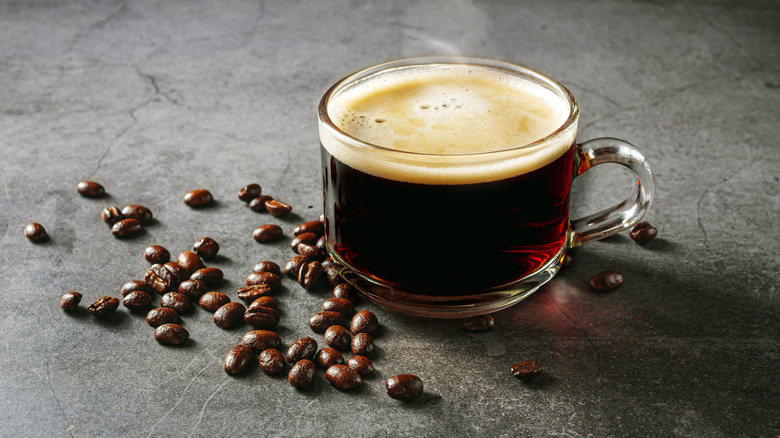
If you have a hankering for coffee midway through your spaghetti alle vongole, forget about it. You can certainly try to ask for one, but you'll be asking again and again, because your server wouldn't dare sully your seafood taste buds with the strong, bitter taste of coffee until they're sure you've finished and won't be taking any more bites of seafood.
This is especially true if you are having wine with your meal. When wine is involved, not only will you have to wait until after you finish your meal to have your coffee, but you'll also have to have finished your glass of wine. And make no mistake: Your server won't slip up in this regard. They will be carefully watching your glass to see if there is anything left. Only once the final drop has been spent will your small cup of espresso appear before you. In short, you may as well wait until the end of the meal to order that coffee.
Ask for tap water
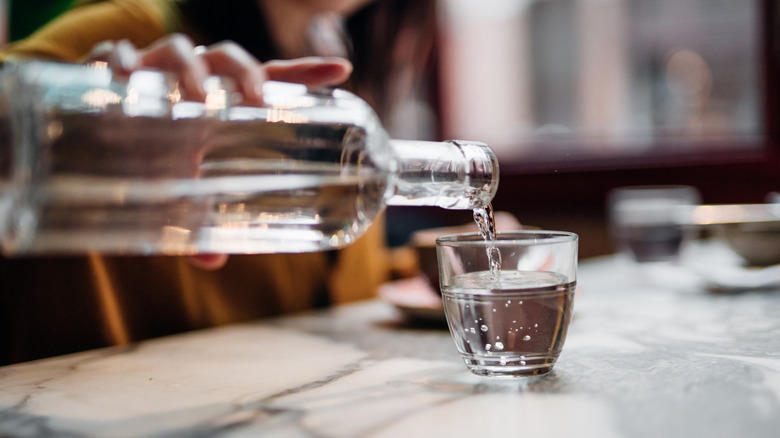
Order water at any Italian restaurant, in the north or the south, and you will receive a bottle of water in almost 100% of cases. It may come in a liter or a half liter, but it will always be from a bottle, even if you order still water instead of sparkling water. Over the years, even Italians have started to wonder why this is, and the answer is that it comes down to a simple matter of mulah.
Indeed, many have suggested that the reason for the apparent ban on tap water had to do with unsanitary pipes or even some obscure law. But the truth is that restaurants want to charge for water, whether it's from a tap or a bottle, and so they prefer to serve bottled water, which tastes better, and on which they can make a good chunk of money. This is particularly the case in cafes, where coffee is ridiculously cheap, and where bottled water sales make up for the low earnings on coffee itself. But overall, restaurant prices in Italy tend to be lower than in the U.S., so it makes sense that they might want to eke out a few extra euros from the water.