

10 Facts About Shrub Drinks You Should Know
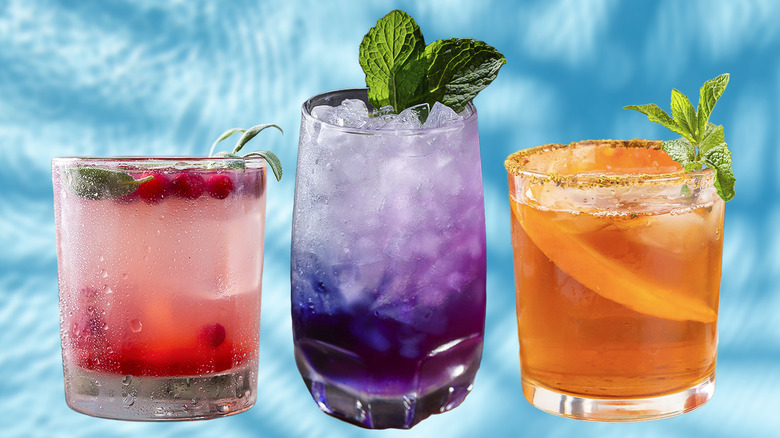
The shrub may be a vintage drink, but its taste is as fresh and modern as it gets. In recent years, shrubs have taken the craft cocktail movement by storm, showcasing familiar flavors in a punchy — and pungent — style.
That's due to the vinegar portion of the drink's bill, which is notable, all the while being in perfect proportion to the shrub's more accessible components of fruit and sugar. Still, what makes the shrub so amazing is that it's actually good for you. Since shrubs can be used in a variety of applications, from cocktails to cooking, and can be made from an array of ingredients, there's really nothing standing in the way between you and your next shrub. Also, it's super easy to make from the comfort of your own kitchen.
As a bartender with years of experience, I can admit that I only got hip to the magic of the shrub once the craft cocktail world had revived it, and since my palate loves anything acidic, I quickly made up for lost time. While experimenting with flavor combinations at home, some of my summertime favorites were rhubarb and strawberry spiced with star anise as well as the celestial combination of watermelon and basil. However, it was my spiced apple shrub, stirred with bourbon and served as an old fashioned, that stole my heart and made it onto the cocktail menu for my October wedding. All love stories aside, here's what you should know about shrubs.
1. Shrubs are derived from drinking vinegars
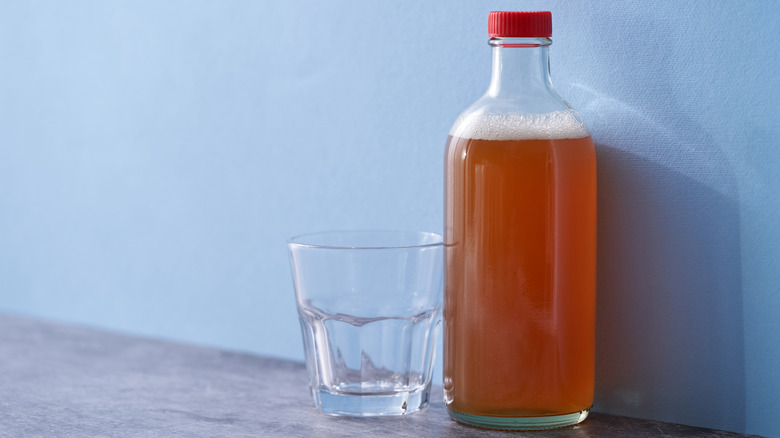
The tradition of making drinking vinegars was commonplace before the advent of refrigeration, with reference to the stuff going as far back as the days of antiquity. It's impossible to locate the precise rationale for mixing water with vinegar, but in the case of ancient Rome, keeping cool in the hot Mediterranean climate may have had something to do with the creation of posca, an ancient antecedent to the colonial-era shrub we all know and love.
Interestingly, posca was a popular choice among ancient laborers due to the fact that drinking vinegars are natural aids in terms of refreshment and revitalization. However, it was only the wealthy who could afford the addition of honey. That very delicious, and very necessary, element proved capable of smoothing out vinegar's acidic edges, thereby making honey the symbolic third pillar in today's formula for the beloved shrub: sugar.
In contrast to the switchels of an earlier era, modern-day drinking vinegar is mostly modeled off the colonial-era shrubs that saw the incorporation of fruit into the vinegar-sugar mixture. While the overall structure is ripe for experimentation — and offers endless possibilities for customization — vinegar, fruit, and sugar is one divine trinity you ought to heed.
2. Shrubs were all the rage in colonial America
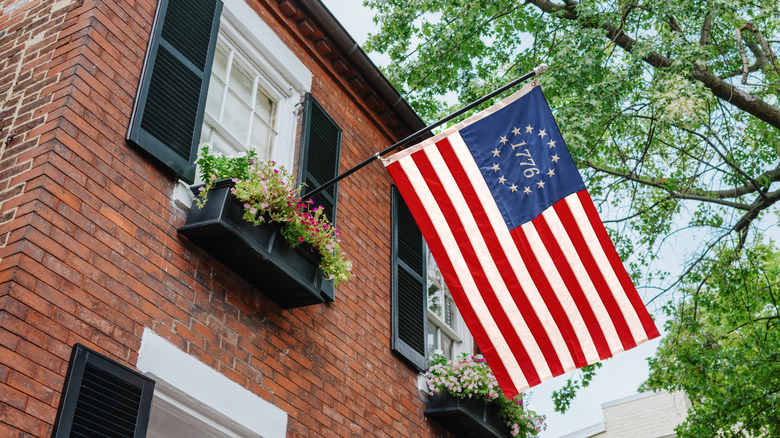
The story of shrubs stretches way beyond the realm of ancient Rome as it can be found in a variety of cultures over the span of centuries. While a lot of that notoriety is likely due to the widespread ancient practice of preserving and fermenting foods, one of the more germane examples pointing to shrub's former dominance lies in the origin of the name shrub, which can be traced back to the Arabic word sharab, meaning drink.
More utilitarian still, the popularity of the colonial-era shrub coincided with its energy-enhancing properties, thanks to the combination of sugar, water, and vinegar, which provided calories, aided in hydration, and quenched thirst, respectively. By the early 1700s, shrubs had made their way to America and soon garnered the seal of approval from the likes of Thomas Jefferson and Martha Washington.
While the drink's popularity was linked to the need to preserve fruit, the bright and tangy vinegar-sugar solution proved to be a delicious way to savor the fruits (pun intended) of that labor. Before long, folks began diluting the vinegar-based fruit syrup with water for a refreshing drink. While its zero-proof bill made shrubs capable of withstanding the temperance movement, the drink's popularity plummeted around the start of the Prohibition era, as it coincided with the widespread use of refrigeration.
3. Alcoholic shrubs have a strong connection to the sea
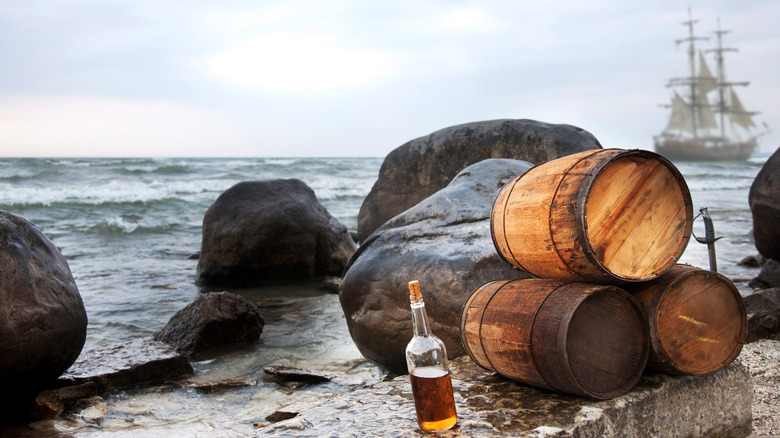
Since shrubs date all the way back to ancient times, it's hard to say for sure who introduced alcohol into the mixture, but during the 17th and 18th centuries in the United Kingdom, shrubs were commonly made using liquor, typically brandy or rum. Theories suggest that the inclusion of alcohol came about as a way to mask the salty taste of seawater that had seeped into the rum barrels over long voyages overseas, although another theoretical predecessor to the alcoholic shrub points directly to pirates.
The claim that pirates were responsible for creating the alcoholic shrub rests on the fact that they often tossed barrels of rum overboard to hide them from confiscation by privateers. Since barrels float, these pirates would add seawater to the rum barrels to make them sink, later reclaiming them after the threat was gone. It's all quite savvy, but the pirates were left with tainted rum, which proved to be a poor seller and prompted the pirates to add fruit to stave off the saltiness of the rum.
Whether you side with the British or those swashbuckling seafarers, it's unlikely we'll ever know for certain who was the first to introduce the alcohol into the shrub. However, since alcoholized shrubs were the norm in the Caribbean and throughout the British colonies, it appears that both theories hold water.
4. They are an endlessly customizable culinary ingredient
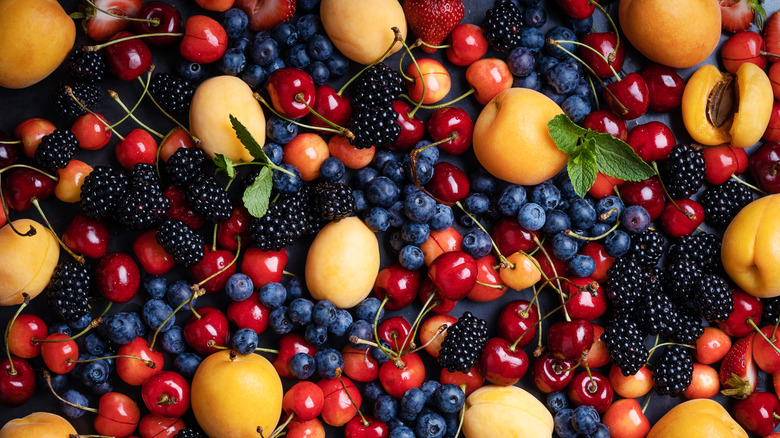
While the history of the shrub may be a bit shrouded in myth, there's no denying that the shrub makes for a unique culinary ingredient that's as distinct as it is versatile. By the 19th century, shrubs had found their way into several cookbooks, notably currant shrub, cherry shrub, and raspberry shrub. While these original recipes specifically called for fruit -– with berries being the quintessential pick — there are no rules against using vegetables, just take a gander at this spicy jalapeño shrub recipe. For savory lovers in need of something with less bite, try this cocktail recipe with carrot shrub instead.
Since shrubs are so ripe for experimentation, as you incorporate more complementary ingredients into your homemade shrub, you'll also be able to influence the flavor profile of the tangy cordial to your own specifications. Better still, every season offers an array of ingredients to work with, and playing around with ratios and sweeteners as well as adding botanicals for increased aromatics are just some of the ways you can customize your own shrub to highlight each season.
5. Shrubs can last a long time
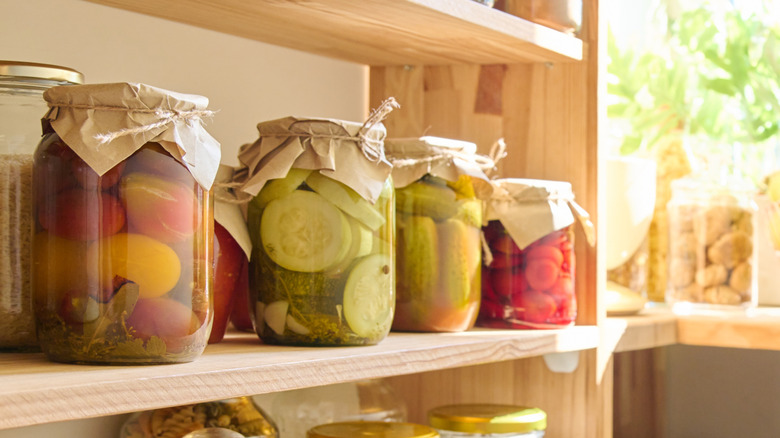
The tried and true formula for making a shrub is ridiculously simple. It requires three distinct components applied in specific proportions and given over to the added variable of time. Of course, you could start drinking your shrub after a day, but it's best to wait at least a week to allow the flavors to mellow. If that strikes you as too long, rest assured that waiting is the hardest part of the shrub equation, because once complete, shrubs naturally contain a very long shelf life.
If unopened and properly stored in a cool, dark place, shrubs can last for up to 12 months. While drinking vinegars preexisted the advent of refrigeration, I always recommend taking advantage of today's technology after opening, and to be sure to consume it within a few months. After all, it's not meant for looking at.
A natural preservative, vinegar is an active part of a shrub's long lifespan as it inhibits the growth of bacteria and mold. When vinegar's combined with fruit, the high-acid environment further reduces the risk of spoilage, while the sugars draw out excess moisture.
6. Shrubs are the original drink mixers
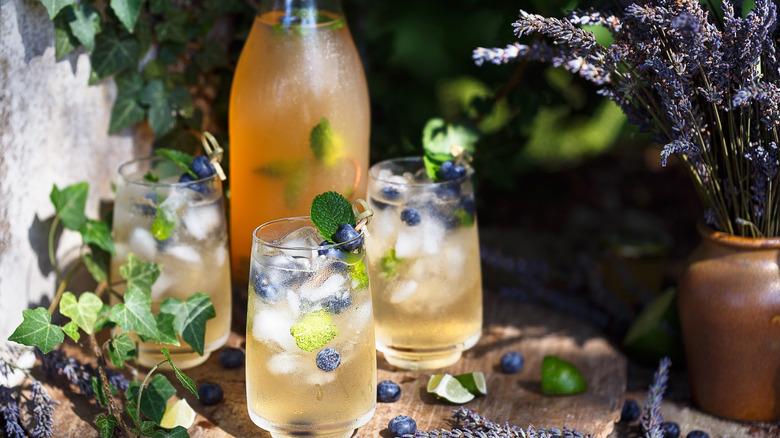
The shrub's distinct tartness can be polarizing to some palates, but it's exactly that robustness of flavor that makes the shrub hold up to alcohol so well. While a whiskey shrub is sure to make your mouth pucker, when spirits and shrubs are paired together, they seem to counteract each other's intensity to yield something better than its original parts. The result is a delightfully zesty drink that's both refreshing and revitalizing — and perfect for a punch bowl.
However, you need not add alcohol to make the most of the shrub's mixing potential. One of my favorite ways to enjoy a shrub is to simply add sparkling water. It's an easy homemade alternative to an artificially flavored carbonated drink, and since it's chock-full of natural ingredients, it's good for you to boot. Treated this way, shrubs double as both a natural sweetener and a flavor booster to any beverage, even tap water!
7. They also have beneficial health properties
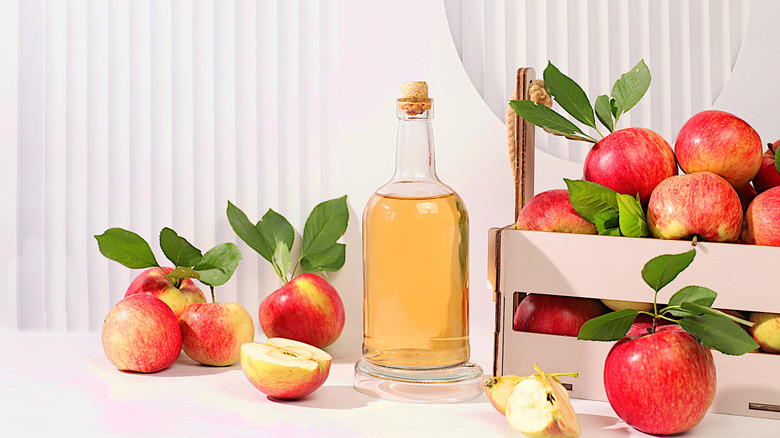
Historically, shrubs use only 100% natural ingredients, with no artificial anything, made the old-fashioned way. While many of today's producers stick to that ethos, it's important to know what's in your bottle of shrub if you want to take advantage of the drink's inherent health benefits.
Shrubs' beneficial health properties are mostly due to its vinegar content, as it's known to encourage salivation, ease digestion, and prevent bacterial growth. Apple cider vinegar is often touted as the healthiest of vinegars for its rich concentration of probiotics and antioxidants, but for maximum gut and immune support, opt for raw vinegar that has the mother.
While vinegar claims ownership of most of the shrub's health benefits, incorporating whole fruits or vegetables and raw sugar in lieu of the processed stuff will ensure that you're getting some of the vitamins and minerals naturally found in those ingredients. Better still, these ingredients imbue the shrub with its own natural color and texture, so there's no need to add anything artificial to achieve an exterior look that's as good as what's inside.
8. Shrubs are easy to make
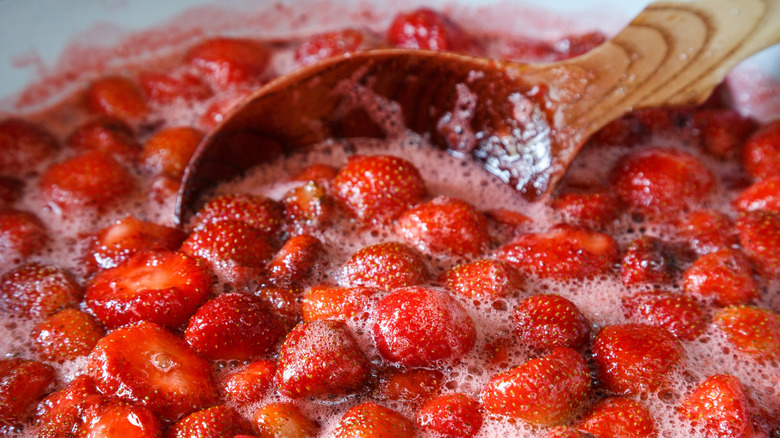
If you're yet to be convinced about the benefits of drinking vinegar, the fruit-infused shrub is so easy to make that it's silly not to give it a go. As is true with most infusions, there are two methods you can take to get to the finished product — the hot or cold process. While both methods will get you to more or less the same place, the choice of which path to take usually comes down to the ingredients you intend to use.
The hot process is tried and true, and works great for hardier fruits like berries, apples, and other kinds of fruit typically used for making jams. Combining all the ingredients, in more or less equal measure, into a stock pot and leaving to simmer is the overall thrust, although I suggest breaking down each component into stages and then adding them accordingly. A rough guideline is to prepare the fruit and make the sugar syrup, then combine and cook gently for about 15 minutes. Once cooled, add the vinegar, then strain and store in a sealed container.
Opting for a cold infusion can be seen as the more straightforward method, but it is time-consuming as it relies primarily on maceration. This occurs when the fruit is combined with sugar and left to do its thing. Stirring intermittently, the mixture will get really juicy after a couple of days, which is your sign to strain and then add vinegar. While the cold method results in a more pronounced flavor, it's the preferred way to use delicate ingredients like cucumber and watermelon.
9. Martha Washington and Benjamin Franklin had their own recipes for spiked shrub
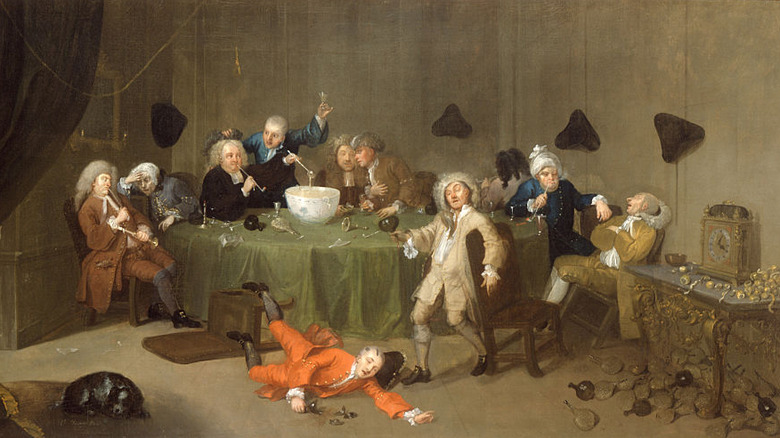
Before the shrub found its way into cookbooks, and more modern still, onto cocktail menus, it caught the fancy of some of colonial America's political elite, notably Benjamin Franklin and Martha Washington. There are also claims that the drink was found at Thomas Jefferson's Monticello and Laura Ingalls Wilder's homestead, lending even more credence to the fact that the colonial era was indeed the heyday of the shrub. Still, only the recipes from Washington and Franklin were preserved, and both support the addition of alcohol.
While Franklin's preferred flavor combination was reportedly orange and rum, George and Martha Washington were known for entertaining guests with large punch bowls where a rotating spirit base, likely brandy, whiskey, or rum, was mixed with shrub and stretched with water. According to the book "Shrubs: An Old Fashioned Drink for Modern Times," one of Martha Washington's recipes called for an equal mixture of cognac and dry white wine, lemon, and sugar.
10. Shrubs almost went extinct, but now they're having a renaissance
As the shrub hit peak popularity in the 17th and 18th centuries, having made several names for itself according to its distinct variations found across continents over time, the drink nearly went extinct around the turn of the 20th century. Originally a zero-proof beverage, you'd think that prohibition's stronghold on Americans in the early 1900s would have increased the ubiquity of the shrub, alas, it was at-home refrigeration that usurped the ancient practice of preservation, nearly killing the drink that came with it.
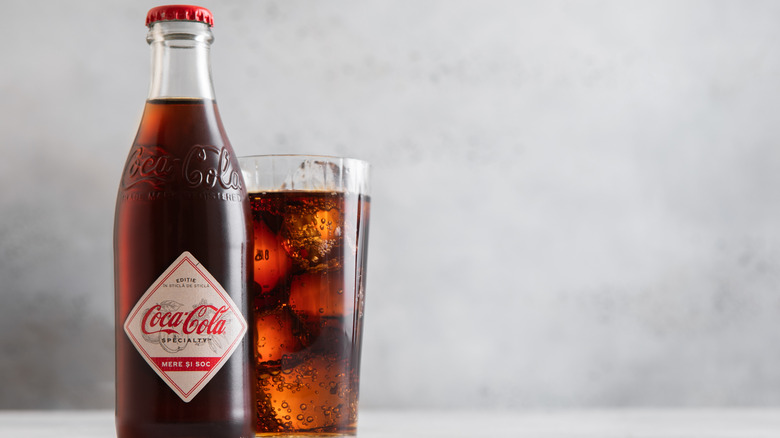
Another reason for the shrub's rapid decline was the introduction of sugary carbonated beverages like Coca-Cola coming onto the scene and completely rewriting the script when it comes to non-alcoholic drinks. In recent years, however, non-alcoholic drinks and low-ABV drinking trends have steadily risen in popularity, securing the shrub as a specialty ingredient capable of creating robust drinks with a punchy character.
The reintroduction of the shrub, a natural ingredient with ancient roots that's both endlessly versatile and extremely tasty, has solidified its presence in the world of mixology, with or without the incorporation of alcohol. While the craft cocktail movement has had a lot to do with the shrub's resurrection from obscurity, rising interest in wellness and nutrition have helped to secure the 21st century as the shrub's renaissance period.