

9 Mistakes To Avoid When Dining At A Jewish Deli
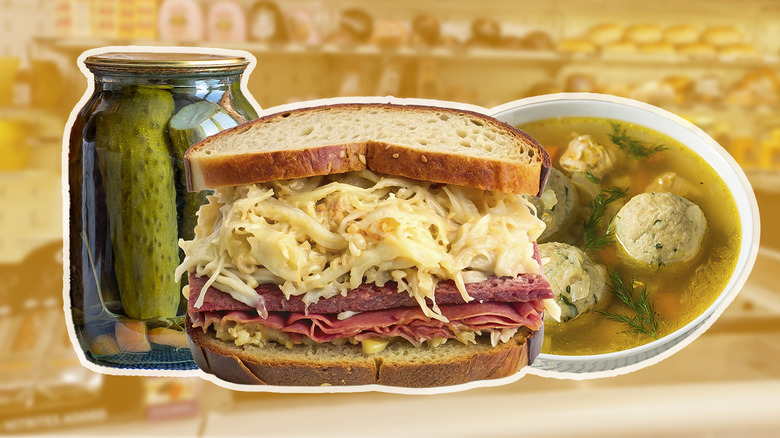
When you're looking for a top-notch breakfast or lunch, going to a Jewish deli will sometimes just hit the spot. It's a prime place to visit for sandwiches, schmear, and some of the best lox you've ever had. Even though it may seem relatively straightforward to order from a Jewish deli, it may be trickier than you're imagining, especially if it's not the kind of eatery you're used to frequenting. There are certain religious and cultural rules you may not be aware of if you don't come from a Jewish community, and you'll want to avoid any ordering faux pas that may come up when you're deciding what to eat.
But don't worry — we've come up with this list of some of the most common mistakes people make when they dine at a traditional Jewish deli. By avoiding these no-nos, you'll guarantee a more delicious visit the next time you go to your local Jewish deli.
Ordering your sandwich on white bread instead of rye
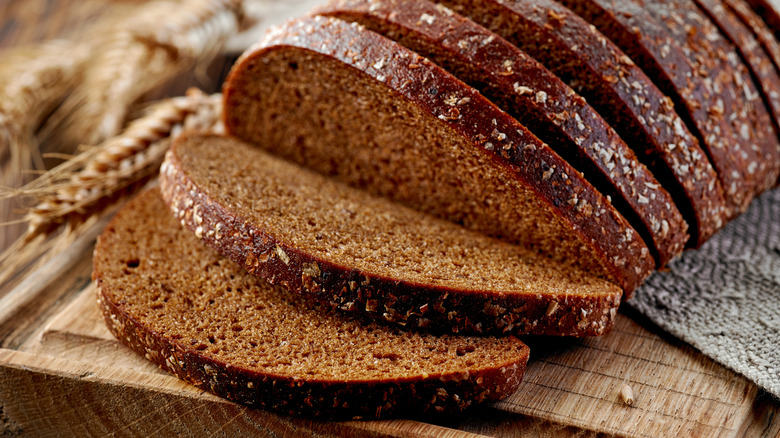
We all have different preferences when it comes to bread, but sometimes, you shouldn't be too picky about bread selection — especially when it means bucking the norm. Although you might prefer the neutral, approachable flavor of white bread on your sandwich, asking for white bread is a huge mistake when you're ordering from a Jewish deli. That's because, traditionally, sandwiches at Jewish delis are made with rye bread. With its bold, nutty, malty flavor, rye bread packs a punch of flavor where white bread just falls flat. This flavor is essential to the sandwich, so skipping it will likely yield a less complex, less delicious sandwich.
White bread isn't just inappropriate thanks to its lack of flavor, though. It's also unlikely to be able to hold up to the mountain of ingredients you'll find in a good Jewish deli sandwich. The last thing you want is to dig into a pastrami sandwich that's already soggy before you even take your first bite, so sticking with rye bread over white just makes sense.
Trying to snag yourself a bacon, egg, and cheese bagel

When a lot of people think of a Jewish deli, the first kind of food that comes to mind is a bagel sandwich. If most of the bagel sandwiches you get are from places that are decidedly not Jewish delis, a bacon, egg, and cheese bagel may sound like a solid option to order. However, you're not going to find bacon at most traditional Jewish delis, since pork bacon isn't kosher. Neither is eating meat and milk together. Therefore, the whole concept of a bacon, egg, and cheese bagel just doesn't work. While there may be some non-kosher Jewish delis that do serve these ingredients, most Jewish delis you walk into aren't.
However, you can view this as an exciting opportunity to try a different type of bagel you might not otherwise be inclined to try. Who knows? You may just realize that a lox bagel is way better than your standard bacon, egg, and cheese order.
Opting for the soup of the day instead of the matzo ball soup
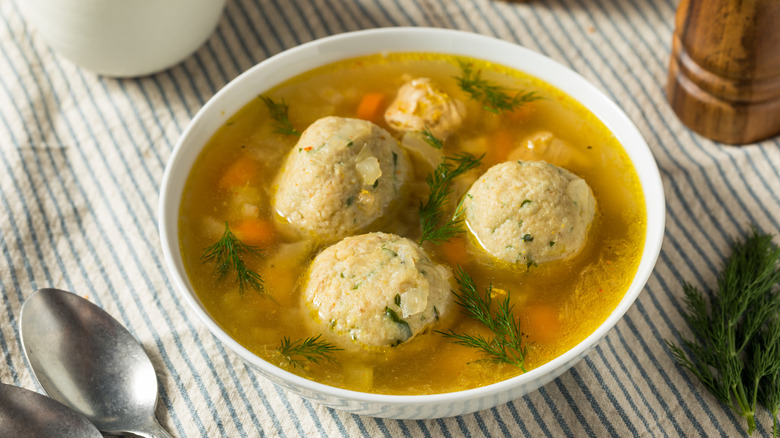
Some people enjoy a surprise or two in their daily lives, and those are the types of people who may be tempted to order the soup of the day at their local Jewish deli. We get it — it sounds like an opportunity to try something new and exciting that's not normally on the menu. However, most of the time, ordering the soup of the day isn't going to yield the most delicious meal possible. This is because all the random ingredients that are about to go bad often end up in the soup of the day. While we love the idea of restaurants making soup to reduce food waste, unless the specific soup they're serving really appeals to you, it may be better to opt for another classic: matzo ball soup.
This soup is known for its clear broth and fluffy, carb-y dumplings, and it often comes with vegetables like celery and carrots. It's a simple soup, but it's one that's deeply comforting, particularly on cold days or when you're not feeling your best. You might regret ordering the soup of the day, but you can almost never go wrong with a steaming bowl of matzo ball soup.
Trying to customize everything instead of sticking with the classics
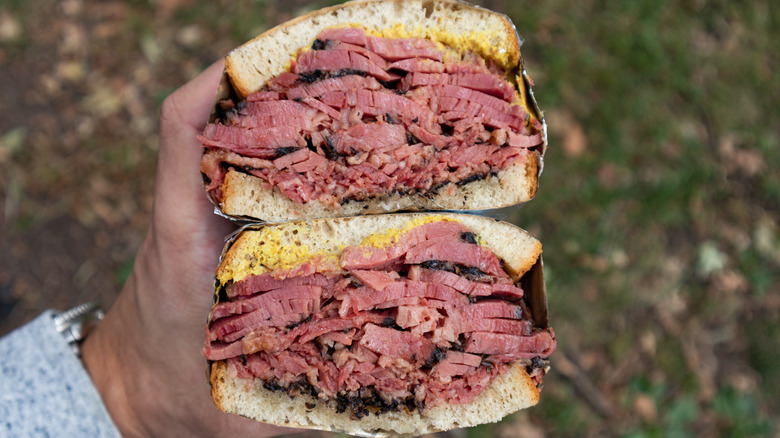
When you want to eat a sandwich that's made perfectly customized to your specific taste, there are countless different sandwich shops you can visit that'll make your sandwich to your specifications. Head to Subway, for instance, and you can tell the person making your sandwich exactly which meats, veggies, and condiments you want to include in your sub. However, a Jewish deli doesn't exactly work the same way, and for the best results, you won't want to customize everything. Instead, it makes more sense to stick to the classic presentations of whatever sandwich you're ordering. This is especially true if you don't have a lot of experience with Jewish deli food in the first place.
When it comes to some of the simple sandwiches that are served at Jewish delis, like a classic corned beef, there are very few different elements in the sandwich. Therefore, switching anything up can make a big difference in how the dish ends up tasting. Instead, try to keep an open mind, and simply order straight off of the menu without a ton of substitutions. You may just find that you like these classics better than your favorite customizable sandwich.
Not trying the half-sour pickles ... even if you don't normally like pickles
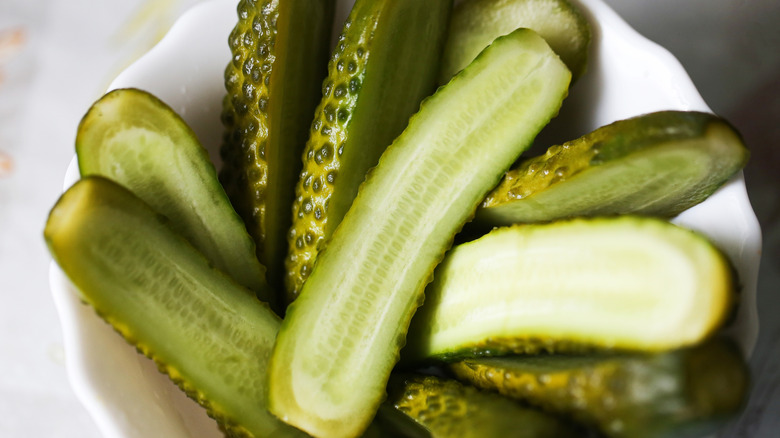
Jewish delis are known for plenty of tasty dishes, but one of our absolute favorites has to be homemade pickles. There's something about fresh pickles that always hits the spot, whether you're digging into a super meaty sandwich or are just stopping in for a simple bowl of matzo ball soup. But whether you love pickles as much as we do or you tend to avoid the sour, crunchy fermented veg, you're not going to want to miss the half-sour pickles at your favorite Jewish deli.
Unlike traditional pickles, which are usually fermented in vinegar, half-sour pickles are fermented in a saltwater brine instead. You'll still get that bold, salty flavor you know and love, but the acidity just won't be quite as intense. This allows you to actually taste the flavor of the cucumbers more. Plus, half-sour pickles often pack an even more pronounced crunch than their fully sour counterparts. Even if you don't tend to like pickles, there's a good chance that you'll enjoy crunching a half-sour pickle or two at a Jewish deli.
Ordering too much, assuming the portions will be small
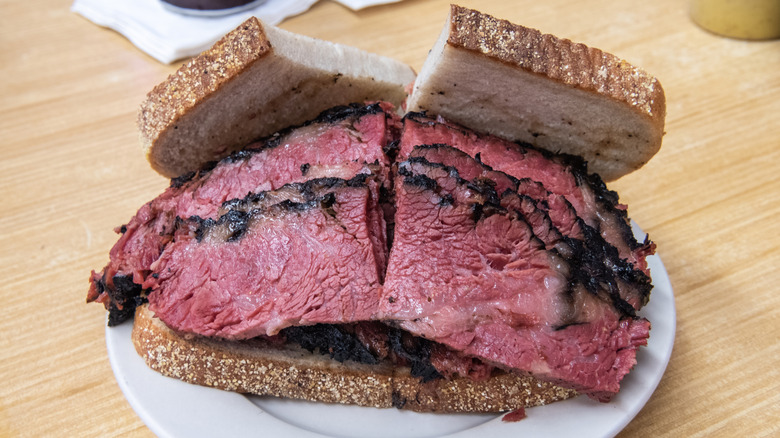
Sometimes, it can be hard to know how much to order when you go to a restaurant. You don't want to order too little and end up not being full by the time you're finished with the dishes you selected, but at the same time, you don't want to over-order and have to take home leftovers you know you're never going to get to anyway. However, when it comes to a Jewish deli, we generally recommend erring on the side of under-ordering. That's because Jewish deli portions tend to be quite generous — so generous, in fact, that it's perfectly reasonable to share a sandwich in some cases instead of getting your own.
Think of Katz's Delicatessen, perhaps the most famous Jewish deli of them all. The portion sizes there are absolutely massive, and getting through a single sandwich on your own can be a serious struggle unless you go into the restaurant starving in the first place. Therefore, we recommend starting small and ordering more as you go if you're still hungry.
Asking for mayo instead of spicy mustard on your sandwich
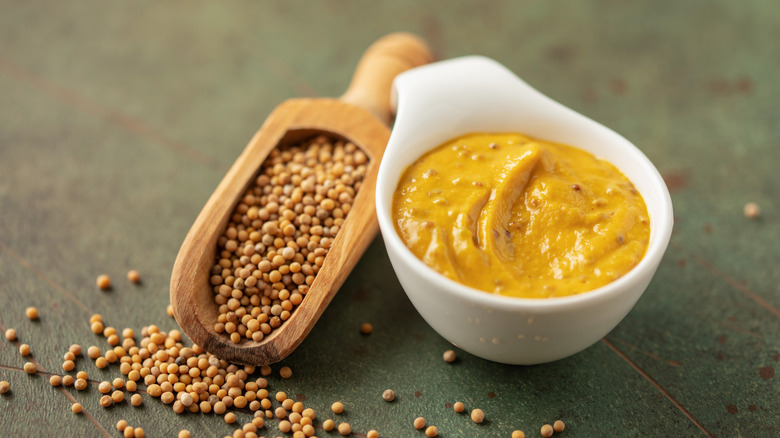
Mayo vs. mustard: It's one of the world's most contentious questions ... except if you're at a Jewish deli, that is. Spicy mustard is essential to most Jewish deli sandwiches, including the famed corned beef and pastrami numbers. So, to ask for mayonnaise instead of that iconic spicy mustard on your sandwich isn't just a faux pas — it might actually make the sandwich taste worse.
You already have plenty of heft and fattiness from the meat included in the sandwich, after all. Mayonnaise just adds another layer of fattiness, creating a mouth-coating texture that doesn't allow you to appreciate just how delicious the meat truly is. On the other hand, spicy mustard cuts through all of that thickness and fattiness to highlight the glory of the meat itself. It's a combo that just makes sense, and why would you want to mess with a good thing? Always stick with the spicy mayo for the tastiest Jewish deli sandwich results.
Requesting cheese on your pastrami or corned beef sandwich
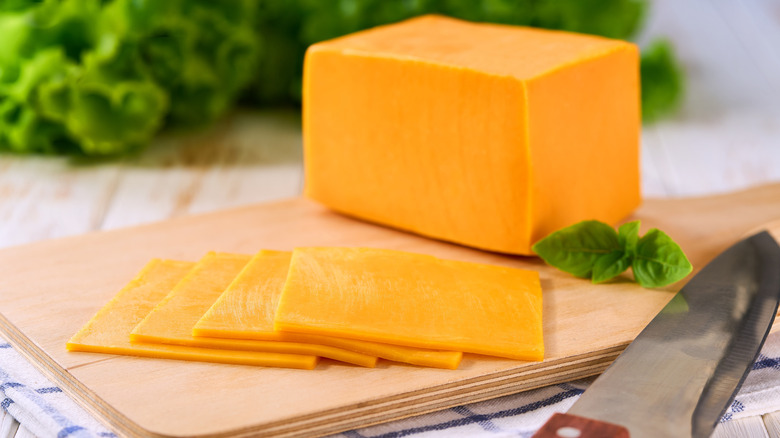
If you know anything about kosher food, then you probably know that there are two types of ingredients that don't mix: milk and meat, as previously mentioned. Yes, "milk" includes cheese. Keeping milk and meat separate is an important facet of a kosher diet, and even Jewish delis that may not be fully kosher aren't likely to include cheese on their meaty sandwiches. Therefore, asking for cheese on your corned beef or pastrami sandwich is likely to earn you a blank stare if you're ordering from a Jewish deli.
Even if you're someone who usually likes to eat a lot of cheese, though, you should realize that this prohibition against serving the two together is ultimately for the best. Cheese might obscure the flavor of the beef, masking it with an unnecessary richness that does nothing to complement the existing flavors in the sandwich. Sometimes, tradition just makes sense, and this is definitely one of those times.
Not being open to trying the tongue
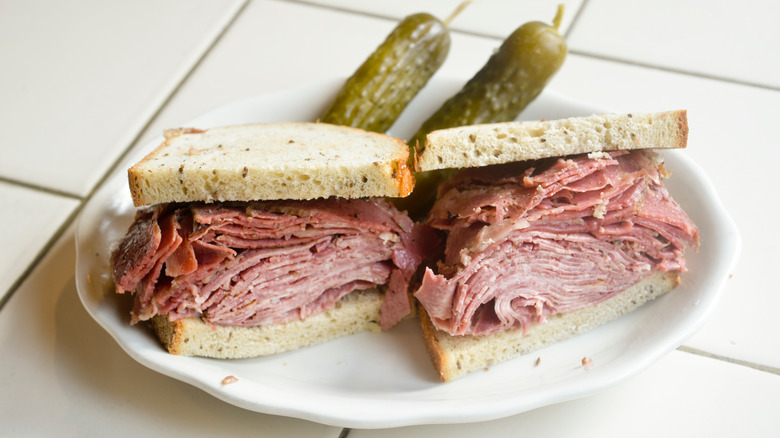
If you're not used to eating at Jewish delis, then you may be slightly taken aback when you realize that there's tongue on the menu. For those who may not be super accustomed to eating organ meats, the idea of eating tongue may not seem like a super pleasant one. Believe us when we say, though, that tongue meat makes for an excellent sandwich that feels a bit more adventurous than the standard corned beef or pastrami.
Flavor-wise, tongue essentially just tastes like beef. Sometimes, the tongue is pickled, which gives it a lovely, acidic quality with just a hint of sweetness to it. What makes tongue stand apart from other types of meat, though, is really the texture. It's quite dense, with a bit of bounciness that makes it appealing to those who love the specific, firm, meaty texture of something like Spam. Next time you visit a Jewish deli, don't be afraid to try the tongue — you just might find that it's the best thing on the whole menu.