

How Austrian Crepes Differ From The Classic French Version
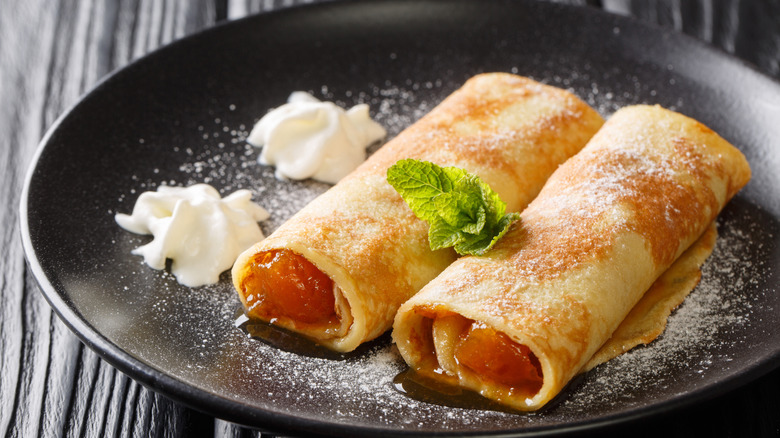
A good crepe is delicate yet sturdy enough to hold a plethora of fillings, from jams to meats and cheeses. But if you've only ever tried the French version of the deliciously versatile culinary feat, it's time to introduce yourself to Austria's beloved crepe version: palatschinken. High on the list of Austrian desserts you need to try at least once, Austrian crepes differ from classic French crepes in their relative thickness, traditional fillings, and signature rolled format. Slightly thicker and less delicate than lacy French crepes, Austrian crepes are typically filled with a healthy serving of apricot jam and rolled up into tubes, then topped with powdered sugar.
While both French and Austrian versions can include a variety of the best crepe fillings, including jam, French crepes are more commonly filled with ingredients like butter and sugar, Nutella, French cheeses, eggs, or smoked salmon, then folded into quarters for sandwich-like paper-thin pancakes. On the other hand, Austrian pancakes are a tad thicker than the French version, and can almost always be told apart by their rolled nature and relative depth. And unless you make them at home, you'll likely find palatschinken served for lunch (and sometimes other mealtimes) with fillings like the signature apricot jam, chocolate walnut spread, or quark cheese.
Austrian crepe batter is slightly thicker

Besides the typical fillings, French and Austrian crepes differ slightly in how they're made. For instance, French crepe batter often contains a bit of melted butter (and sometimes granulated sugar for sweetness), while Austrian crepe batter recipes typically just call for eggs, milk, flour, and salt. In both recipes, adding butter to the pan contributes flavor and helps prevent the crepes from sticking. But in French crepe recipes, the melted butter, along with other liquid ingredients like milk, is combined to form a slightly thinner batter. Austrian crepes come out a bit thicker and slightly less delicate — similar in texture to other thin pancakes like Jewish blintzes. Due to their relative thickness compared to French variations, palatschinken are a little less susceptible to noticeable tearing as you flip and assemble them, which could be appealing for beginner crepe-makers.
To make palatschinken at home, pour your batter into a large nonstick frying pan and cook it over gentle heat. Once your Austrian crepes are flipped and cooked fully, spread them with apricot jam, then get rolling, tucking the crepes in on themselves until they form long tubes. You can also add a touch of brandy to the apricot jam for a boozy hint, just like it is commonly done in Austria. Once you've eaten your fill of Austrian crepes, it might just be time to try a variety of other pancakes from around the world, too.