

The Type Of Alcohol In White Claw, Explained
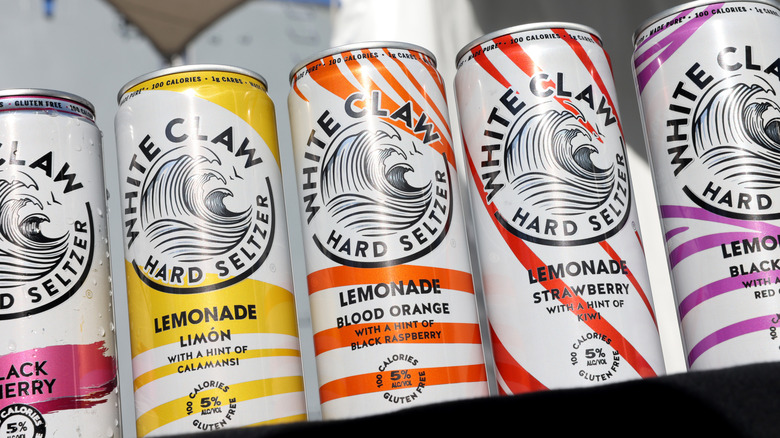
White Claw sells itself as "hard seltzer," which sounds like sparkling water that just happens to be boozy (indeed, the can reads "spiked sparkling water"). But the alcohol inside isn't distilled vodka, rum, or tequila. Instead, it's a gluten-free alcohol base that comes from fermented sugars, so technically, it's a form of malt liquor. The process starts with grains that are mashed, mixed with water, and pitched with yeast. The yeast consumes the sugars and produces ethanol, which is then filtered, clarified, and carbonated until it tastes less like a brewery tank and more like spiked seltzer.
That's why White Claw sits in the same legal category as the best sweet beers rather than spirits. At about 5% ABV, it's comparable to a light lager. The choice to use a malt base doesn't do anything for the flavor, as you won't taste grains in the finished product. Fermenting sugar is cheaper and faster than distilling liquor, and it allows the beverage to be sold (and taxed) under beer rules instead of the stricter standards that govern spirits.
That might feel a bit anticlimactic if you thought you were drinking sparkling vodka water. The "malt base" is stripped so clean during filtering that it's practically flavorless. What you taste instead are the added fruit essences and carbonation. In other words, White Claw is beer's sneaky cousin in a slim can, pretending to be spa water.
Malt science behind White Claw
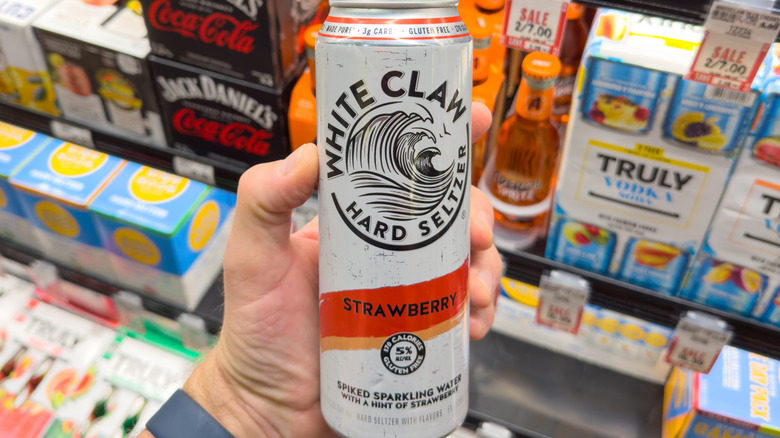
The term "malt" usually conjures visions of barley, kilns, and old-school brewing, but White Claw doesn't actually use traditional malted barley. Because the brand is marketed as gluten-free, its fermentable base comes from GF grains, sometimes mixed with cane sugar. This is the most common way hard seltzers are made. The science is the same: yeast converts simple sugars into alcohol and carbon dioxide, leaving behind a neutral wash of booze that's easier to flavor than a hoppy beer. What makes hard seltzer different is just how aggressively it's stripped down. No hops, no roasted malts, no residual yeast character, just a blank canvas for bubbles and "black cherry," which is also one of the best White Claw flavors.
Understanding that base helps explain White Claw's rise. By decoupling alcohol from beer's bitterness or liquor's burn, it became an approachable, low-calorie option that still sits on the same store shelves as beer. The malt base also kept production scalable for breweries that already had the equipment. Fans love it because it's light, session-friendly, and endlessly flavored; critics joke that it's just alcoholic LaCroix. Basically, the "type of alcohol" in White Claw is the same ethanol molecule found in beer, wine, or spirits, dressed up in bubbles and branding.