

How 2 Cans Of The Same Corn Can Have Wildly Different Nutrition Facts
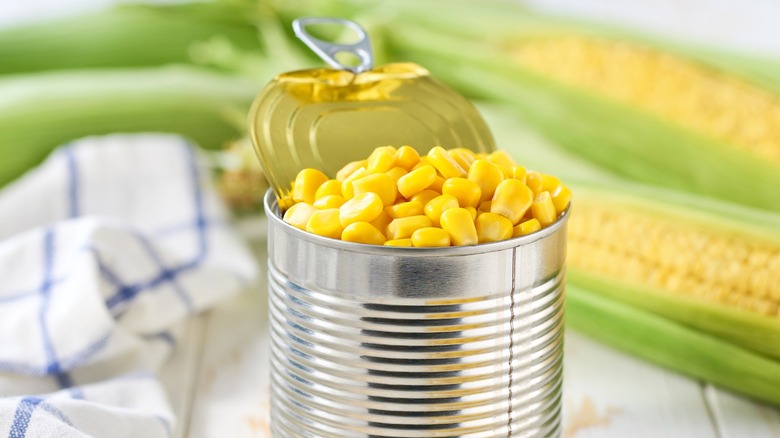
If you're in the grocery store grabbing a couple cans of corn — whether they're creamed corn, kernel, sweet corn, or white or yellow corn — you could be in for a surprise when you look at the nutrition labels. You may find that the amount of calories, carbohydrates, and even sodium in each is different. So how is it possible for what seems like the same product to have such wildly different nutrition facts?
The answer lies in how food labeling laws work, and the natural variations inherent in agricultural products. In the United States, the FDA allows food manufacturers some flexibility in nutrition labeling. As long as the numbers reported on the label fall within 20% of the actual value, the label is considered compliant. That means that two batches of canned corn from the same producer could be slightly different in moisture content, kernel number or size (which can differ on the cob), or sweetness — leading to variations in nutritional content. One batch may have slightly more sugar or starch, affecting carbohydrate content, while another may be packed with a bit more liquid or brine, changing sodium or calorie totals.
Additionally, manufacturers sometimes update their labels based on new testing methods or lab analyses, leading to changes even if the product itself hasn't noticeably changed. These small shifts are normal in the world of food labeling, but they can cause confusion for us as consumers trying to track the nutrient value of the foods we're putting into our bodies.
Why natural variation makes a difference in canned food labeling

Like any kind of agricultural product, corn's nutritional profile can vary depending on soil conditions, weather, harvest timing, and how it's processed. One harvest could yield sweeter corn with more natural sugars, while another could produce starchier kernels with slightly higher fiber. Even differences in the canning process — how long the corn is cooked, the amount of brine added, or how much liquid is in the can — can affect the nutrition content of one batch compared to another.
Further to that, nutrition facts on canned products are often based on averages rather than precise lab measurements of every single can. This is why you may see one can of corn showing 70 calories per serving, while another displays only 60 — even though they look identical. Food companies work within government-approved ranges, which makes sense when you consider the realities of farming and mass production.
At the end of the day, while nutrition labels are a useful guideline, they aren't perfect. Understanding the variability in products growing in their natural environment with differences in temperature and soil nutrition — as well as factors in harvesting, processing, transporting, and storage of canned products — can help clear the mystery around why two of the same brands or types of canned corn may have different nutrition info on the label. Check out our ranking of 10 canned corn brands, ranked worst to best — and always read the labels carefully.